

Kirjahaku
Etsi kirjoja tekijän nimen, kirjan nimen tai ISBN:n perusteella.
110 kirjaa tekijältä David Wilson

The Doctrine of Justification Through Imputed Righteousness, a Divine Doctrine; Or, the Righteousness of Believers, Declared by God Himself to Be, Not of Themselves, But of Him. ... by David Wilson
David Wilson
Gale Ecco, Print Editions
2018
sidottu
The 18th century was a wealth of knowledge, exploration and rapidly growing technology and expanding record-keeping made possible by advances in the printing press. In its determination to preserve the century of revolution, Gale initiated a revolution of its own: digitization of epic proportions to preserve these invaluable works in the largest archive of its kind. Now for the first time these high-quality digital copies of original 18th century manuscripts are available in print, making them highly accessible to libraries, undergraduate students, and independent scholars.The Age of Enlightenment profoundly enriched religious and philosophical understanding and continues to influence present-day thinking. Works collected here include masterpieces by David Hume, Immanuel Kant, and Jean-Jacques Rousseau, as well as religious sermons and moral debates on the issues of the day, such as the slave trade. The Age of Reason saw conflict between Protestantism and Catholicism transformed into one between faith and logic -- a debate that continues in the twenty-first century.++++The below data was compiled from various identification fields in the bibliographic record of this title. This data is provided as an additional tool in helping to insure edition identification: ++++British LibraryT097148London: printed for the author, by J. and W. Oliver: sold by G. Keith; A. Grant; and J. Gray, 1775. vii, 1],88p.; 8

Darwin`s Cathedral – Evolution, Religion, and the Nature of Society
David Wilson
University of Chicago Press
2003
nidottu
Until recently, evolution and religion have been considered contending, irreconcilable theories of origin and existence. David Sloan Wilson takes the radical step of joining the two, while thinking of society as an organism, one in which morality and religion are adaptations.
This is the first full-length biography of Ernest Rutherford (1871-1937), the most important experimental physicist of his time, and probably the most ingenious since Faraday. It was Rutherford who discovered the atomic nucleus and who first "split" an atom.Based in large part on previously inaccessible letters and other papers, the book traces Rutherford's life from his upbringing in the pioneering society of New Zealand to his burial in Westminster Abbey as Lord Rutherford of Nelson. It recounts his student years at Cambridge, working with J.J. Thomson on the newly discovered X-rays; the years of McGill University when (with Soddy) he established the laws of radioactive decay and demonstrated the transmutation of elements, work that resulted in a Nobel prize; his highly productive years at Manchester when he discovered the nucleus and developed in collaboration with Niels Bohr, the standard model of atomic structure; and finally, his return to Cambridge to direct the Cavendish Laboratory.Wilson unearths new material on Rutherford's development of SONAR-like antisubmarine devices during World War I, an official secret for many years after his death. He also presents new information on Rutherford's relationship to Russian physicist Peter Kapitza, his "favourite son," who was denied permission to return to Cambridge after a visit to his homeland in 1934. The "Kapitza affair" unleashed a storm of protest in international scientific and political circles. The book also offers numerous personal glimpses of Rutherford - the hundreds of unreported experimental dead ends that lay behind his legendary scientific intuition, and the sensitive and sympathetic side of the older Rutherford who presented a gruff, crusty exterior to his colleagues.

This fascinating book examines the 1990s rise of a new black ghetto in rust belt America, 'the global ghetto'. It uses the emergent perspective of 'racial economy' to delineate a fundamental proposition; historically neglected and marginalized black ghettos, in a 1990s era of societal boom and bust, have become more impoverished, more stigmatized, and functionally ambiguous as areas. As these ghettos grow in size and become more stigmatized entities in contemporary society, our understanding of them in relation to evolving cities and society has not kept pace. This book looks to the heart of this misunderstanding, to find out how race and political economy in cities dynamically connect in new ways ('racial economy') to deepen deprivation in these areas. This book is an essential read for students of geography, urban studies and sociology.
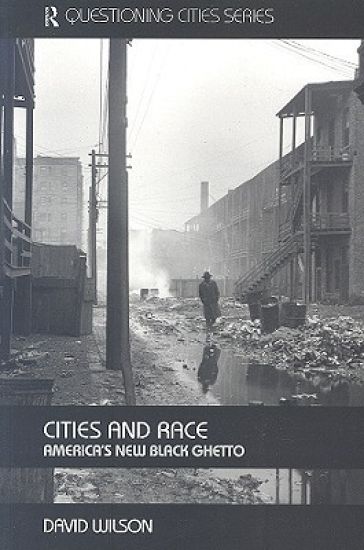
This fascinating book examines the 1990s rise of a new black ghetto in rust belt America, 'the global ghetto'. It uses the emergent perspective of 'racial economy' to delineate a fundamental proposition; historically neglected and marginalized black ghettos, in a 1990s era of societal boom and bust, have become more impoverished, more stigmatized, and functionally ambiguous as areas. As these ghettos grow in size and become more stigmatized entities in contemporary society, our understanding of them in relation to evolving cities and society has not kept pace. This book looks to the heart of this misunderstanding, to find out how race and political economy in cities dynamically connect in new ways ('racial economy') to deepen deprivation in these areas. This book is an essential read for students of geography, urban studies and sociology.

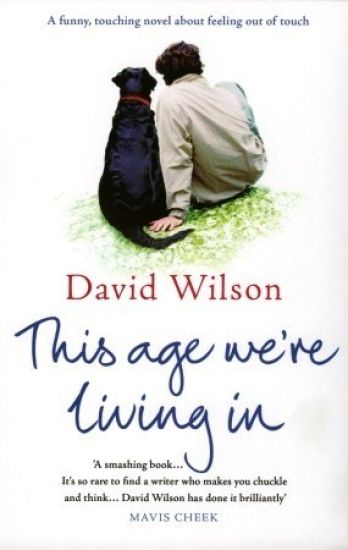
'Only two big facts are known for certain: you are on a large spinning rock hurtling through space at about 67,000 mph, and one day your body is going to die. Will a new pair of shoes really help?' Worth's 12th Rule of ShoppingGeorge Worth is a grumpy lifestyle columnist who works in a woman's world. He hates fashion, mobile phones, computers and Young People. At night he goes home to a borrowed Labrador and feelings of guilt about his dead wife.Justin Smith is a Young Person. A bright newcomer, he's always on his mobile to his girlfriend, surfing the Net and keeping abreast of the latest trends.Then comes the day when Justin's girlfriend throws him out and he finds himself having to share a flat with George. As the women around them watch and wonder both men start to work out what really matters among the obsessions and distractions of modern life.Laugh-out-loud funny, moving and revealing, This Age We're Living In is a novel that confronts the big questions: Can shopping solve everything? Why are boxers better than Y-fronts? Are lifestyle writers secretly in the same mess as everyone else? And if life is a journey, who the hell changed all the signposts?


BE THE FIRST TO READ DAVID WILSON'S NEW TRUE CRIME BOOK "A PLOT TO KILL" BY PRE-ORDERING NOW 'Hugely insightful and thought provoking . . . I read it from cover to cover in one go' - Emilia Fox'With characteristic brilliance and admirable sensitivity, Wilson illuminates the complex causes of their often horrific crimes' - Professor Simon Winlow, Vice President of the British Society of CriminologyProfessor David Wilson has spent his professional life working with violent men - especially men who have committed murder. Aged twenty-nine he became, at that time, the UK's youngest ever prison Governor in charge of a jail and his career since then has seen him sat across a table with all sorts of killers: sometimes in a tense interview; sometimes sharing a cup of tea (or something a little stronger); sometimes looking them in the eye to tell them that they are a psychopath.Some of these men became David's friends; others would still love to kill him. My Life with Murderers tells the story of David's journey from idealistic prison governor to expert criminologist and professor. With experience unlike any other, David's story is a fascinating and compelling study of human nature.
'Enthralling ... will leave true-crime readers with more to ponder than they bargained for' - The Herald From the UK's leading criminologist comes the true story of Margaret McLaughlin, and the man he believes was fitted up for her murderBefore David Wilson became the UK's pre-eminent criminologist, he was just a young boy growing up in the Scottish town of Carluke. As a child, the brutal murder of a young woman rocked this small community, but very quickly a man was arrested for the crime, convicted and put behind bars. For most, life slowly carried on - case closed. But there were whispers in the town, that the wrong man was imprisoned. Over the years, these whispers grew louder, to the point that any time David would visit, friends and acquaintances would ask in hushed tones: 'But what are you going to do about the Carluke Case?'Carluke believed that a young man had been wrongly convicted. A murderer was still on the loose.Forty years later, it's time for David to return home, and find out the truth.
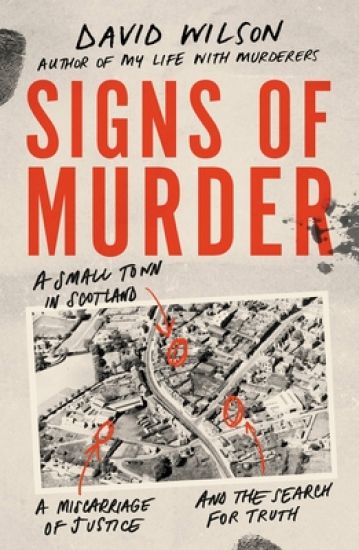
From the UK's leading criminologist comes the true story of Margaret McLaughlin, and the man he believes was fitted up for her murder 'Enthralling ... will leave true crime readers with more to ponder than they bargained for' - The HeraldBefore David Wilson became the UK's pre-eminent criminologist, he was just a young boy growing up in the Scottish town of Carluke. When he was a child, the brutal murder of a young woman rocked this small community, but very quickly a man was arrested for the crime, convicted and put behind bars. For most, life slowly carried on - case closed. But there were whispers in the town that the wrong man was imprisoned. Over the years, these whispers grew louder, to the point that any time David would visit, he'd be asked in hushed tones, 'What are you going to do about the Carluke Case?'Carluke believed the real killer had evaded justice. A murderer was still on the loose.Forty years later, it's time for David to return home, and find out the truth.

BE THE FIRST TO READ DAVID WILSON'S NEW TRUE CRIME BOOK "A PLOT TO KILL" BY PRE-ORDERING NOW Expanded and updated, this is the definitive history of British serial killing 1888-2020 - by the UK's leading criminologist, David WilsonIn this fascinating and informative book, Professor David Wilson tells the stories of Britain's serial killers from Jack the Ripper to the extraordinary Suffolk Murders case. David Wilson has worked as a Prison Governor and as a profiler, and has been described as the UK's leading expert on serial killers. His work has led him to meet several of the UK's deadliest killers, and build up fascinating insights into what makes a serial killer - and who they are most likely to target. A vivid narrative history and a call for prison and social reform, Professor Wilson's new book is a powerful and gripping investigation of Britain's serial murderers.

The true story behind hit BBC drama THE SIXTH COMMANDMENT'[A] real-life Midsomer Murder ... it's chilling, but [David Wilson's] explanation of how a psychopath thinks is masterly' The TimesTwo deaths.Three doors apart.An unsuspecting community about to realise there's a killer in their midst. In October 2015, Peter Farquhar was found dead in his house in Maids Moreton, lying on the sofa next to a bottle of whisky. An inquest was made, and Peter's death was quickly ruled an accident.But after the death of another elderly neighbour, the dreadful truth began to emerge: both victims had been groomed, seduced and mentally tortured by a young man, Benjamin Field, who had used his position of power in the community to target and exploit the elderly.He almost got away with it. Very little shocks criminologist David Wilson, but this extraordinary case in his sleepy hometown astounded him. Wilson felt duty-bound to follow its trail, discovering how his tightknit community failed to intervene, how a psychopath went undetected for years, and how Peter unwittingly supplied the blueprint for his own murder.A Plot to Kill is a chilling, gripping account of a callous murder in the heart of middle England, a fight for justice, and a revealing insight into the mind of a killer.
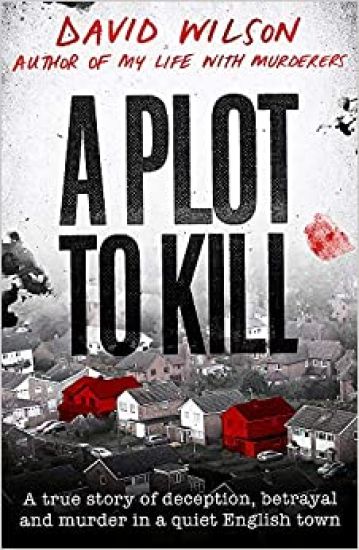
The true story behind hit BBC drama THE SIXTH COMMANDMENT'[A] real-life Midsomer Murder ... it's chilling, but [David Wilson's] explanation of how a psychopath thinks is masterly' The TimesThe shocking story of the murder of Peter Farquhar and the churchwarden who groomed and betrayed him, from the UK's leading criminologist David WilsonTwo deaths.Three doors apart.An unsuspecting community about to realise there's a killer in their midst. In October 2015, Peter Farquhar was found dead in his house in Maids Moreton, lying on the sofa next to a bottle of whisky. An inquest was made, and Peter's death was quickly ruled an accident.But after the death of another elderly neighbour, the dreadful truth began to emerge: both victims had been groomed, seduced and mentally tortured by a young man, Benjamin Field, who had used his position of power in the community to target and exploit the elderly.He almost got away with it. Very little shocks criminologist David Wilson, but this extraordinary case in his sleepy hometown astounded him. Wilson felt duty-bound to follow its trail, discovering how his tightknit community failed to intervene, how a psychopath went undetected for years, and how Peter unwittingly supplied the blueprint for his own murder.A Plot to Kill is a chilling, gripping account of a callous murder in the heart of middle England, a fight for justice, and a revealing insight into the mind of a killer.
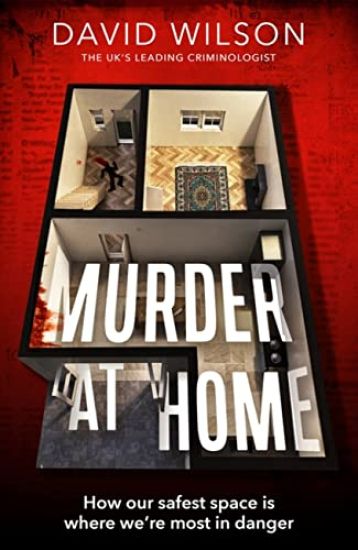
Home is where the heart is. But home is also the most common site for murder. The grimly fascinating new book from the UK's leading criminologist David Wilson uncovers the dangers that exist where we least expect them - perfect for fans of The Dark Side of the Mind and The Mind of a Murderer.


Home is where the heart is. But home is also the most common site for murder. The grimly fascinating new book from the UK's leading criminologist David Wilson uncovers the dangers that exist where we least expect them - perfect for fans of The Dark Side of the Mind and The Mind of a Murderer. The home is the place where murder most commonly occurs. In England and Wales, each year on average 75 per cent of female murder victims and 39 per cent of murdered men are killed at home.This gripping new title from the author of My Life with Murderers and A Plot to Kill explores the tragic prevalence of domestic murder and how, for so many victims, their own home is the place they are most in danger.David Wilson is the UK's leading criminologist and his knowledge of murder is unparalleled. By walking through each part of the house, he explains how each room's purpose has changed over time, the weapons they contain, and ultimately, how these things combine in murder.Delving into infamous as well as lesser-known true crime cases, this examination of the tragic, ordinary nature of murder is both a chilling read and a startling insight into the everyday impact of violence and how it can touch us all.
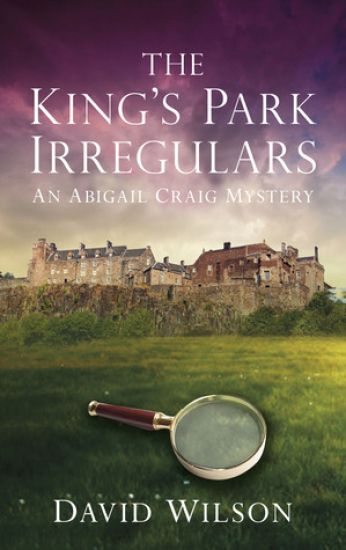
When retired solicitor Alasdair Mills is burgled, the robbers leave behind his money and valuables, only stealing a pair of slippers that once belonged to Sir Walter Scott. Dismayed that the police are not taking the theft of his prized possession seriously, Alasdair turns to his old friend, the cunning Abigail Craig, for help. Donning disguises and hunting for clues, the pair turn detectives to track down the thief themselves. But the investigation takes a turn for the worse when Abigail and Alasdair stumble across something more sinister and realise there is far more to this case than a pair of missing slippers.
This book explores the societal construction of "black-on-black" - referring to the 1980s when violence among African American perpetrators and victims increased. Massive job losses, debased identities, and rampant physical decay made American blacks seem ripe for explosive behavior. Many people blamed black lifestyle, values, and culture. David Wilson shows how America imbued a process of violence with race and accepted it as one of the country's most vexing ills during the Reagan era and afterward. Based on statistics, ethnographies, anecdotal accounts, and national reportage the findings are hard to dispute. Wilson tells of prominent conservative and liberal writers, reporters and politicians who collectively nurtured this issue, then parlayed it into ""truth"" in the public mind. Mixing memoirs, critical geographical studies, and race theory, the book shows how vulnerable groups of society can become pawns in an acute process of racial demonization. And how, in America, this allowed blacks to be marginalized.