Kirjojen hintavertailu. Mukana 11 417 157 kirjaa ja 12 kauppaa.

Kirjahaku

Etsi kirjoja tekijän nimen, kirjan nimen tai ISBN:n perusteella.

93 kirjaa tekijältä David Wood

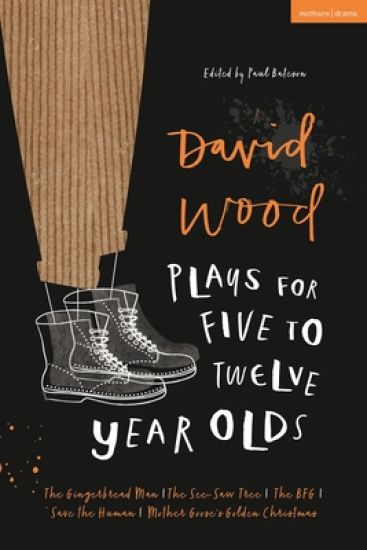
David Wood Plays for 5–12-Year-Olds
Looking for a whizzpoppingly wonderful collection of plays for your whole class? Want some ready-made, delumptious lesson plans to accompany them? Biffsquiggled at the thought of how to stage these pieces?Well, look no further because this is a scrumdiddlyumptious selection of David Wood's plays; paired with all the information and materials you need to use them in class or on stage, edited by Paul Bateson, an experienced primary-level drama teacher. The plays create worlds that trigger children's imaginations as well as entertain them, make them think as well as make them laugh, and open their minds to new ideas and the power of storytelling through theatre. Plays included are: The Gingerbread Man The See-Saw Tree The BFG Save the Human Mother Goose's Golden ChristmasThis book also contains a new foreword by David Wood.

Wood Plays: 2

Wood Plays: 2

David Wood

Methuen Drama
1999
nidottu
If there is anyone who should be the children's playwright laureate it is David Wood' (Evening Standard) The Owl and the Pussycat Went to See - '...the funniest, prettiest and most melodious children's show I have ever seen' (Guardian); The BFG - 'Any child not delighted by the BFG must have a head filled with squashed flies, and deserves to be fed for a year on disgustatious snozzcumbers' (Guardian); The Plotters of Cabbage Patch Corner - 'A milestone in children's entertainment' (Theatre Review); Save the Human - 'A first-rate show, it's colourful, entertaining and thought-provoking' (Sunderland Echo)
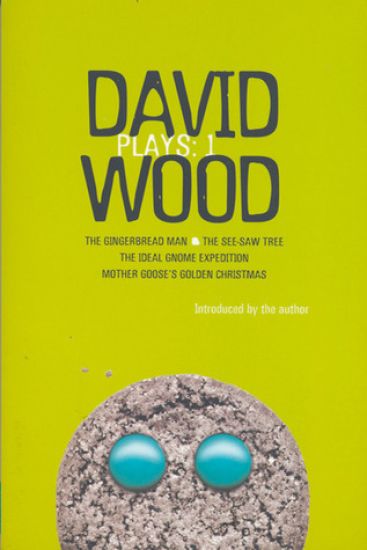
Wood Plays: 1

Wood Plays: 1

David Wood

Methuen Drama
1999
nidottu
"As playwright, composer and director, Mr Wood has given children a self respecting art form" (The Times) The Gingerbread Man - 'The perfect children's play, with lots of superbly silly jokes and foot-tapping songs ...a magnificent epic of comic disarray' (Time Out); The See-Saw Tree - 'We are made to feel at once that the theatre is something immediate and involving' (Times); The Ideal Gnome Expedition - 'David Wood has surely scored again ...yet another gently entertaining excursion into a fantasy world where eminently sensible values prevail' (Daily Telegraph); Mother Goose's Golden Christmas - 'I cannot recommend this pantomime highly enough ...an enchanting blend of mirth and music that captivates the hearts of mums, dads and kids' (Romford Observer)
The Porridge Pincher

The Porridge Pincher

David Wood

Collins
2012
nidottu
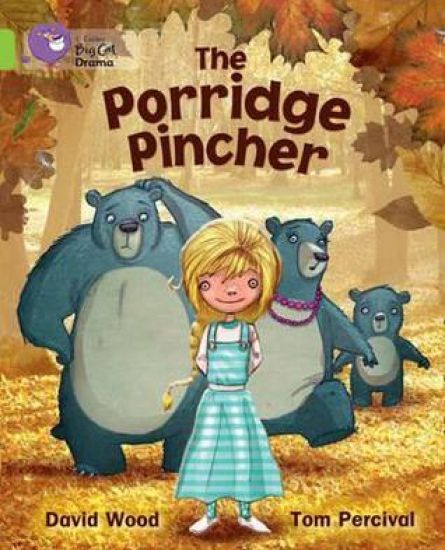
Build your child’s reading confidence at home with books at the right level When the Three Bears leave their house for a walk, a young girl named Goldilocks appears and is drawn in to the house by the smell of hot porridge. But what happens when the bears return and find their porridge is gone? This fun rhyming play by the ‘national children’s dramatist’ David Wood is wonderfully illustrated by Tom Percival. This is a Band 11/Lime book in the Collins Big Cat reading programme which has longer sentence structures and a greater use of literary language. This story is a playscript of a traditional tale, and pages 30 and 31 present a radio interview with the Three Bears which explores their thoughts towards the events of the play. This book supports literacy as well as learning about dialogue and plays. This book has been quizzed for Accelerated Reader. For more guided reading books in this Collins Big Cat band, try Oliver (9780007462094) written by Hilary McKay and illustrated by Rupert Van Wyk.
Budoor, the Porridge Pincher
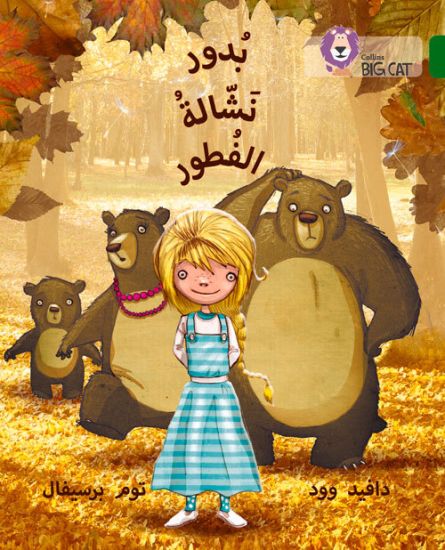
Collins Arabic Big Cat is a guided reading series for ages 3 to 11. The series is structured with reference to the learning progression of Arabic at nursery and primary schools researched especially for Collins. This carefully graded approach allows children to build up their reading knowledge of Arabic step by step. Level 15 books provide more complex plots and longer chapters to help develop reading stamina and to help develop sustained engagement with texts. Level 15 books use a wide range of language structures to reflect progression in the teaching of Arabic grammar. Paragraphs and other text devices become more evident in these longer books. When the Three Bears leave their house for a walk, a young girl named Budoor appears and is drawn in to the house by the smell of hot porridge. But what happens when the bears return and find their porridge is gone? This fun rhyming play by the “national children’s dramatist” David Wood is wonderfully illustrated by Tom Percival and creatively adapted into Arabic rhyme for this edition. Pages 30 and 31 present a radio interview with the Three Bears, exploring their thoughtstowards the events of the play.
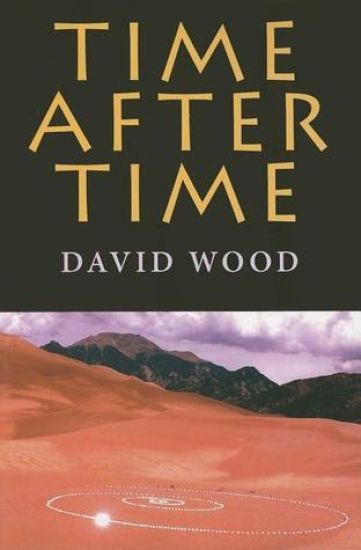
Time After Time

Time After Time

David Wood

Indiana University Press
2007
pokkari
In Time After Time, David Wood accepts, without pessimism, the broad postmodern idea of the end of time. Wood exposes the rich, stratified, and non-linear textures of temporal complexity that characterize our world. Time includes breakdowns, repetitions, memories, and narratives that confuse a clear and open understanding of what it means to occupy time and space. In these thoughtful and powerful essays, Wood engages Kierkegaard, Nietzsche, Heidegger, and Derrida to demonstrate how repetition can preserve sameness and how creativity can interrupt time. Wood's original thinking about time charts a course through the breakdown in our trust in history and progress and poses a daring and productive way of doing phenomenology and deconstruction.
What Have We Done

What Have We Done

David Wood

Little, Brown Company
2016
sidottu
Most Americans are now familiar with Post Traumatic Stress Disorder (PTSD) and its prevalence among troops. In this groundbreaking new book, David Wood examines the far more pervasive yet less understood experience of those we send to war: moral injury, the violation of our fundamental values of right and wrong that so often occurs in the impossible moral dilemmas of modern conflict. Featuring portraits of combat veterans and leading mental health researchers, along with Wood's personal observations of war and the young Americans deployed in Iraq and Afghanistan, WHAT HAVE WE DONE offers an unflinching look at war and those who volunteer for it: the thrill and pride of service and, too often, the scars of moral injury.Impeccably researched and deeply personal, WHAT HAVE WE DONE is a compassionate, finely drawn study of modern war and those caught up in it. It is a call to acknowledge our newest generation of veterans by listening intently to them and absorbing their stories; and, as new wars approach, to ponder the inevitable human costs of putting American "boots on the ground."
Fundamentals of Formulaic Language

Fundamentals of Formulaic Language

David Wood

Bloomsbury Academic
2015
sidottu
This is the first book to address formulaic language directly and provide a foundation of knowledge for graduates and researchers in early stages of study of this important language phenomenon. It is also suitable for students of linguistics, applied linguistics, and language teacher education. The information that currently exists is scattered throughout articles and book chapters across a range of subfields of linguistics and applied linguistics. Over the past few decades there has been a steadily increasing interest and research focus on the phenomenon of formulaic language in the fields of linguistics and applied linguistics. Slowly, a consistent definition has emerged, centring around the idea that formulaic sequences are multi-word units with specific meanings or functions, and some evidence points to their being processed mentally as wholes. Researchers from diverse backgrounds have identified the nature and roles of formulaic sequences in language acquisition and production, in the construction of text and discourse, in spoken and written language, and in language teaching. The increasing volume, diversity, and complexity of the state of knowledge about this emerging area of study is marshalled by this intelligent and well-written book.
Fundamentals of Formulaic Language

Fundamentals of Formulaic Language

David Wood

Bloomsbury Academic
2015
nidottu
This is the first book to address formulaic language directly and provide a foundation of knowledge for graduates and researchers in early stages of study of this important language phenomenon. It is also suitable for students of linguistics, applied linguistics, and language teacher education. The information that currently exists is scattered throughout articles and book chapters across a range of subfields of linguistics and applied linguistics. Over the past few decades there has been a steadily increasing interest and research focus on the phenomenon of formulaic language in the fields of linguistics and applied linguistics. Slowly, a consistent definition has emerged, centring around the idea that formulaic sequences are multi-word units with specific meanings or functions, and some evidence points to their being processed mentally as wholes. Researchers from diverse backgrounds have identified the nature and roles of formulaic sequences in language acquisition and production, in the construction of text and discourse, in spoken and written language, and in language teaching. The increasing volume, diversity, and complexity of the state of knowledge about this emerging area of study is marshalled by this intelligent and well-written book.
Plotters of Cabbage Patch Corner

Plotters of Cabbage Patch Corner

David Wood

Samuel French Ltd
1973
pokkari
The insects live in a busy world in the garden. Their existence, however, is always overshadowed by the humans - the Big Ones. Infuriated by constant "spraying" the unattractive Slug, Greenfly and Maggot call for rebellion, strikes, ruination of the garden. The others, the 'pretty' insects - Red Admiral, Ladybird and Bumble Bee - oppose this and war is declared. Glow Worm and Ant reluctantly become involved. Fortune swings one way and the other in a series of bitter campaigns. The garden goes to ruin and the Big Ones decide to build a garage on it. This brings the insects to their senses. They combine to restore the garden to its original beauty and thus preserve their home.
The Papertown Paperchase

The Papertown Paperchase

David Wood

Samuel French Ltd
1976
pokkari
The Salamander, a sort of dragon, is in trouble with the Fire Flies, because he is unable to create a fire by breathing on a pile of sticks. To redeem himself he is sent on a mission to burn down Papertown. The paper inhabitants, including the Papertown Crier (a newspaper), the Postman (an envelope), Professor Paperback (a book who runs the bookshop), Mr. Quid (a pound note who is the Bank Manager) and Lady Carrier Bag - gather their resources to meet the threat. Spike the Pen (the litter collector), Fireman Silver, and even the cheeky Litterbug become involved, and the two petty criminals, Blotch and Carbon, are released to join the forces.Flexible cast
Flibberty and the Penguin

Flibberty and the Penguin

David Wood

Samuel French Ltd
1974
pokkari
Young Penguin has come from Iceland to find his Mother and Father. This must be done before the spring weather becomes too warm. He falls in with Flibberty, a genial goblin, who helps him in his search. They incur the wrath of Krafty Kingfisher, who accuses the Penguin of stealing a fish from him. On their journey the two meet, among others, two Silly Cuckoos busy practising their spring song, a helpful Bus Driver/Conductor, and the famous Mr. Maestro who has come to town to conduct a concert (he can only understand singing, not talking).4 women, 11 men
Hijack Over Hygenia

Hijack Over Hygenia

David Wood

Samuel French Ltd
1974
pokkari
Hijack Over Hygenia is set in an aeroplane interior, on a roof, in a throne room and in a bedroom. Hygenia is the cleanest kingdom in the world. Disease is unknown. But one day a villainous Measle enters illegally and starts bringing the inhabitants out in spots. It is all the plot of Dr. Spicknspan who, owing to the pervading healthiness, is always out of work. Things look serious, but the plot is foiled by the gallantry of the royal staff: peace, health and cleanliness are restored.4 women, 8 men
The Gingerbread Man

The Gingerbread Man

David Wood

Samuel French Ltd
1977
pokkari
The play takes place on an antique kitchen dresser. The Gingerbread Man, newly baked by the Big Ones, meets Salt, Pepper and Herr Von Cuckoo, who lives in the cuckoo-clock. He has a sore throat which is ruining his "cuckoos", thus threatening to land him in the dreaded dustbin. The Gingerbread Man's efforts to help Cuckoo's sore throat are hampered by the villainous scavenger Sleek the Mouse and by The Old Bag - an old tea-bag who lives in the tea pot on the top shelf.
There Was an Old Woman...

There Was an Old Woman...

David Wood

Samuel French Ltd
1980
pokkari
Though Mother Shipton's shoe is crowded to its laces, she lives there happily with her vast brood of children, among them Jack and Jill. Unfortunately, however, the shoe is actually the property of a Giant, who lost it and has been looking for it - with one bare foot - ever since. One day The Great Boon arrives, a genial and charming, but not terribly efficient, magician, looking for a Circus in which he is due to appear. His attempts to save Mother Shipton and family from the Giant involve the loss of her shoe because he is unable to bring the Giant down to human size and harmlessness without also reducing the shoe. However, after a lot of adventures and muddled magic all ends happily.-Large flexible cast
The Ideal Gnome Expedition

The Ideal Gnome Expedition

David Wood

Samuel French Ltd
1982
pokkari
After rescuing a toy duck from the dustbin in their backyard, Mr. Fisher and Mr. Wheeler, two temporarily nomadic garden gnomes, decide to venture over the garden wall into the big wide world. Their object is to find a holiday island, just like the 'Big Ones', but being unused to the hazards of the concrete jungle of the town, they almost don't make it. Until they meet Chips, that is. Chips is a very cool cat, and with his help the gnomes and Baby Duck survive several urban adventures before reaching their island in the sun. Although it is not quite as expected (a traffic island!), they all agree that it is the best holiday they have ever had.Flexible cast
Selfish Shellfish

Selfish Shellfish

David Wood

Samuel French Ltd
1986
pokkari
The ecological effects of pollution are seen from the perspective of shellfish in this delightfully told saga. Urchin, Mussel, Starfish, Seagull and the shellfish H.C. fight to survive an oil spill resulting from the collision of ships at sea. The audience is encourage to participate in battles with Sludge and The Great Slick.-7 women or men
Jack and the Giant

Jack and the Giant

David Wood

Samuel French Ltd
1987
pokkari
The action starts in Mrs. Macdonald's farmyard. Jack, her son, is preoccupied with his dream of building a rocket. At first this leads him astray, but eventually proves he's really a winner. His sister is the only practical member of the family, a hard-working tomboy. The family is threatened with eviction by Mr. Meany, an unfair landlord. Jack is sent to sell Marigold, the cow. Meanwhile, the arrival of a spaceship containing Buzz and Beep, two spacemen on a mission to find a cow, leads to unusual complications.Large flexible cast