Kirjojen hintavertailu. Mukana 12 211 204 kirjaa ja 12 kauppaa.

Kirjahaku

Etsi kirjoja tekijän nimen, kirjan nimen tai ISBN:n perusteella.

8 kirjaa tekijältä David Wootton

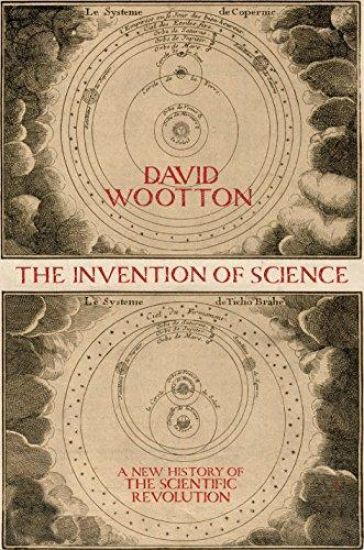
The Invention of Science: A New History of the Scientific Revolution
"Captures the excitement of the scientific revolution and makes a point of celebrating the advances it ushered in." --Financial TimesA companion to such acclaimed works as The Age of Wonder, A Clockwork Universe, and Darwin's Ghosts--a groundbreaking examination of the greatest event in history, the Scientific Revolution, and how it came to change the way we understand ourselves and our world.We live in a world transformed by scientific discovery. Yet today, science and its practitioners have come under political attack. In this fascinating history spanning continents and centuries, historian David Wootton offers a lively defense of science, revealing why the Scientific Revolution was truly the greatest event in our history.The Invention of Science goes back five hundred years in time to chronicle this crucial transformation, exploring the factors that led to its birth and the people who made it happen. Wootton argues that the Scientific Revolution was actually five separate yet concurrent events that developed independently, but came to intersect and create a new worldview. Here are the brilliant iconoclasts--Galileo, Copernicus, Brahe, Newton, and many more curious minds from across Europe--whose studies of the natural world challenged centuries of religious orthodoxy and ingrained superstition.From gunpowder technology, the discovery of the new world, movable type printing, perspective painting, and the telescope to the practice of conducting experiments, the laws of nature, and the concept of the fact, Wotton shows how these discoveries codified into a social construct and a system of knowledge. Ultimately, he makes clear the link between scientific discovery and the rise of industrialization--and the birth of the modern world we know.
Invention of Science

Invention of Science

David Wootton

Penguin Books Ltd.
2016
pokkari
We live in a world made by science. How and when did this happen? This book tells the story of the extraordinary intellectual and cultural revolution that gave birth to modern science, and mounts a major challenge to the prevailing orthodoxy of its history. Before 1492 it was assumed that all significant knowledge was already available; there was no concept of progress; people looked for understanding to the past not the future. This book argues that the discovery of America demonstrated that new knowledge was possible: indeed it introduced the very concept of 'discovery', and opened the way to the invention of science. The first crucial discovery was Tycho Brahe's nova of 1572: proof that there could be change in the heavens. The telescope (1610) rendered the old astronomy obsolete. Torricelli's experiment with the vacuum (1643) led directly to the triumph of the experimental method in the Royal Society of Boyle and Newton. By 1750 Newtonianism was being celebrated throughout Europe. The new science did not consist simply of new discoveries, or new methods. It relied on a new understanding of what knowledge might be, and with this came a new language: discovery, progress, facts, experiments, hypotheses, theories, laws of nature - almost all these terms existed before 1492, but their meanings were radically transformed so they became tools with which to think scientifically. We all now speak this language of science, which was invented during the Scientific Revolution. The new culture had its martyrs (Bruno, Galileo), its heroes (Kepler, Boyle), its propagandists (Voltaire, Diderot), and its patient labourers (Gilbert, Hooke). It led to a new rationalism, killing off alchemy, astrology, and belief in witchcraft. It led to the invention of the steam engine and to the first Industrial Revolution. David Wootton's landmark book changes our understanding of how this great transformation came about, and of what science is.
Bad Medicine

Bad Medicine

David Wootton

Oxford University Press
2007
nidottu
Just how much good has medicine done over the years? And how much damage does it continue to do? The history of medicine begins with Hippocrates in the fifth century BC. Yet until the invention of antibiotics in the 1930s doctors, in general, did their patients more harm than good. In this fascinating new look at the history of medicine, David Wootton argues that for more than 2300 years doctors have relied on their patients' misplaced faith in their ability to cure. Over and over again major discoveries which could save lives were met with professional resistance. And this is not just a phenomenon of the distant past. The first patient effectively treated with penicillin was in the 1880s; the second not until the 1940s. There was overwhelming evidence that smoking caused lung cancer in the 1950s; but it took thirty years for doctors to accept the claim that smoking was addictive. As Wootton graphically illustrates, throughout history and right up to the present, bad medical practice has often been deeply entrenched and stubbornly resistant to evidence. This is a bold and challenging book - and the first general history of medicine to acknowledge the frequency with which doctors do harm.
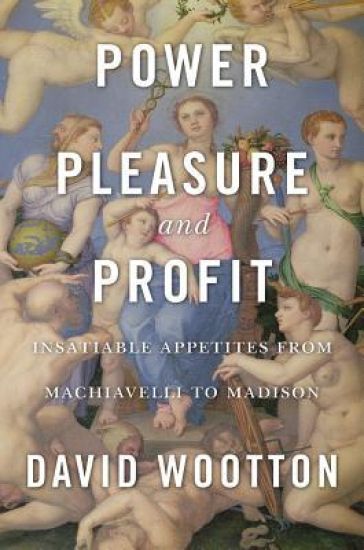
Power, Pleasure, and Profit

Power, Pleasure, and Profit

David Wootton

The Belknap Press
2018
sidottu
A provocative history of the changing values that have given rise to our present discontents.We pursue power, pleasure, and profit. We want as much as we can get, and we deploy instrumental reasoning—cost-benefit analysis—to get it. We judge ourselves and others by how well we succeed. It is a way of life and thought that seems natural, inevitable, and inescapable. As David Wootton shows, it is anything but. In Power, Pleasure, and Profit, he traces an intellectual and cultural revolution that replaced the older systems of Aristotelian ethics and Christian morality with the iron cage of instrumental reasoning that now gives shape and purpose to our lives.Wootton guides us through four centuries of Western thought—from Machiavelli to Madison—to show how new ideas about politics, ethics, and economics stepped into a gap opened up by religious conflict and the Scientific Revolution. As ideas about godliness and Aristotelian virtue faded, theories about the rational pursuit of power, pleasure, and profit moved to the fore in the work of writers both obscure and as famous as Hobbes, Locke, and Adam Smith. The new instrumental reasoning cut through old codes of status and rank, enabling the emergence of movements for liberty and equality. But it also helped to create a world in which virtue, honor, shame, and guilt count for almost nothing, and what matters is success.Is our world better for the rise of instrumental reasoning? To answer that question, Wootton writes, we must first recognize that we live in its grip.
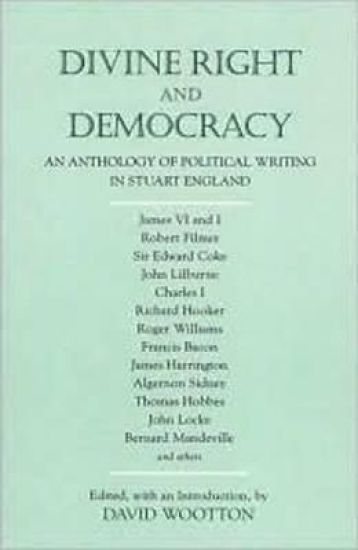
Divine Right and Democracy

Divine Right and Democracy

David Wootton

Hackett Publishing Co, Inc
2003
pokkari
The seventeenth century was Englands century of revolution, an era in which the nation witnessed protracted civil wars, the execution of a king, and the declaration of a short-lived republic. During this period of revolutionary crisis, political writers of all persuasions hoped to shape the outcome of events by the force of their arguments. To read the major political theorists of Stuart England is to be plunged into a world in which many of our modern conceptions of political rights and social change are first formulated. David Wootton's masterly compilation of speeches, essays, and fiercely polemical pamphlets--organized into chapters focusing on the main debates of the century--represents the first attempt to present in one volume a broad collection of Stuart political thought. In bringing together abstract theorizing and impassioned calls to arms, anonymous tract writers and King James I, Wootton has produced a much-needed collection; in combination with the editors thoughtful running commentary and invaluable Introduction, its texts bring to life a crucial period in the formation of our modern liberal and conservative theories.
Divine Right and Democracy

Divine Right and Democracy

David Wootton

Hackett Publishing Co, Inc
2003
sidottu
The seventeenth century was England's century of revolution, an era in which the nation witnessed protracted civil wars, the execution of a king, and the declaration of a short-lived republic. During this period of revolutionary crisis, political writers of all persuasions hoped to shape the outcome of events by the force of their arguments. To read the major political theorists of Stuart England is to be plunged into a world in which many of our modern conceptions of political rights and social change are first formulated. David Wootton's masterly compilation of speeches, essays, and fiercely polemical pamphlets--organized into chapters focusing on the main debates of the century--represents the first attempt to present in one volume a broad collection of Stuart political thought. In bringing together abstract theorizing and impassioned calls to arms, anonymous tract writers and King James I, Wootton has produced a much-needed collection; in combination with the editor's thoughtful running commentary and invaluable Introduction, its texts bring to life a crucial period in the formation of our modern liberal and conservative theories.
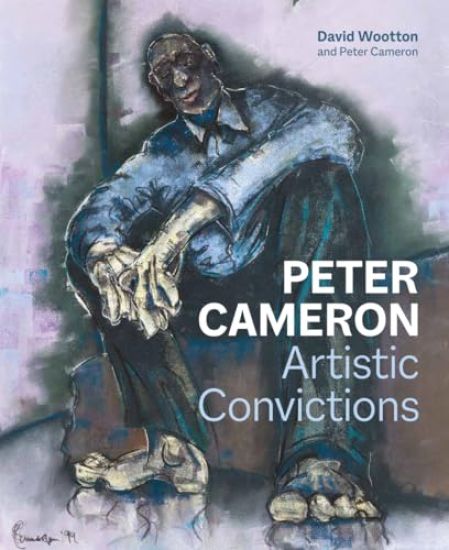
Peter Cameron

Peter Cameron

David Wootton

SANSOM CO
2025
sidottu
Peter Cameron (b. 1947) took up art while serving a prison sentence, and later described his incarceration as a career move. On his release in 1992, he received the support of the Koestler Trust and was able to evolve from post-prison survivor to celebrated artist with a substantial body of work. In 2003, he was diagnosed with Parkinson’s, which took his art in a new direction, emphasising the movement that increasingly eluded him. Peter’s is an inspiring story of survival and real-life grit, richly illustrated and narrated, and embellished with Peter’s own lively anecdotes.
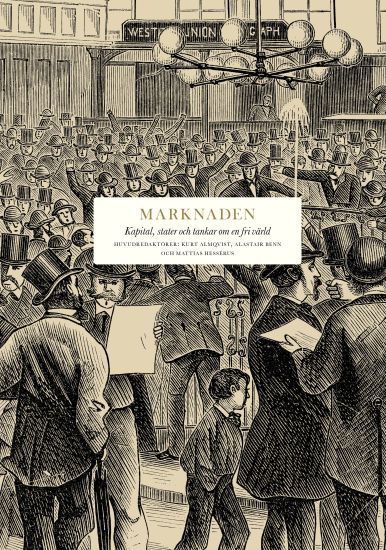
Marknaden : Kapital, stater och tankar om en fri värld

Marknaden : Kapital, stater och tankar om en fri värld

David Abulafia; Ali Ansari; Richard Bratby; Mary Bridges; Caroline Burt; David Butterfield; Edward Chancellor; Marie Kawthar Daouda; Eloise Davies; Ulrike Franke; Francis J. Gavin; Magnus Henrekson; William Inboden; Shashank Joshi; Knut N. Kjaer; Kwasi Kwarteng; Charlie Laderman; Ian Leslie; Nicklas Berild Lundblad; Iain Martin; Jade McGlynn; Mario Pisani; Alina Polyakova; Sergey Radchenko; Mick Ryan; Paul Tucker; Rikard Westerberg; Adrian Wooldridge; David Wootton; Linda Yueh

Bokförlaget Stolpe
2026
sidottu
Från det romerska torget till digitala valutor – hur har marknaden utvecklats under historiens gång och hur kan den komma att se ut i framtiden? Denna antologi gör en djupdykning i marknadsutvecklingen och tittar närmare på marknaders avgörande roll i att utforma samtiden men tar också upp den brännande frågan om hur vi ska navigera mot en hållbar framtid. I tankeväckande essäer skrivna av internationella forskare, politiker och andra sakkunniga utforskas marknadens dynamik. Med utgångspunkt i de antika torgen och i det medeltida Europas marknader undersöker författarna hur tekniska framsteg, konsumentbeteende och geopolitisk strategi – till exempel den politik som utövades under Reagan-eran – har format nutida marknader. Slutligen tar boken upp de utmaningar för stabiliteten på marknaden som utgörs av auktoritära stater och AI. Boken finns även i engelsk utgåva, The Market.