Kirjojen hintavertailu. Mukana 11 244 527 kirjaa ja 12 kauppaa.

Kirjahaku

Etsi kirjoja tekijän nimen, kirjan nimen tai ISBN:n perusteella.

78 kirjaa tekijältä David Wright

English Romantic Verse

English Romantic Verse

David Wright

Penguin Classics
1973
nidottu
English Romantic poetry from its beginnings and its flowering to the first signs of its decadence. Nearly all the famous pieces de resistance will be found here - 'Intimations of Immortality', 'The Ancient Mariner', 'The Tyger', excerpts from 'Don Juan' - as well as some less familiar poems. As far as possible the poets are arranged in chronological order, and their poems in order of composition, beginning with eighteenth-century precursors such as Gray, Cowper, Burns and Chatterton. Naturally most space has been given over to the major Romantics - Blake, Wordsworth, Coleridge, Byron, Shelley, Clare and Keats - although their successors, poets such as Beddoes and Poe, are included too, as well as early poems by Tennyson and Browning. In an excellent introduction David Wright discusses the Romantics as a historical phenomenon, and points out their central ideals and themes.
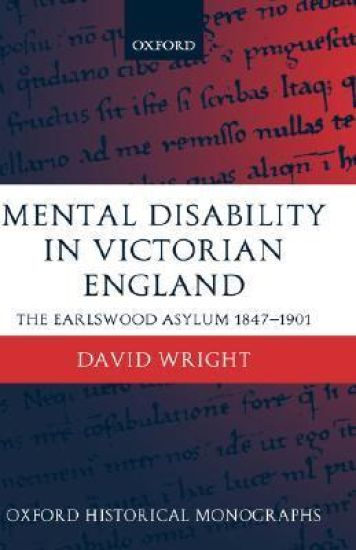
Mental Disability in Victorian England

Mental Disability in Victorian England

David Wright

Clarendon Press
2001
sidottu
This book contributes to the growing scholarly interest in the history of disability by investigating the emergence of 'idiot' asylums in Victorian England. Using the National Asylum for Idiots, Earlswood, as a case-study, it investigates the social history of institutionalization, privileging the relationship between the medical institution and the society whence its patients came. By concentrating on the importance of patient-centred admission documents, and utilizing the benefits of nominal record linkage to other, non-medical sources, David Wright extends research on the confinement of the 'insane' to the networks of care and control that operated outside the walls of the asylum. He contends that institutional confinement of mentally disabled and mentally ill individuals in the nineteenth century cannot be understood independently of a detailed analysis of familial and community patterns of care. In this book, the family plays a significant role in the history of the asylum, initiating the identification of mental disability, participating in the certification process, mediating medical treatment, and facilitating discharge back into the community. By exploring the patterns of confinement to the Earlswood Asylum, Professor Wright reveals the diversity of the 'insane' population in Victorian England and the complexities of institutional committal in the nineteenth century. Moreover, by investigating the evolution of the Earlswood Asylum, it examines the history of the institution where John Langdon Down made his now famous identification of 'Mongolism', later renamed Down's Syndrome. He thus places the formulation of this archetype of mental disability within its historical, cultural, and scientific contexts.
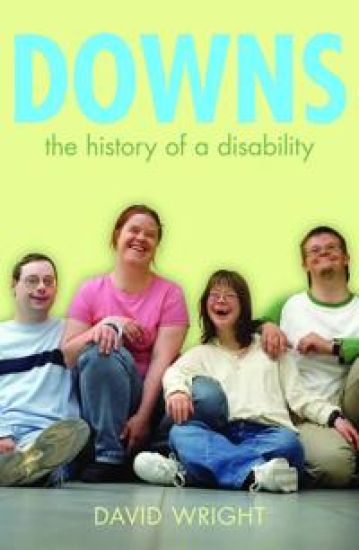
Downs

Downs

David Wright

Oxford University Press
2011
sidottu
For 150 years, Down's Syndrome has constituted the archetypal mental disability, easily recognisable by distinct facial anomalies and physical stigmata. In a narrow medical sense, Down's syndrome is a common disorder caused by the presence of all or part of an extra 21st chromosome. It is named after John Langdon Down, the British asylum medical superintendent who described the syndrome as Mongolism in a series of lectures in 1866. In 1959, the disorder was identified as a chromosome 21 trisomy by the French paediatrician and geneticist Jérôme Lejeune and has since been known as Down's Syndrome (in the English-speaking world) or Trisomy 21 (in many European countries). But children and adults born with this chromosomal abnormality have an important collective history beyond their evident importance to the history of medical science. David Wright, a Professor in the History of Medicine at McMaster University, looks at the care and treatment of Down's sufferers - described for much of history as 'idiots', - from Medieval Europe to the present day. The discovery of the genetic basis of the condition and the profound changes in attitudes, care, and early identification of Down's in the genetic era, reflects the fascinating medical and social history of the disorder.
Corpus Approaches to Discourse in Forensic and Legal Contexts
This book is the first of its kind to bridge the gap between corpus linguistics and forensic linguistics, illustrating the value of applying corpus linguistic data, tools, and methods in the analysis of language in the law, evidence, crime, and justice.The volume begins by taking stock of the use of corpus linguistics in the field of forensic and legal linguistics over its roughly thirty-year history as a foundation for critically reflecting on the current state-of play within the discipline. Wright uses this discussion as a jumping-off point from which to demonstrate the opportunities and challenges of using corpora and corpus methods to analyse language in legal and forensic contexts and offers possible solutions to collecting and analysing types of data that are typically not in the public domain. The five analysis chapters that follow apply corpus method to both established and emerging areas of forensic and legal linguistics, summarized in a concluding chapter which also looks ahead to future directions for the interface of the two fields.This book will be key reading for graduate students and researchers in forensic linguistics and corpus linguistics methods as well as scholars working across disciplines interested in the intersection between language and the law.
Ironies in Ulysses

Ironies in Ulysses

David Wright

Rowman Littlefield
1992
sidottu
This book brings a new perspective to the study of Joyce's great novel. The author argues the case for employing the concept of irony as an explicatory tool in the study of Ulyssesóand indeed of the whole Joycean canon. Moreover he uses modern critical theory to enlarge our understanding of irony itself and to suggest how such theory has an appropriate object of attention in Joyce. Wright defines irony as "the use of a 'false' textual surface to direct a reader's attention towards initially concealed premises or implications". Thus an author lays a partly false trail, but one which usually leads towards a more authenthic or appropriate understanding of the subject under discussion. Joyce's work is full of this kind of semantic counterpoint. Indeed, it is essential to his whole comic method. Both Portrait of the Artist As a Young Man and Ulysses are full of ironic contrasts between the desire for order, certainty and stability on the one hand and random meetings and perverse associations. The author argues that Joyce's other favorite techniques of ambiguity and punning are so closely related to that of irony that all three may legitimately be considered as a unity, specially formed and deployed by Joyce in his mature work. ; Contents: Preface; List of Abbreviations; Introduction; Local Ironies; Single-Episode Ironies; Inter-Episode Ironies; Ironies from Early Joyce; Ironies from Homer to Shakespeare; Bibliography; Index.
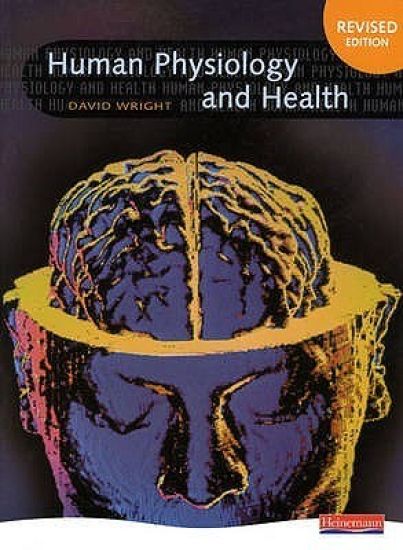
Human Physiology and Health

Human Physiology and Health

David Wright

pearson education limited
2007
nidottu
Human Physiology and Health provides complete coverage of the content for the GCSE specifications in Human Physiology and Health, and Human biology. It is also a valuable resource for students studying any of the BTEC or OCR Nationals in Health and Social Care, or Science. Advanced level Biology, Human Biology, and Health and Social Care students will also find it useful for background information to many of the topics. Clear 'bite-sized' presentation of topics in double page spreads with clear summaries of what students should know at the end of each. Plenty of clear illustrations in full colour, which explain the biological concepts visually. Discussion of real life applications and some of the ethical and social issues with which science must deal. Examination type questions at the end of each chapter, to provide practice and to check up on learning.
Breaking Bread

Breaking Bread

David Wright

Quarto Publishing Plc
2025
sidottu
‘An amazing book.’ Dan Lepard‘The rich and fascinating story of bread.’ Lily Vanilli‘A brilliant, timely and important book full of compassion.’ Olia Hercules‘A fascinating exploration of our universal love of bread. David traces the past, present and future of bread through his personal lens as a third generation baker.’ Edd KimberIn Breaking Bread, third generation baker, food writer and presenter David Wright examines the universal questions about bread and baking. About the people who make and shape the bread we buy and the difficulties that social and cultural change, food fads and health directives have had, and are having, on the baking industry. After his family bakery sadly closed its doors after seventy-five years, Wright asks if the the closure of the bakery underlines the very idea that bread is a dying foodstuff. Is bread good or bad? And what does the future hold for bread?Bread is an essential part of our story, our health, our very being. Every civilisation has a form of bread, and how we create, make and bake it, how we sell it and buy it, our food security, our access to it, affects everything: our physical and mental well-being, the ingredients, the seeds, the very earth we grow our grains in, the water we use and how we treat and sustain these natural resources, impact on the very health and future of our planet.Chapters include:1 Why Bread? – Creating, making, baking2: The Wheel of Life – A loaf’s cycle3: Frankenloaf – Science and the perfect loaf4: Sicker by the Slice – A marriage not made in heaven5: Big Bread – Industrial vs artisan bakeries6: The Breadline – The economics of crust7: Flour Power – The politics of bread8: Bloody Bread – The costs of conquest9: Our Daily Bread – What the gods want10: Breaking bread - A once ropey baker looks to the futureBreaking Bread contains interviews and expert contributions from Olia Hercules - Food Writer, Dan Lepard - Baker and Writer, Felicity Spector - Writer and Baker, Kateryna Kalyuzhna – Baker, Brad Leone - Food Personality, Chris Cowie – Philosopher, Zara Mohammed - Religious Leader, William Kendall - Food Producer, Andy Cato/George Lamb – Wildfarmed, Daisy Terry - Dusty Knuckle, Ollie Hornsey-Pennell - Hylsten Bakery, Tim Williams - Regenerative Farmer, Matt Burgess – Chef, Martha Delacey - Teacher and Writer, Karl De Smedt - Sourdough Librarian, Vanessa Kimbell – Baker, Chris Young - Real Bread Campaign, Ben MacKinnon - Baker E5, Ben Glazer - Coombeshead Bakery, Andrew Gilespy - Fresh Flour, OJ Borg - Radio 2 DJ and Presenter, Christopher Tan - Baker and Writer, Martin Bricknell - War Studies Professor KCL, Wing Mon Cheung - Cereal Bakery
Breaking Bread

Breaking Bread

David Wright

Quarto Publishing Plc
2026
pokkari
‘An amazing book.’ Dan Lepard ‘The rich and fascinating story of bread.’ Lily Vanilli ‘A brilliant, timely and important book full of compassion.’ Olia Hercules ‘A fascinating exploration of our universal love of bread. David traces the past, present and future of bread through his personal lens as a third generation baker.’ Edd Kimber In Breaking Bread, third generation baker, food writer and presenter David Wright examines the universal questions about bread and baking. About the people who make and shape the bread we buy and the difficulties that social and cultural change, food fads and health directives have had, and are having, on the baking industry. After his family bakery sadly closed its doors after seventy-five years, Wright asks if the the closure of the bakery underlines the very idea that bread is a dying foodstuff. Is bread good or bad? And what does the future hold for bread? Bread is an essential part of our story, our health, our very being. Every civilisation has a form of bread, and how we create, make and bake it, how we sell it and buy it, our food security, our access to it, affects everything: our physical and mental well-being, the ingredients, the seeds, the very earth we grow our grains in, the water we use and how we treat and sustain these natural resources, impact on the very health and future of our planet. Chapters include: 1 Why Bread? – Creating, making, baking 2: The Wheel of Life – A loaf’s cycle 3: Frankenloaf – Science and the perfect loaf 4: Sicker by the Slice – A marriage not made in heaven 5: Big Bread – Industrial vs artisan bakeries 6: The Breadline – The economics of crust 7: Flour Power – The politics of bread 8: Bloody Bread – The costs of conquest 9: Our Daily Bread – What the gods want 10: Breaking bread - A once ropey baker looks to the future Breaking Bread contains interviews and expert contributions from Olia Hercules - Food Writer, Dan Lepard - Baker and Writer, Felicity Spector - Writer and Baker, Kateryna Kalyuzhna – Baker, Brad Leone - Food Personality, Chris Cowie – Philosopher, Zara Mohammed - Religious Leader, William Kendall - Food Producer, Andy Cato/George Lamb – Wildfarmed, Daisy Terry - Dusty Knuckle, Ollie Hornsey-Pennell - Hylsten Bakery, Tim Williams - Regenerative Farmer, Matt Burgess – Chef, Martha Delacey - Teacher and Writer, Karl De Smedt - Sourdough Librarian, Vanessa Kimbell – Baker, Chris Young - Real Bread Campaign, Ben MacKinnon - Baker E5, Ben Glazer - Coombeshead Bakery, Andrew Gilespy - Fresh Flour, OJ Borg - Radio 2 DJ and Presenter, Christopher Tan - Baker and Writer, Martin Bricknell - War Studies Professor KCL, Wing Mon Cheung - Cereal Bakery
The Passive Solar Primer

The Passive Solar Primer

David Wright

Schiffer Publishing Ltd
2008
nidottu
Architect David Wright helped pioneer the concept of passive solar architecture, and his thoughts and experiments have helped shape the evolution of solar design throughout the world. His years of exploration are distilled in this comprehensive book, which provides simple graphics and language to illuminate concepts including greenhouse effect, heat storage, surface-to-volume ratio, ventilation, and cooling.. Tips, rules-of-thumb, regional characteristics, and many other considerations are presented to help readers, from initial site selection to visionary design. Written for architects, designers, and others who seek to tap the free resources offered by earth and sun, this invaluable tool will help reduce dependence on outside energy sources. You will be inspired.
Broadband

Broadband

David Wright

Artech House
1993
sidottu
Broadband technology is ushering the telecom industry through a unique period of change with profound business implications for suppliers and users. This single source describes the four major broadband technologies that are shaping telecommunications networks: frame relay; optical fiber (including SONET); distributed queue dual bus (DQDB); and asynchronous transfer mode (ATM).
Solarnomics

Solarnomics

David Wright

TAYLOR FRANCIS LTD
2022
nidottu
Solar power has come of age. Not only has it become one of the key alternatives to fossil fuels, it can now be deployed in a way that makes a viable business with a financial profit. This book shows industry professionals and students how to do just that.Solarnomics describes the economics of building and operating a solar power plant today and provides a window into a future in which several technologies collaborate, and in which all participants in the electricity grid become smarter at scheduling both the supply and demand for electric power to give humanity a future that is sustainable, both environmentally and economically. The book shows how to estimate costs and revenues, how to tweak the design of a project to improve profitability, how to calculate return on investment, how to assess and deal with risk, how to raise capital, how to combine solar with batteries to make a hybrid microgrid, and how to be prepared for future developments in the evolving smart electricity grid. Solarnomics will enable professionals in the solar industry to assess the potential profitability of a proposed solar project, and it will enable students to add an extra dimension to their understanding of sustainability.
Solarnomics

Solarnomics

David Wright

TAYLOR FRANCIS LTD
2022
sidottu
Solar power has come of age. Not only has it become one of the key alternatives to fossil fuels, it can now be deployed in a way that makes a viable business with a financial profit. This book shows industry professionals and students how to do just that.Solarnomics describes the economics of building and operating a solar power plant today and provides a window into a future in which several technologies collaborate, and in which all participants in the electricity grid become smarter at scheduling both the supply and demand for electric power to give humanity a future that is sustainable, both environmentally and economically. The book shows how to estimate costs and revenues, how to tweak the design of a project to improve profitability, how to calculate return on investment, how to assess and deal with risk, how to raise capital, how to combine solar with batteries to make a hybrid microgrid, and how to be prepared for future developments in the evolving smart electricity grid. Solarnomics will enable professionals in the solar industry to assess the potential profitability of a proposed solar project, and it will enable students to add an extra dimension to their understanding of sustainability.
Into The Darkness: Hook Your Readers

Into The Darkness: Hook Your Readers

David Wright

Independently Published
2019
nidottu
Create an army of rabid fans by telling richer, deeper stories that readers love. David Wright has garnered thousands of avid fans by writing dark stories that pull his readers in and keep them hooked to the last page. He masterfully balances darkness and light to create gripping stories his readers can't put down, with just enough hope that they are left feeling satisfied and dying to read the next book.In Into The Darkness, Dave takes you into his world and shows you how he approaches adding darkness to his writing, while still always being able to return to the light. You will learn how to...Increase the tension in your stories to keep your readers hooked, give them a powerful emotional experience, and leave them wanting to read MORE of your booksAdd depth and believability to your characters by layering in personal darknessMine your past and your own inner darkness to tell truer stories, without getting lost in your own painAdd realistic darkness through researchCreate more believable (and scarier) villains by balancing their darkness with lightInsert humor and hope to keep your audience going when things get too darkKeep yourself feeling positive and hopefully, even when exploring dark themesIf you're ready to tell richer, fuller stories and create your own army of rabid fans... it's time to go Into the Darkness.
Using Commercial Contracts

Using Commercial Contracts

David Wright

Wiley-Blackwell
2016
nidottu
Using Commercial Contracts: a practical guide for engineers and project managers examines how the law of contract operates, and the way in which the legal system interprets what a contract actually means. By giving clear, readable and expert advice on key legal issues, this guide provides the manager and engineer with an easily understandable and practical approach to the laws of contract.
Understanding Cultural Taste

Understanding Cultural Taste

David Wright

Palgrave Macmillan
2015
sidottu
This book will help students and researchers to clarify a complex concept that is often over simplified in media and cultural studies, the sociology of culture and cultural policy. It updates established theoretical and methodological debates in the study of taste and provides an original perspective on a distinct and rich research field.