Kirjojen hintavertailu. Mukana 11 699 587 kirjaa ja 12 kauppaa.

Kirjahaku

Etsi kirjoja tekijän nimen, kirjan nimen tai ISBN:n perusteella.

3 kirjaa tekijältä David van der Linden

Remembering the Wars of Religion

Remembering the Wars of Religion

David van der Linden

Oxford University Press
2026
sidottu
In the aftermath of civil war, often the most daunting task is to reconcile former opponents who continue to demand justice--or even vengeance--for wartime suffering. Remembering the Wars of Religion offers a historical perspective on the painful legacy of civil war by focusing on memories of violence and victimhood after the French Wars of Religion. Officially, these wars ended in 1598, when the Edict of Nantes proclaimed peaceful coexistence between Catholics and Protestants, and ordered them to bury the memory of the troubles that had begun in 1562. Below the surface, however, the conflict would simmer for generations, as neither side was able to forgive and forget the violence they had suffered. Moving away from the corridors of state power in Paris to the cities of Lyon, Montpellier, and La Rochelle, Remembering the Wars of Religion examines the local memory wars between Catholics and Protestants as they resurfaced throughout the seventeenth century. David van der Linden shows that the Wars of Religion left behind a kingdom divided by memory: Catholics and Protestants developed sectarian narratives of the troubles, victimizing their own community while assigning blame to the other. The massacres, looting, material losses, and forced displacement that had punctuated the wars proved impossible to forget, let alone forgive, as vindictive memories were continuously reconstructed by later generations. This constant weaponizing of the past undermined the state-led process of peacebuilding and the practice of toleration in France's biconfessional communities. Ultimately, these memories of victimhood fed a new cycle of violence during the reign of Louis XIV, who in 1685 revoked the Edict of Nantes and forced his Protestant subjects to convert to Catholicism. Remembering the Wars of Religion thus offers a fresh perspective on the challenge of religious coexistence and reconciliation, both past and present. It shows that besides state policies of intolerance and ideological differences rooted in the Reformation, it was the manipulation of wartime memories by subsequent generations that fuelled long-term animosity. This is an open access title available under the terms of a CC BY-NC-ND 4.0 International licence. It is free to read on the Oxford Academic platform and offered as a free PDF download from OUP and selected open access locations.
Experiencing Exile

Experiencing Exile

David van der Linden

TAYLOR FRANCIS LTD
2024
nidottu
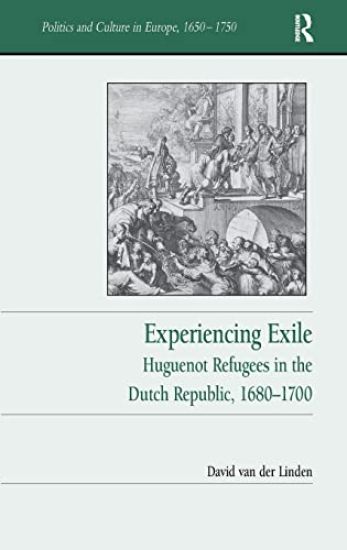
The persecution of the Huguenots in France, followed by the revocation of the Edict of Nantes in 1685, unleashed one of the largest migration waves of early modern Europe. Focusing on the fate of French Protestants who fled to the Dutch Republic, Experiencing Exile examines how Huguenot refugees dealt with the complex realities of living as strangers abroad, and how they seized upon religion and stories of their own past to comfort them in exile. The book widens the scope of scholarship on the Huguenot Refuge, by looking beyond the beliefs and fortunes of high-profile refugees, to explore the lives of ’ordinary’ exiles. Studies on Huguenots in the Dutch Republic in particular focus almost exclusively on the intellectual achievements of a small group of figures, including Pierre Bayle and the Basnage brothers, whereas the fate of the many refugees who joined them in exile remains unknown. This book puts the masses of Huguenot refugees back into the history of the Refuge, examining how they experienced leaving France and building a new life in the Dutch Republic. Divided into three sections - ’The Economy of Exile’, ’Faith in Exile’ and ’Memories in Exile’ - the book argues that the Huguenot exile experience was far more complicated than has often been assumed. Scholars have treated Huguenot refugees either as religious heroes, as successful migrants, or as modern philosophers, while ignoring the many challenges that exile presented. As this book demonstrates, Huguenots in the Dutch Republic discovered that being a religious refugee in early modern Europe was above all a complex and profoundly unsettling experience, fraught with socio-economic, religious and political challenges, rather than a clear-cut quest for religious freedom.
Experiencing Exile

Experiencing Exile

David van der Linden

Routledge
2016
sidottu
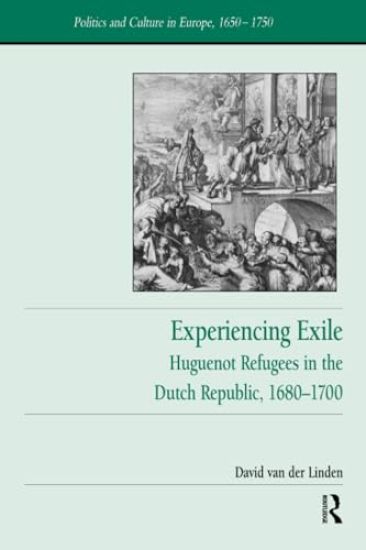
The persecution of the Huguenots in France, followed by the revocation of the Edict of Nantes in 1685, unleashed one of the largest migration waves of early modern Europe. Focusing on the fate of French Protestants who fled to the Dutch Republic, Experiencing Exile examines how Huguenot refugees dealt with the complex realities of living as strangers abroad, and how they seized upon religion and stories of their own past to comfort them in exile. The book widens the scope of scholarship on the Huguenot Refuge, by looking beyond the beliefs and fortunes of high-profile refugees, to explore the lives of ’ordinary’ exiles. Studies on Huguenots in the Dutch Republic in particular focus almost exclusively on the intellectual achievements of a small group of figures, including Pierre Bayle and the Basnage brothers, whereas the fate of the many refugees who joined them in exile remains unknown. This book puts the masses of Huguenot refugees back into the history of the Refuge, examining how they experienced leaving France and building a new life in the Dutch Republic. Divided into three sections - ’The Economy of Exile’, ’Faith in Exile’ and ’Memories in Exile’ - the book argues that the Huguenot exile experience was far more complicated than has often been assumed. Scholars have treated Huguenot refugees either as religious heroes, as successful migrants, or as modern philosophers, while ignoring the many challenges that exile presented. As this book demonstrates, Huguenots in the Dutch Republic discovered that being a religious refugee in early modern Europe was above all a complex and profoundly unsettling experience, fraught with socio-economic, religious and political challenges, rather than a clear-cut quest for religious freedom.