Kirjojen hintavertailu. Mukana 11 699 587 kirjaa ja 12 kauppaa.

Kirjahaku

Etsi kirjoja tekijän nimen, kirjan nimen tai ISBN:n perusteella.

6 kirjaa tekijältä Deborah Ascher Barnstone

The Break with the Past

The Break with the Past

Deborah Ascher Barnstone

Routledge
2019
nidottu
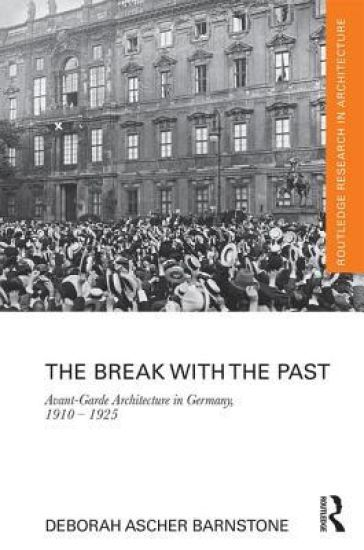
Between 1918 and 1933 the German interwar avant-garde was a primary force driving European cultural innovation and modernism. These innovations continue to influence artistic practice, theory, and arts education today, thus making a comprehensive study of the relationship between individual war experience and the immediate response of avant-garde architects after the war all the more important.The Break with the Past pursues several important, interrelated questions. What were the disparate war experiences of German architects, and did they have different effects on Weimar cultural production? Did political orientation play a part in support for the war? In aesthetic choices? What changes occurred in avant-garde architectural practice after 1918? How do they compare with pre-war positions and practices, and expectations for post-war outcomes? In order to address these questions, the book uses individual case studies of four leading architects: Bruno Taut, Walter Gropius, Erich Mendelsohn, and Hans Scharoun.This is a valuable resource for academics and students in the areas of Art and Architecture History, German history and Cultural Studies, European Culture and Modernism.
The Transparent State

The Transparent State

Deborah Ascher Barnstone

Routledge
2004
sidottu
Examining the transformation of transparency as a metaphor in West German political thought to an analogy for democratic architecture, this bookquestions the prevailing assumption in German architectural circles that transparency in governmental buildings can be equated with openness, accessibility and greater democracy.The Transparent State traces the development of transparency in German political and architectural culture, tying this lineage to the relationship between culture and national identity, a connection that began before unification of the German state in the eighteenth century and continues today. The Weimar Republic and Third Reich periods are examined although the focus is on the postwar period, looking at the use of transparency in the three projects for a national parliament - the 1949 Bundestag project by Hans Schwippert, the 1992 Bundestag building by Gunter Behnisch and the 1999 Reichstag renovation by Norman Foster.Transparency is an important issue in contemporary architectural practice; this book will appeal to both the practising architect and the architectural historian.
The Transparent State

The Transparent State

Deborah Ascher Barnstone

Routledge
2005
nidottu
Examining the transformation of transparency as a metaphor in West German political thought to an analogy for democratic architecture, this bookquestions the prevailing assumption in German architectural circles that transparency in governmental buildings can be equated with openness, accessibility and greater democracy.The Transparent State traces the development of transparency in German political and architectural culture, tying this lineage to the relationship between culture and national identity, a connection that began before unification of the German state in the eighteenth century and continues today. The Weimar Republic and Third Reich periods are examined although the focus is on the postwar period, looking at the use of transparency in the three projects for a national parliament - the 1949 Bundestag project by Hans Schwippert, the 1992 Bundestag building by Gunter Behnisch and the 1999 Reichstag renovation by Norman Foster.Transparency is an important issue in contemporary architectural practice; this book will appeal to both the practising architect and the architectural historian.
Beyond the Bauhaus

Beyond the Bauhaus

Deborah Ascher Barnstone

The University of Michigan Press
2016
sidottu
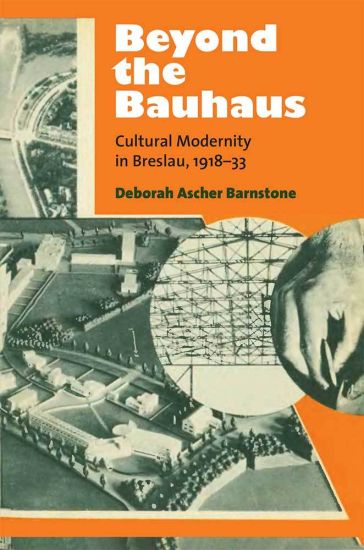
Although the Breslau arts scene was one of the most vibrant in all of Weimar-era Germany, it has largely disappeared from memory. Studies of the influence of Weimar culture on modernism have focused almost exclusively on Berlin and the Dessau Bauhaus, yet the advances that occurred in Breslau affected nearly every intellectual field, forming the basis for aesthetic modernism internationally and having an enduring impact on visual art and architecture. Breslau boasted a thriving modern arts scene and one of the premier German arts academies of the day until the Nazis began their assault on so-called degenerate art. This book charts the cultural production of Breslau-based artists, architects, art collectors, urban designers, and arts educators who operated in the margins of Weimar-era cultural debates. Rather than accepting the radical position of the German avant-garde or the reactionary position of German conservatives, many Breslauers sought a middle ground. This richly illustrated volume is the first book in English to address this history, constituting an invaluable addition to the literature on the Weimar period. Its readership includes scholars of German history, art, architecture, urban design, planning, collecting, and exhibition history; of the avant-garde, and of the development of arts academies and arts pedagogy.
The Break with the Past

The Break with the Past

Deborah Ascher Barnstone

Routledge
2017
sidottu
Between 1918 and 1933 the German interwar avant-garde was a primary force driving European cultural innovation and modernism. These innovations continue to influence artistic practice, theory, and arts education today, thus making a comprehensive study of the relationship between individual war experience and the immediate response of avant-garde architects after the war all the more important.The Break with the Past pursues several important, interrelated questions. What were the disparate war experiences of German architects, and did they have different effects on Weimar cultural production? Did political orientation play a part in support for the war? In aesthetic choices? What changes occurred in avant-garde architectural practice after 1918? How do they compare with pre-war positions and practices, and expectations for post-war outcomes? In order to address these questions, the book uses individual case studies of four leading architects: Bruno Taut, Walter Gropius, Erich Mendelsohn, and Hans Scharoun.This is a valuable resource for academics and students in the areas of Art and Architecture History, German history and Cultural Studies, European Culture and Modernism.
The Color of Modernism

The Color of Modernism

Deborah Ascher Barnstone

Bloomsbury Visual Arts
2022
nidottu
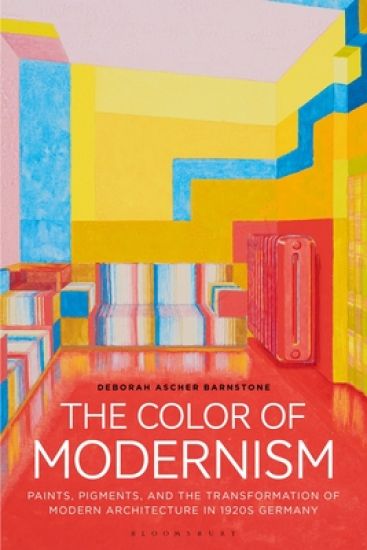
One of the most enduring and pervasive myths about modernist architecture is that it was white—pure white walls both inside and out. Yet nothing could be further from the truth. The Color of Modernism explodes this myth of whiteness by offering a riot of color in modern architectural treatises, polemics, and buildings.Focusing on Germany in the early 20th century, one of modernism’s most foundational and influential periods, it examines the different scientific and artistic color theories which were advanced by members of the German avant-garde, from Bruno Taut to Walter Gropius to Hans Scharoun. German color theory went on to have a profound influence on the modern movement, and Germany serves as the key case study for an international phenomenon which encompassed modern architects worldwide from le Corbusier and Alvar Aalto to Berthold Lubetkin and Lina Bo Bardi.Supported by accessible introductions to the development of color theory in philosophy, science and the arts, the book uses the German case to explore the new ways in which color was used in architecture and urban design, turning attention to an important yet overlooked aspect of the period. Much more than a mere correction to the historical record, the book leads the reader on an adventure into the color-filled worlds of psychology, the paranormal, theories of sensory perception, and pleasure, showing how each in turn influenced the modern movement. The Color of Modernism will fundamentally change the way the early modernist period is seen and discussed.