Kirjojen hintavertailu. Mukana 12 016 292 kirjaa ja 12 kauppaa.

Kirjahaku

Etsi kirjoja tekijän nimen, kirjan nimen tai ISBN:n perusteella.

6 kirjaa tekijältä Deborah Beck

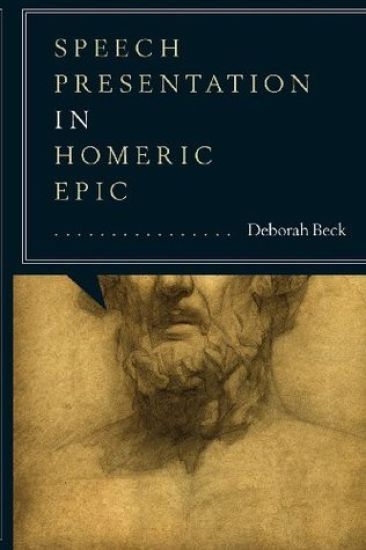
Speech Presentation in Homeric Epic

Speech Presentation in Homeric Epic

Deborah Beck

University of Texas Press
2012
nidottu
The Iliad and the Odyssey are emotional powerhouses largely because of their extensive use of direct speech. Yet this characteristic of the Homeric epics has led scholars to underplay the poems’ use of non-direct speech, the importance of speech represented by characters, and the overall sophistication of Homeric narrative as measured by its approach to speech representation. In this pathfinding study by contrast, Deborah Beck undertakes the first systematic examination of all the speeches presented in the Homeric poems to show that Homeric speech presentation is a unified system that includes both direct quotation and non-direct modes of speech presentation.Drawing on the fields of narratology and linguistics, Beck demonstrates that the Iliad and the Odyssey represent speech in a broader and more nuanced manner than has been perceived before, enabling us to reevaluate our understanding of supposedly “modern” techniques of speech representation and to refine our idea of where Homeric poetry belongs in the history of Western literature. She also broadens ideas of narratology by connecting them more strongly with relevant areas of linguistics, as she uses both to examine the full range of speech representational strategies in the Homeric poems. Through this in-depth analysis of how speech is represented in the Homeric poems, Beck seeks to make both the process of their composition and the resulting poems themselves seem more accessible, despite pervasive uncertainties about how and when the poems were put together.
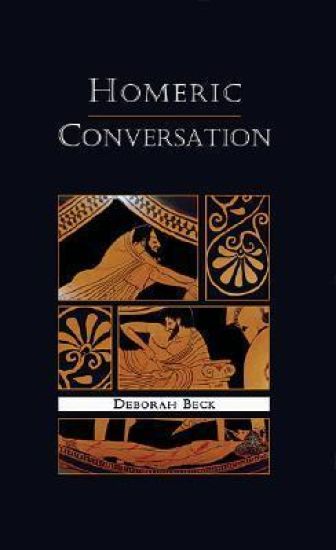
Homeric Conversation

Homeric Conversation

Deborah Beck

Harvard University, Center for Hellenic Studies
2006
nidottu
Homeric Conversation is the first full-length study of conversation in the Homeric poems. Deborah Beck argues that conversation should be considered a traditional Homeric type scene, alongside recognized types such as arrival, sacrifice, battle, and hospitality. Drawing on both linguistics and previous work on type scenes and oral aesthetics, the book describes the typical conversational patterns that characterize a range of situations, including one-on-one conversation, formal assemblies, battlefield encounters, and laments. Departures from these typical patterns for conversation provide the basis for a wide-ranging, closely argued aesthetic analysis of repetition and variation in the Homeric epics.
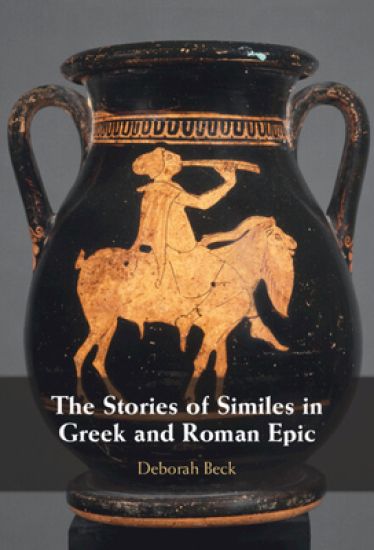
The Stories of Similes in Greek and Roman Epic

The Stories of Similes in Greek and Roman Epic

Deborah Beck

Cambridge University Press
2023
sidottu
Just as the story of an epic poem is woven from characters and plot, so too the individual similes within an epic create a unique simile world. Like any other story, it is peopled by individual characters, happenings, and experiences, such as the shepherd and his flocks, a storm at sea, or predators hunting prey. The simile world that complements the epic mythological story is re-imagined afresh in relation to the themes of each epic poem. As Deborah Beck argues in this stimulating book, over time a simile world takes shape across many poems composed over many centuries. This evolving landscape resembles the epic story world of battles, voyages, and heroes that comes into being through relationships among different epic poems. Epic narrative is woven from a warp of the mythological story world and a weft of the simile world. They are partners in creating the fabric of epic poetry.
The Stories of Similes in Greek and Roman Epic

The Stories of Similes in Greek and Roman Epic

Deborah Beck

Cambridge University Press
2025
pokkari
Just as the story of an epic poem is woven from characters and plot, so too the individual similes within an epic create a unique simile world. Like any other story, it is peopled by individual characters, happenings, and experiences, such as the shepherd and his flocks, a storm at sea, or predators hunting prey. The simile world that complements the epic mythological story is re-imagined afresh in relation to the themes of each epic poem. As Deborah Beck argues in this stimulating book, over time a simile world takes shape across many poems composed over many centuries. This evolving landscape resembles the epic story world of battles, voyages, and heroes that comes into being through relationships among different epic poems. Epic narrative is woven from a warp of the mythological story world and a weft of the simile world. They are partners in creating the fabric of epic poetry.
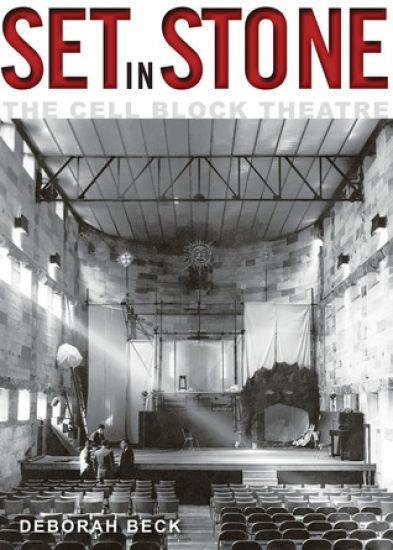
Set in Stone

Set in Stone

Deborah Beck

NewSouth Publishing
2011
nidottu
Set in Stone is the fascinating story of how a derelict wing of Darlinghurst Gaol, home to Sydney’s most notorious female criminals, became the Cell Block Theatre, the hub of Australia‘s avant-garde theatre, music and dance scene in the 1960s and '70s. A place of creative freedom and ingenuity, this extraordinary venue saw early performances from artists such as John Bell, Yvonne Kenny, Peter Sculthorpe, David Malouf, Jim Sharman and Nick Cave. Richly illustrated with striking archival photographs, Set in Stone is the first book to explore this iconic cultural site and the ground-breaking works that emerged from its rough sandstone walls.
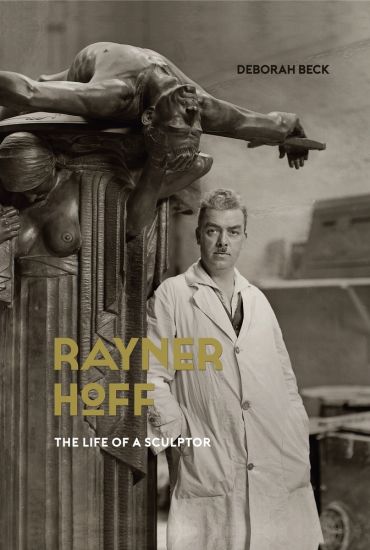
Rayner Hoff

Rayner Hoff

Deborah Beck

NewSouth Publishing
2017
nidottu
In the 1920s and 1930s, Rayner Hoff was the most gifted – and controversial – public sculptor in Australia, best known for the sculptures and friezes that adorn Sydney’s Anzac Memorial, including Sacrifice at its centre.After moving from London in the early 1920s, Hoff taught at and eventually ran the National Art School. As well as completing the Anzac Memorial sculptures – which generated uproar when the Catholic Archbishop of Sydney opposed two further works planned for the Memorial – he also designed the original Holden lion badge, won the Wynne Prize in 1927, and made firm friends with luminaries like Norman Lindsay, Hugh McCrae and Mary Gilmore.This biography tells the story of Hoff’s life and work for the first time, and shows how he spearheaded an Australian sculpture renaissance and left a mark that is still keenly felt today.