Kirjojen hintavertailu. Mukana 11 244 527 kirjaa ja 12 kauppaa.

Kirjahaku

Etsi kirjoja tekijän nimen, kirjan nimen tai ISBN:n perusteella.

7 kirjaa tekijältä Deborah Bird Rose

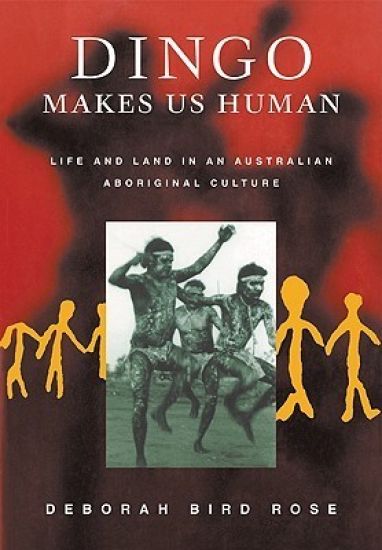
Dingo Makes Us Human

Dingo Makes Us Human

Deborah Bird Rose

Cambridge University Press
2000
pokkari
This original ethnography brings indigenous people's stories into conversations around troubling questions of social justice and environmental care. Deborah Bird Rose lived for two years with the Yarralin community in the Northern Territory's remote Victoria River Valley. Her engagement with the people's stories and their action in the world leads her to this analysis of a multi-centred poetics of life and land. The book speaks to issues that are of immediate and broad concern today: traditional ecological knowledge, kinship between humans and other living things, colonising history, environmental history, and sacred geography. Now in paperback, this award-winning exploration of the Yarralin people is available to a whole new readership. The boldly direct and personal approach will be illuminating and accessible to general readers, while also of great value to experienced anthropologists.
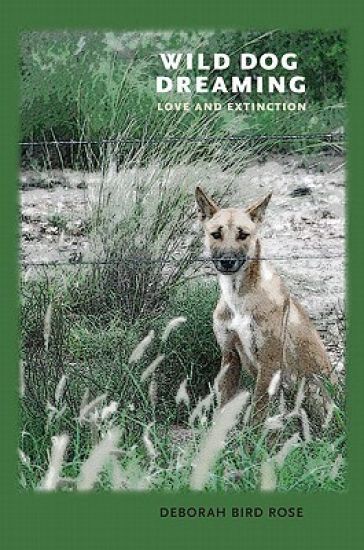
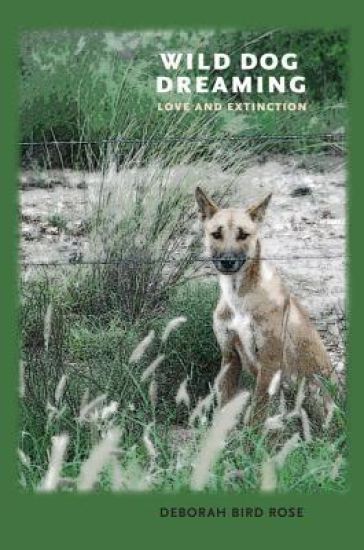
Wild Dog Dreaming

Wild Dog Dreaming

Deborah Bird Rose

University of Virginia Press
2011
sidottu
We are living in the midst of the Earth’s sixth great extinction event, the first one caused by a single species: our own. In Wild Dog Dreaming, Deborah Bird Rose explores what constitutes an ethical relationship with nonhuman others in this era of loss. She asks, Who are we, as a species? How do we fit into the Earth’s systems? Amidst so much change, how do we find our way into new stories to guide us? Rose explores these questions in the form of a dialogue between science and the humanities. Drawing on her conversations with Aboriginal people, for whom questions of extinction are up-close and very personal, Rose develops a mode of exposition that is dialogical, philosophical, and open-ended.An inspiration for Rose—and a touchstone throughout her book—is the endangered dingo of Australia. The dingo is not the first animal to face extinction, but its story is particularly disturbing because the threat to its future is being actively engineered by humans. The brazenness with which the dingo is being wiped out sheds valuable, and chilling, light on the likely fate of countless other animal and plant species."People save what they love," observed Michael Soulé, the great conservation biologist. We must ask whether we, as humans, are capable of loving—and therefore capable of caring for—the animals and plants that are disappearing in a cascade of extinctions. Wild Dog Dreaming engages this question, and the result is a bold account of the entangled ethics of love, contingency, and desire.
Wild Dog Dreaming

Wild Dog Dreaming

Deborah Bird Rose

University of Virginia Press
2013
nidottu
We are living in the midst of the Earth’s sixth great extinction event, the first one caused by a single species: our own. In Wild Dog Dreaming, Deborah Bird Rose explores what constitutes an ethical relationship with nonhuman others in this era of loss. She asks, Who are we, as a species? How do we fit into the Earth’s systems? Amidst so much change, how do we find our way into new stories to guide us? Rose explores these questions in the form of a dialogue between science and the humanities. Drawing on her conversations with Aboriginal people, for whom questions of extinction are up-close and very personal, Rose develops a mode of exposition that is dialogical, philosophical, and open-ended.An inspiration for Rose—and a touchstone throughout her book—is the endangered dingo of Australia. The dingo is not the first animal to face extinction, but its story is particularly disturbing because the threat to its future is being actively engineered by humans. The brazenness with which the dingo is being wiped out sheds valuable, and chilling, light on the likely fate of countless other animal and plant species.""People save what they love,"" observed Michael Soulé, the great conservation biologist. We must ask whether we, as humans, are capable of loving—and therefore capable of caring for—the animals and plants that are disappearing in a cascade of extinctions. Wild Dog Dreaming engages this question, and the result is a bold account of the entangled ethics of love, contingency, and desire.
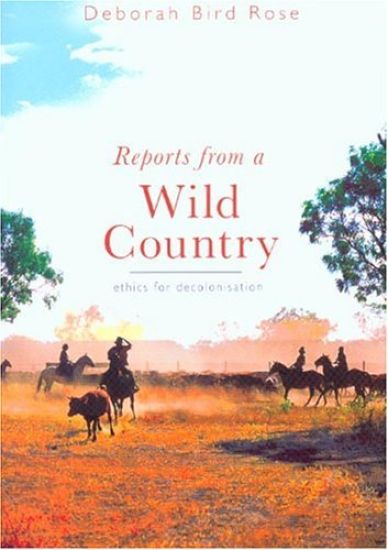
Reports from a Wild Country

Reports from a Wild Country

Deborah Bird Rose

UNSW Press
2004
nidottu
This work explores some of Australia's major ethical challenges. Written in the midst of rapid social and environmental change and in a time of uncertainty and division, it offers powerful stories and arguments for ethical choice and commitment. The focus is on reconciliation between Indigenous and Settler' peoples, and with nature.
Shimmer

Shimmer

Deborah Bird Rose

Edinburgh University Press
2022
sidottu
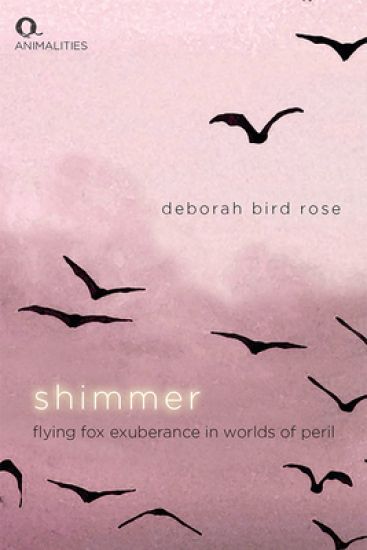
I was called to flying-foxes. My research questions led me into multispecies ethnographic work involving wildlife carers and academically trained scientists in eastern Australia. The people I met were at the front line in the work of holding flying-foxes back from the edge of extinction. I continued to visit the north, and I revisited my notebooks from several decades of research with Aboriginal people. The research was exhilarating, and then again at times deeply disheartening. I was to encounter more passion, intimacy, cruelty, horror, complexity, generosity and wild beauty than I could ever have imagined. Living with flying-foxes, I came to understand, takes us straight to the heart of every big question facing Earth life in the 21st century.' In this deeply personal book, the last one she wrote before hear death in 2018, Deborah Bird Rose explores the shimmer of life the iridescent pulse of beauty and power, the processes of transition and transformation that flows across and between generations. Grounded within this insight, she develops and advocates for an ethics of attention that is in the world within everyday practices, and in this case for and with flying foxes and their worlds.
Shimmer

Shimmer

Deborah Bird Rose

Edinburgh University Press
2022
nidottu
I was called to flying-foxes. My research questions led me into multispecies ethnographic work involving wildlife carers and academically trained scientists in eastern Australia. The people I met were at the front line in the work of holding flying-foxes back from the edge of extinction. I continued to visit the north, and I revisited my notebooks from several decades of research with Aboriginal people. The research was exhilarating, and then again at times deeply disheartening. I was to encounter more passion, intimacy, cruelty, horror, complexity, generosity and wild beauty than I could ever have imagined. Living with flying-foxes, I came to understand, takes us straight to the heart of every big question facing Earth life in the 21st century.' In this deeply personal book, the last one she wrote before hear death in 2018, Deborah Bird Rose explores the shimmer of life the iridescent pulse of beauty and power, the processes of transition and transformation that flows across and between generations. Grounded within this insight, she develops and advocates for an ethics of attention that is in the world within everyday practices, and in this case for and with flying foxes and their worlds.
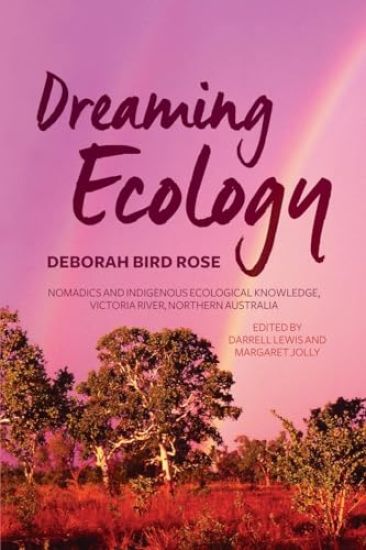
Dreaming Ecology

Dreaming Ecology

Deborah Bird Rose

ANU Press
2024
nidottu
In the author's own words, Dreaming Ecology 'explores a holistic understanding of the interconnections of people, country, kinship, creation and the living world within a context of mobility. Implicitly it asks how people lived so sustainably for so long'. It offers a telling critique of the loss of Indigenous life, human and non-human, in the wake of white settler colonialism and this becoming 'cattle country'. It offers a fresh perspective on nomadics grounded in 'footwalk epistemology' and 'an ethics of return sustained across different species, events, practices and scales'.'This is the final and most substantial of Debbie's love letters to the Aboriginal people of the Victoria River Downs. I say this because there is such a sense of reverence, wonder and respect throughout the book. The introduction of concepts of double-death, footwalk epistemology, wild country ... are not only organising ideas but characterisations arising from what Debbie hears, sees and feels of herself and Aboriginal others ... I think of it in terms of love, if love is care, reciprocal respect, deep connectivity and a strong desire to never make less of the people she chose to commit herself to.'-Richard Davis'This book was a pleasure to read, filled with careful description of people, places, and various plants and animals, and insightful analysis of the patterns and commitments that hold them together in the world.'-Thom van Dooren