Kirjojen hintavertailu. Mukana 12 016 292 kirjaa ja 12 kauppaa.

Kirjahaku

Etsi kirjoja tekijän nimen, kirjan nimen tai ISBN:n perusteella.

9 kirjaa tekijältä Deborah Blum

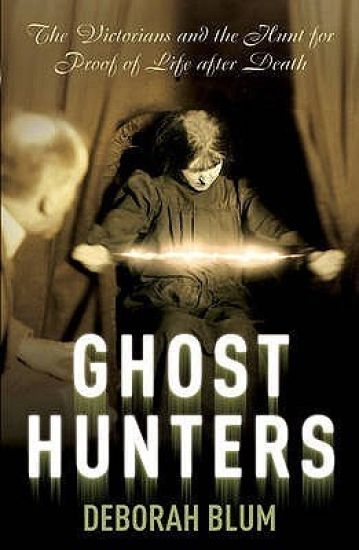
Ghost Hunters

Ghost Hunters

Deborah Blum

Arrow Books Ltd
2007
pokkari
Many mediums, like the notorious Madame Blavatsky, were exposed as charlatans yet there were some mediums who continued to communicate directly with another world, who despite every rigorous scientific test seemed to prove that souls survived death.
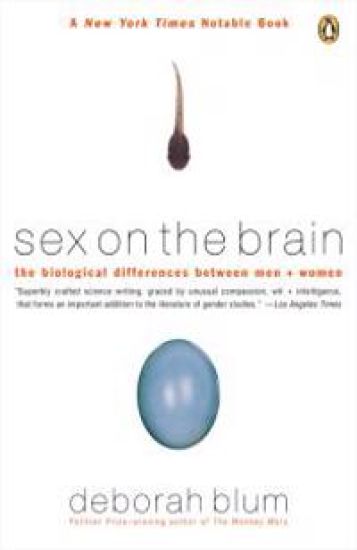
Sex on the Brain: The Biological Differences Between Men and Women
Go beyond the headlines and the hype to get the newest findings in the burgeoning field of gender studies. Drawing on disciplines that include evolutionary science, anthropology, animal behavior, neuroscience, psychology, and endocrinology, Deborah Blum explores matters ranging from the link between immunology and sex to male/female gossip styles. The results are intriguing, startling, and often very amusing. For instance, did you know that. . . - Male testosterone levels drop in happy marriages; scientists speculate that women may use monogamy to control male behavior- Young female children who are in day-care are apt to be more secure than those kept at home; young male children less so- Anthropologists classify Western societies as "mildly polygamous" The Los Angeles Times has called Sex on the Brain "superbly crafted science writing, graced by unusual compassion, wit, and intelligence, that forms an important addition to the literature of gender studies."
Ghost Hunters: William James and the Search for Scientific Proof of Life After Death
Traces how the respected psychologist brother of Henry James announced his belief in the paranormal at the end of the nineteenth century and set out to gather scientific data proving the existence of ghosts, an endeavor in which he formed the American Society for Psychical Research along with contemporaries Richard Hodgson and James Hyslop. Reprint.
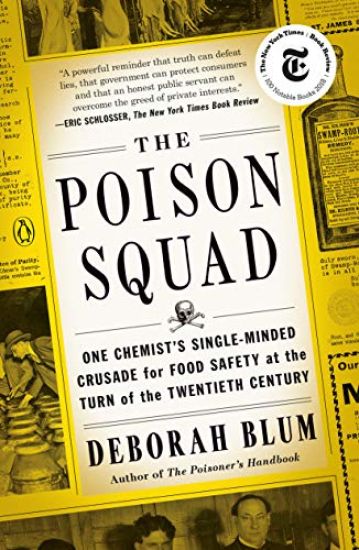
The Poison Squad: One Chemist's Single-Minded Crusade for Food Safety at the Turn of the Twentiethcentury
A New York Times Notable Book The inspiration for PBS's AMERICAN EXPERIENCE film The Poison Squad. From Pulitzer Prize winner and New York Times-bestselling author Deborah Blum, the dramatic true story of how food was made safe in the United States and the heroes, led by the inimitable Dr. Harvey Washington Wiley, who fought for change By the end of nineteenth century, food was dangerous. Lethal, even. "Milk" might contain formaldehyde, most often used to embalm corpses. Decaying meat was preserved with both salicylic acid, a pharmaceutical chemical, and borax, a compound first identified as a cleaning product. This was not by accident; food manufacturers had rushed to embrace the rise of industrial chemistry, and were knowingly selling harmful products. Unchecked by government regulation, basic safety, or even labelling requirements, they put profit before the health of their customers. By some estimates, in New York City alone, thousands of children were killed by "embalmed milk" every year. Citizens--activists, journalists, scientists, and women's groups--began agitating for change. But even as protective measures were enacted in Europe, American corporations blocked even modest regulations. Then, in 1883, Dr. Harvey Washington Wiley, a chemistry professor from Purdue University, was named chief chemist of the agriculture department, and the agency began methodically investigating food and drink fraud, even conducting shocking human tests on groups of young men who came to be known as, "The Poison Squad." Over the next thirty years, a titanic struggle took place, with the courageous and fascinating Dr. Wiley campaigning indefatigably for food safety and consumer protection. Together with a gallant cast, including the muckraking reporter Upton Sinclair, whose fiction revealed the horrific truth about the Chicago stockyards; Fannie Farmer, then the most famous cookbook author in the country; and Henry J. Heinz, one of the few food producers who actively advocated for pure food, Dr. Wiley changed history. When the landmark 1906 Food and Drug Act was finally passed, it was known across the land, as "Dr. Wiley's Law." Blum brings to life this timeless and hugely satisfying "David and Goliath" tale with righteous verve and style, driving home the moral imperative of confronting corporate greed and government corruption with a bracing clarity, which speaks resoundingly to the enormous social and political challenges we face today.
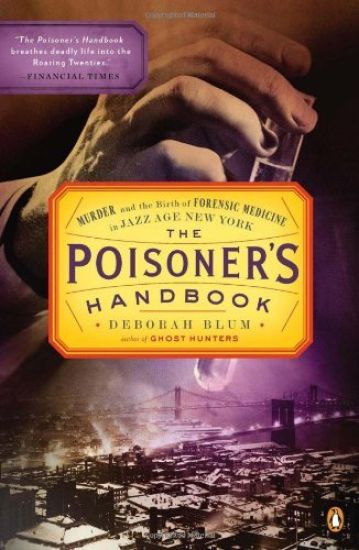
The Poisoner's Handbook: Murder and the Birth of Forensic Medicine in Jazz Age New York
Equal parts true crime, twentieth-century history, and science thriller, The Poisoner's Handbook is "a vicious, page-turning story that reads more like Raymond Chandler than Madame Curie." --The New York Observer "The Poisoner's Handbook breathes deadly life into the Roaring Twenties." --Financial Times "Reads like science fiction, complete with suspense, mystery and foolhardy guys in lab coats tipping test tubes of mysterious chemicals into their own mouths." --NPR: What We're Reading A fascinating Jazz Age tale of chemistry and detection, poison and murder, The Poisoner's Handbook is a page-turning account of a forgotten era. In early twentieth-century New York, poisons offered an easy path to the perfect crime. Science had no place in the Tammany Hall-controlled coroner's office, and corruption ran rampant. However, with the appointment of chief medical examiner Charles Norris in 1918, the poison game changed forever. Together with toxicologist Alexander Gettler, the duo set the justice system on fire with their trailblazing scientific detective work, triumphing over seemingly unbeatable odds to become the pioneers of forensic chemistry and the gatekeepers of justice. In 2014, PBS's AMERICAN EXPERIENCE released a film based on The Poisoner's Handbook.
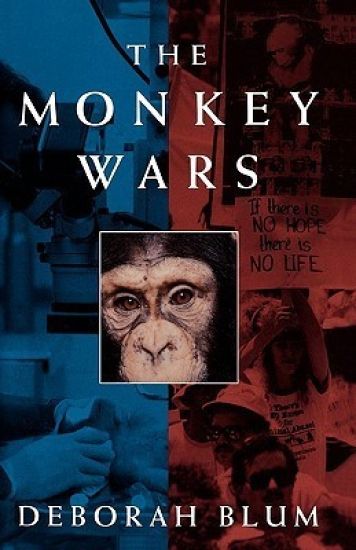
The Monkey Wars

The Monkey Wars

Deborah Blum

Oxford University Press Inc
1996
nidottu
The use of primates in research is an ongoing controversy. We have all benefited from the medical discoveries, yet we have also learned more in recent years about the real intelligence of apes and monkeys. Activists have also uncovered cases of animal cruelty by researchers. The Monkey Wars assesses the often caustic debate over the use of primates in scientific research, and examines the personalities and issues behind the headlines. The author focuses on researchers forced to conduct their work behind barbed wire and alarm systems, animal rights activists ranging from the moderate AWI Institute to the highly radical ALF, and some of the remarkable chimpanzees involved. The research community and its activist critics are invariably portrayed as rival camps locked in a long, bitter, and seemingly intractable political battle. In reality there are people on both sides willing to accept and work within the complex middle. Deborah Blum gives these people a voice
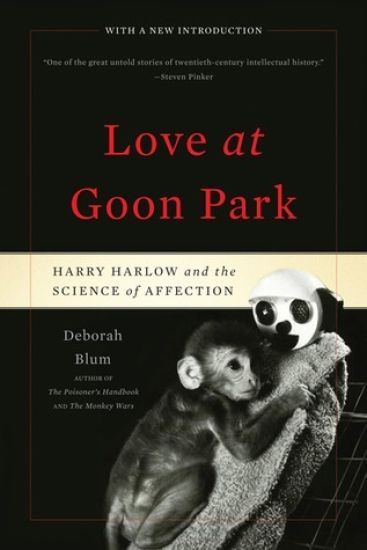
Love at Goon Park

Love at Goon Park

Deborah Blum

Basic Books
2011
pokkari
In the early twentieth century, affection between parents and their children was discouraged,psychologists thought it would create needy kids, and doctors thought it would spread infectious disease. It took a revolution in psychology to overturn these beliefs and prove that touch ensures emotional and intellectual health. In Love at Goon Park, Pulitzer Prize winner Deborah Blum charts this profound cultural shift by tracing the story of Harry Harlow,the man who studied neglect and its life-altering consequences on primates in his lab. The biography of both a man and an idea, Love at Goon Park ultimately invites us to examine ourselves and the way we love.
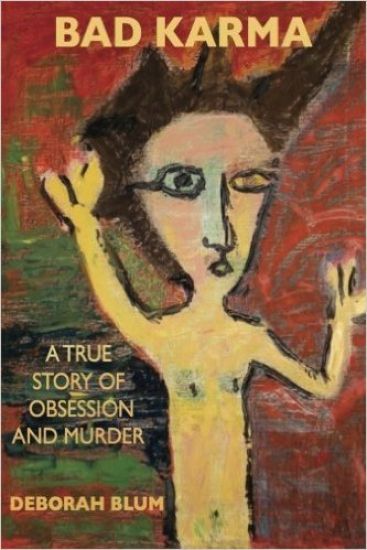
Bad Karma

Bad Karma

Deborah Blum

Createspace Independent Publishing Platform
2013
nidottu
A TRUE CRIME THRILLER THAT EXPLORES THE DARKEST REGIONS OF ROMANTIC INFATUATION.THE YEAR: 1969THE SETTING: Berkeley, CaliforniaTHE STORY: Amidst the turmoil of student rebellion two loners encounter each other and turn an innocent flirtation into a dance of death.THE CHARACTERS: Prosenjit Poddar was the brilliant engineering student who wanted nothing more than to return to his native India a big success and to marry a woman of his parents' choosing.Tanya Tarasoff was the na ve coed who just wanted somebody to love.And Larry Moore was the young psychologist who thought he recognized the warning signs that his patient was not just suffering from a jilted love affair... but was about to commit an act of murder.THE STAKES: In a culture clash that pits the traditional values of male-dominated India against free-love attitudes of Berkeley in the '60s, an impending tragedy unfolds. Soon Larry Moore finds himself face-to-face with the biggest dilemma of his career. What does a doctor do if he perceives his patient as mentally unstable and a threat to the well-being of another... but is bound by the oath of doctor-patient confidentiality not to warn the police?This true story tracks Moore's race against time to stop the inevitable.BAD KARMA is more than an anatomy of madness; it is also a chronicle of the events that would culminate in a landmark decision handed down by the California Supreme Court. Known simply as Tarasoff, this 1976 ruling would change the oath of confidentially between therapist and patient, and establish the rule that a mental health professional has the legal duty to protect a threatened individual.