Kirjojen hintavertailu. Mukana 12 016 292 kirjaa ja 12 kauppaa.

Kirjahaku

Etsi kirjoja tekijän nimen, kirjan nimen tai ISBN:n perusteella.

8 kirjaa tekijältä Deborah Chambers

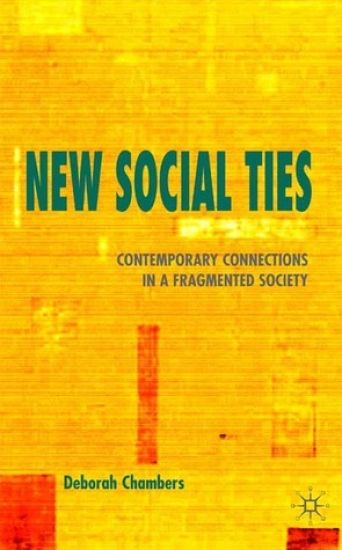
New Social Ties

New Social Ties

Deborah Chambers

Palgrave Macmillan
2006
sidottu
Deborah Chambers draws on the metaphor of friendship as a strategy for exploring contemporary changes in informal social ties. She traces the shift from fixed and permanent ties of family, neighbourhood and community to fluid and transient ties typified by computer mediated communication.
New Social Ties

New Social Ties

Deborah Chambers

Palgrave Macmillan
2006
nidottu
Deborah Chambers draws on the metaphor of friendship as a strategy for exploring contemporary changes in informal social ties. She traces the shift from fixed and permanent ties of family, neighbourhood and community to fluid and transient ties typified by computer mediated communication.
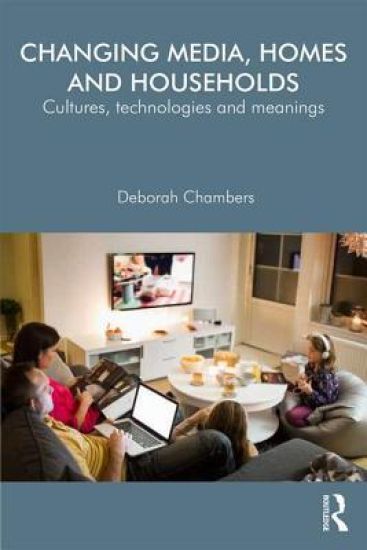
Changing Media, Homes and Households

Changing Media, Homes and Households

Deborah Chambers

Routledge
2016
sidottu
Media technologies have played a central role in shaping ideas about home life over the last two centuries. Changing Media, Homes and Households explores the complex relationship between home, householders, families and media technologies by charting the evolution of the media-rich home, from the early twentieth century to the present. Moving beyond a narrow focus on media texts, production and audiences, Deborah Chambers investigates the physical presence of media objects in the home and their symbolic importance for home life. The book identifies the role of home-based media in altering relationships between home, leisure, work and the outside world in the context of entertainment, communication and work. It assesses whether domestic media are transforming or reinforcing traditional identities and relations of gender, generation, class and migrancy.Mediatisation theory is employed to assess the domestication of media and media saturation of home life in the context of wider global changes. The author also develops the concept of media imaginaries to explain the role of public discourses in shaping changing meanings, values and uses of domestic media. Framed within these approaches, four chapters also provide in-depth case studies of the processes involved in media’s home adoption: early television design, family-centred video gaming, the domestication of tablet computers, and the shift from "smart homes" to today’s "connected" homes.This is an ideal text for students and researchers interested in media and cultural studies, communication, and sociology.
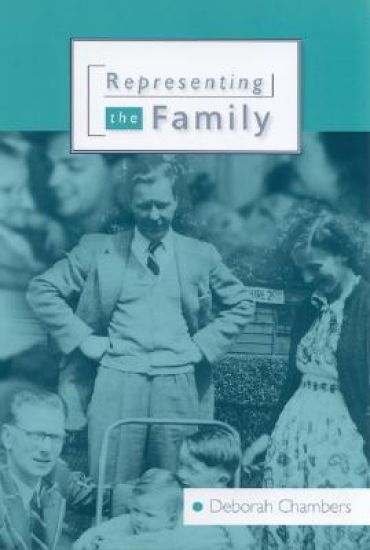
Representing the Family

Representing the Family

Deborah Chambers

SAGE Publications Inc
2001
sidottu
Looking at how the family is represented by the media, and by scrutinizing the manner in which it is regulated, this book uncovers the ways in which academic research and welfare policy have colluded with political rhetoric and the popular media to re-invent a mythical ideal family. Representing the Family: combines perspectives from a range of theories including media and cultural studies, sociology, and social history to show how certain types of family life are pathologised; highlights the discrepancies between contemporary representations of the `ideal' family and lived experience; compares the British experience with that of the United States and Australia. Representing the Family provides a rich and an engaging illustration of the ways in which the media produce meaning. It also demonstrates the ways in which critical social issues are played out across a range of discursive sites - academia, politics, and public policy.
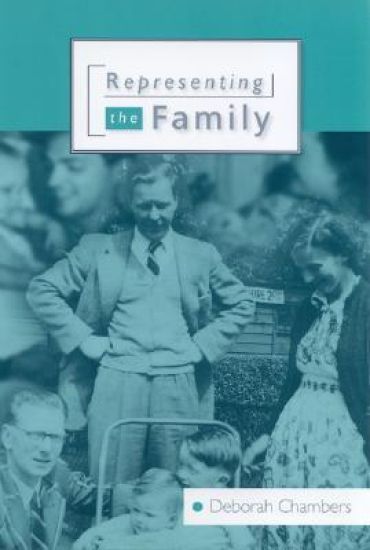
Representing the Family

Representing the Family

Deborah Chambers

SAGE Publications Inc
2001
nidottu
Looking at how the family is represented by the media, and by scrutinizing the manner in which it is regulated, this book uncovers the ways in which academic research and welfare policy have colluded with political rhetoric and the popular media to re-invent a mythical ideal family. Representing the Family: combines perspectives from a range of theories including media and cultural studies, sociology, and social history to show how certain types of family life are pathologised; highlights the discrepancies between contemporary representations of the `ideal' family and lived experience; compares the British experience with that of the United States and Australia. Representing the Family provides a rich and an engaging illustration of the ways in which the media produce meaning. It also demonstrates the ways in which critical social issues are played out across a range of discursive sites - academia, politics, and public policy.
Cultural Ideals of Home

Cultural Ideals of Home

Deborah Chambers

Routledge
2020
sidottu
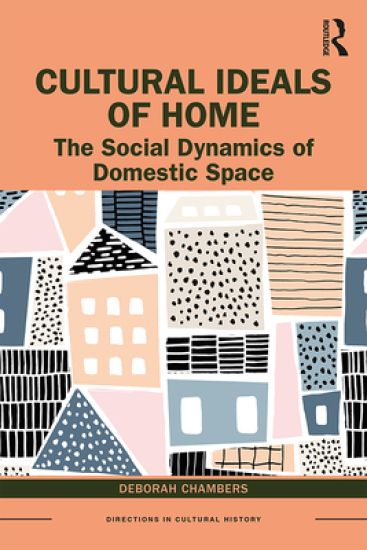
Spanning the nineteenth to twenty-first centuries, this book investigates how home is imagined, staged and experienced in western culture.Questions about meanings of ‘home’ and domestic culture are triggered by dramatic changes in values and ideals about the dwellings we live in and the dwellings we desire or dread. Deborah Chambers explores how home is idealised as a middle-class haven, managed as an investment, and signified as a status symbol and expression of personal identity. She addresses a range of public, state, commercial, popular and expert discourses about ‘home’: the heritage industry, design, exhibitions, television, social media, home mobilities and migration, smart technologies and ecological sustainability. Drawing on cross-disciplinary research including cultural history and cultural geography, the book offers a distinctive media and cultural studies approach supported by original, historically informed case studies on interior and domestic design; exhibitions of model homes; TV home interiors; ‘media home’ imaginaries; multiscreen homes; corporate visions of ‘homes of tomorrow’ and digital smart homes. A comprehensive and engaging study, this book is ideal for students and researchers of cultural studies, cultural history, media and communication studies, as well as sociology, gender studies, cultural geography and design studies.
Cultural Ideals of Home

Cultural Ideals of Home

Deborah Chambers

Routledge
2020
nidottu
Spanning the nineteenth to twenty-first centuries, this book investigates how home is imagined, staged and experienced in western culture.Questions about meanings of ‘home’ and domestic culture are triggered by dramatic changes in values and ideals about the dwellings we live in and the dwellings we desire or dread. Deborah Chambers explores how home is idealised as a middle-class haven, managed as an investment, and signified as a status symbol and expression of personal identity. She addresses a range of public, state, commercial, popular and expert discourses about ‘home’: the heritage industry, design, exhibitions, television, social media, home mobilities and migration, smart technologies and ecological sustainability. Drawing on cross-disciplinary research including cultural history and cultural geography, the book offers a distinctive media and cultural studies approach supported by original, historically informed case studies on interior and domestic design; exhibitions of model homes; TV home interiors; ‘media home’ imaginaries; multiscreen homes; corporate visions of ‘homes of tomorrow’ and digital smart homes. A comprehensive and engaging study, this book is ideal for students and researchers of cultural studies, cultural history, media and communication studies, as well as sociology, gender studies, cultural geography and design studies.
Changing Media, Homes and Households

Changing Media, Homes and Households

Deborah Chambers

Routledge
2016
nidottu
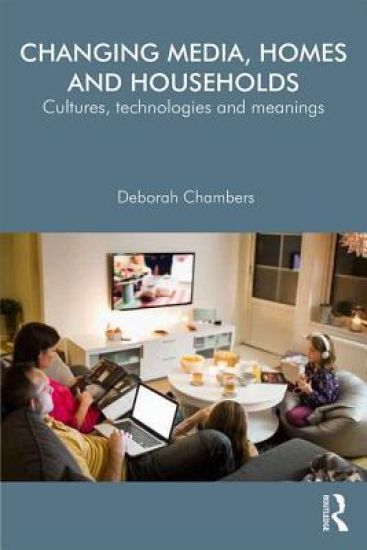
Media technologies have played a central role in shaping ideas about home life over the last two centuries. Changing Media, Homes and Households explores the complex relationship between home, householders, families and media technologies by charting the evolution of the media-rich home, from the early twentieth century to the present. Moving beyond a narrow focus on media texts, production and audiences, Deborah Chambers investigates the physical presence of media objects in the home and their symbolic importance for home life. The book identifies the role of home-based media in altering relationships between home, leisure, work and the outside world in the context of entertainment, communication and work. It assesses whether domestic media are transforming or reinforcing traditional identities and relations of gender, generation, class and migrancy.Mediatisation theory is employed to assess the domestication of media and media saturation of home life in the context of wider global changes. The author also develops the concept of media imaginaries to explain the role of public discourses in shaping changing meanings, values and uses of domestic media. Framed within these approaches, four chapters also provide in-depth case studies of the processes involved in media’s home adoption: early television design, family-centred video gaming, the domestication of tablet computers, and the shift from "smart homes" to today’s "connected" homes.This is an ideal text for students and researchers interested in media and cultural studies, communication, and sociology.