Kirjojen hintavertailu. Mukana 12 376 682 kirjaa ja 12 kauppaa.

Kirjahaku

Etsi kirjoja tekijän nimen, kirjan nimen tai ISBN:n perusteella.

8 kirjaa tekijältä Deborah G. Plant

Of Greed and Glory

Of Greed and Glory

Deborah G. Plant

HARPERCOLLINS PUBLISHERS INC
2024
sidottu
A ground-breaking, personal exploration of America’s obsession with continuing human bondage from the editor of the New York Times–bestselling Barracoon.Freedom and equality are the watchwords of American democracy. But like justice, freedom and equality are meaningless when there is no corresponding practical application of the ideals they represent. Physical, bodily liberty is fundamental to every American’s personal sovereignty. And yet, millions of Americans—including author Deborah Plant’s brother, whose life sentence at Angola Prison reveals a shocking current parallel to her academic work on the history of slavery in America—are deprived of these basic freedoms every day.In her studies of Zora Neale Hurston, Deborah Plant became fascinated by Hurston’s explanation for the atrocities of the international slave trade. In her memoir, Dust Tracks on a Road, Hurston wrote: “But the inescapable fact that stuck in my craw, was: my people had sold me and the white people had bought me. . . . It impressed upon me the universal nature of greed and glory.” We look the other way when the basic human rights of marginalized and stigmatized groups are violated and desecrated, not realizing that only the practice of justice everywhere secures justice, for any of us, anywhere.An active vigilance is required of those who would be and remain free; with Of Greed and Glory, Deborah Plant reveals the many ways in which slavery continues in America today and charts our collective course toward personal sovereignty for all.
Every Tub Must Sit on Its Own Bottom

Every Tub Must Sit on Its Own Bottom

Deborah G. Plant

University of Illinois Press
1995
sidottu
"Plant's study is sorely needed at this point in the evolving critical assessment of Hurston. It is a paradigm for the study of individual African American women writers." -- Alice Deck, University of Illinois at Urbana-Champaign In a ground-breaking study of Zora Neale Hurston, Deborah Plant takes issue with current notions of Hurston as a feminist and earlier impressions of her as an intellectual lightweight who disregarded serious issues of race in American culture. Instead, Plant calls Hurston a "writer of resistance" who challenged the politics of domination both in her life and in her work. One of the great geniuses of the Harlem Renaissance, Hurston stands out as a strong voice for African-American women. Her anthropological inquiries as well as her evocative prose provide today's readers with a rich history of African American folk culture, a folk culture through which Hurston expressed her personal and political strategy of resistance and self-empowerment. Through readings of Hurston's fiction and autobiographical writings, Plant offers one of the first book-length discussions of Hurston's personal philosophy of individualism and self-preservation. From a discussion of Hurston's preacher father and influential mother, whose guiding philosophy is reflected in the title of this book, to the influence of Spinoza and Nietzsche, Plant puts into perspective the driving forces behind Hurston's powerful prose. This fresh look at one of the most important writers of the twentieth century is sure to shape future study of Hurston and her work.
Zora Neale Hurston

Zora Neale Hurston

Deborah G. Plant

Praeger Publishers Inc
2007
sidottu
This new biography takes into account the whole woman—not just the prolific author of such great works as Their Eyes Were Watching God , Moses, Man of the Mountain, Jonah's Gourd Vine, Mules and Men, as well as essays, folklore, short stories, and poetry—but the philosopher and the spiritual soul, examining how each is reflected in her career, fiction and nonfiction publications, social and political activity, and, ultimately, her death. When we ask what animated the woman who achieved all that she did, we must necessarily probe further. Not one of the other existing biographies discusses or analyzes Hurston's spirituality in any sustained sense, even though this spirituality played a significant role in her life and works. As author Deborah G. Plant shows, Zora Neale Hurston's ability to achieve and to endure all she did came from the courage of her convictions—a belief in self that was profoundly centered and anchored in spirituality.
Alice Walker

Alice Walker

Deborah G. Plant

Praeger Publishers Inc
2017
sidottu
This biography explores Alice Walker's life experiences and her lifework in context of her philosophical thought, and celebrates the author's creative genius and heroism.Born in Eatonton, GA, in 1944, a daughter of sharecroppers, Alice Walker has lived a remarkable and courageous life, and she continues to do so as an elder. Taking inspiration from her great-great-great-great grandmother who lived enslaved in the American South and died at age 125, Walker's activism stems from a philosophy that embraces all life and expresses itself through courageous truth-telling, a resolute stand for freedom, and radical love.Alice Walker: A Woman for Our Times offers a full examination of the intellectual underpinnings of Walker's life and her oeuvre from a philosophical standpoint. This philosophical biography draws a portrait of the author that reveals the nuances of her character, clarifies the relationship between her life experiences and her lifework, and the philosophical thought that underlies both. This work will be essential reading to those interested in Black studies, women's studies, the Civil Rights and Black Arts movements, peace studies, the American South, philosophy, psychology, sociology, spirituality and New Age literature, and ecology and eco-feminism.
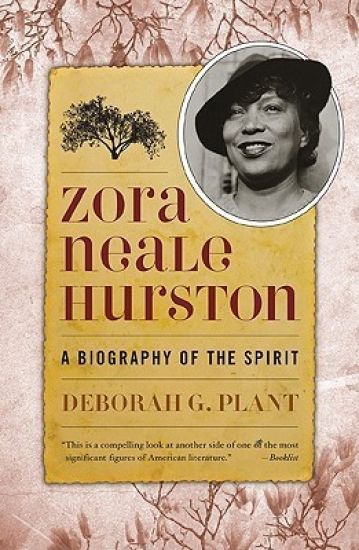
Zora Neale Hurston

Zora Neale Hurston

Deborah G. Plant

Rowman Littlefield
2011
pokkari
While most biographies of Hurston take a standard approach to revealing the facts and details of her life, this is the first to look at the role spirituality played in her life and letters. Throughout her fiction, nonfiction, political and social activity, Hurston's spirit shines through, animating all areas of her life. To ignore it is to paint an incomplete picture of a life that carries on through the works she left behind. Plant shows here that Hurston's spirituality helped her to endure the challenges in her life, including chronic ill health, personal and professional setbacks, financial difficulties, and other obstacles that might have crushed a less resilient soul. In revealing this often overlooked area of Hurston's life, Plant offers a more complete biography of this eminent woman of letters.
The Life of Herod the Great

The Life of Herod the Great

Zora Neale Hurston; Deborah G. Plant

Amistad Press
2025
sidottu
A never before published novel from beloved author Zora Neale Hurston, revealing the historical Herod the Great--not the villain the Bible makes him out to be but a religious and philosophical man who lived a life of valor and vision.In the 1950s, as a continuation of Moses, Man of the Mountain, Zora Neale Hurston penned a historical novel about one of the most infamous figures in the Bible, Herod the Great. In Hurston's retelling, Herod is not the wicked ruler of the New Testament who is charged with the "slaughter of the innocents," but a forerunner of Christ--a beloved king who enriched Jewish culture and brought prosperity and peace to Judea.From the peaks of triumph to the depths of human misery, the historical Herod "appears to have been singled out and especially endowed to attract the lightning of fate," Hurston writes. An intimate of both Marc Antony and Julius Caesar, the Judean king lived during the first century BCE, in a time of war and imperial expansion that was rife with political assassinations and bribery, as the old world gave way to the new.Portraying Herod within this vivid and dynamic world of antiquity, little known to modern readers, Hurston's unfinished manuscript brings this complex, compelling, and misunderstood leader fully into focus. Hurston shared her findings about Herod's rise, his reign, and his waning days in letters to friends and associates. Text from three of these letters concludes the manuscript in an intimate way. Scholar-Editor Deborah Plant's "Commentary: A Story Finally Told" assesses Hurston's pioneering work and underscores Hurston's perspective that the first century has much to teach us, and the lens through which to view this dramatic and stirring era is the life and times of Herod the Great.
The Life of Herod the Great

The Life of Herod the Great

Zora Neale Hurston; Deborah G. Plant

Amistad Press
2026
nidottu
A never before published novel from beloved author Zora Neale Hurston, revealing the historical Herod the Great--not the villain the Bible makes him out to be but a religious and philosophical man who lived a life of valor and vision.In the 1950s, as a continuation of Moses, Man of the Mountain, Zora Neale Hurston penned a historical novel about one of the most infamous figures in the Bible, Herod the Great. In Hurston's retelling, Herod is not the wicked ruler of the New Testament who is charged with the "slaughter of the innocents," but a forerunner of Christ--a beloved king who enriched Jewish culture and brought prosperity and peace to Judea.From the peaks of triumph to the depths of human misery, the historical Herod "appears to have been singled out and especially endowed to attract the lightning of fate," Hurston writes. An intimate of both Marc Antony and Julius Caesar, the Judean king lived during the first century BCE, in a time of war and imperial expansion that was rife with political assassinations and bribery, as the old world gave way to the new.Portraying Herod within this vivid and dynamic world of antiquity, little known to modern readers, Hurston's unfinished manuscript brings this complex, compelling, and misunderstood leader fully into focus. Hurston shared her findings about Herod's rise, his reign, and his waning days in letters to friends and associates. Text from three of these letters concludes the manuscript in an intimate way. Scholar-Editor Deborah Plant's "Commentary: A Story Finally Told" assesses Hurston's pioneering work and underscores Hurston's perspective that the first century BCE has much to teach us and that the lens through which to view this dramatic and stirring era is the life and times of Herod the Great.
The Life of Herod the Great

The Life of Herod the Great

Zora Neale Hurston; Deborah G. Plant

Harperone Large Print
2025
nidottu
A never before published novel from beloved author Zora Neale Hurston, revealing the historical Herod the Great--not the villain the Bible makes him out to be but a religious and philosophical man who lived a life of valor and vision.In the 1950s, as a continuation of Moses, Man of the Mountain, Zora Neale Hurston penned a historical novel about one of the most infamous figures in the Bible, Herod the Great. In Hurston's retelling, Herod is not the wicked ruler of the New Testament who is charged with the "slaughter of the innocents," but a forerunner of Christ--a beloved king who enriched Jewish culture and brought prosperity and peace to Judea.From the peaks of triumph to the depths of human misery, the historical Herod "appears to have been singled out and especially endowed to attract the lightning of fate," Hurston writes. An intimate of both Marc Antony and Julius Caesar, the Judean king lived during the first century BCE, in a time of war and imperial expansion that was rife with political assassinations and bribery, as the old world gave way to the new.Portraying Herod within this vivid and dynamic world of antiquity, little known to modern readers, Hurston's unfinished manuscript brings this complex, compelling, and misunderstood leader fully into focus. Hurston shared her findings about Herod's rise, his reign, and his waning days in letters to friends and associates. Text from three of these letters concludes the manuscript in an intimate way. Scholar-Editor Deborah Plant's "Commentary: A Story Finally Told" assesses Hurston's pioneering work and underscores Hurston's perspective that the first century has much to teach us, and the lens through which to view this dramatic and stirring era is the life and times of Herod the Great.