Kirjojen hintavertailu. Mukana 12 108 627 kirjaa ja 12 kauppaa.

Kirjahaku

Etsi kirjoja tekijän nimen, kirjan nimen tai ISBN:n perusteella.

6 kirjaa tekijältä Deborah Gray White

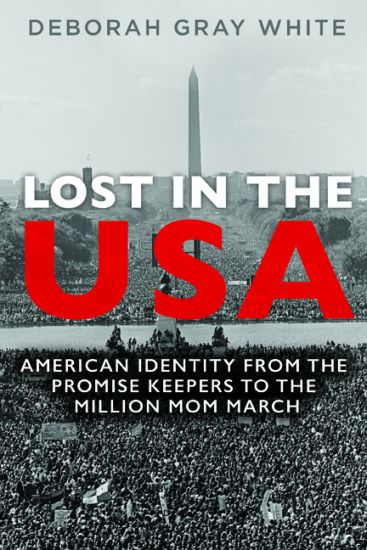
Lost in the USA

Lost in the USA

Deborah Gray White

University of Illinois Press
2017
sidottu
Remembered as an era of peace and prosperity, turn-of-the-millennium America was also a time of mass protest. But the political demands of the marchers seemed secondary to an urgent desire for renewal and restoration felt by people from all walks of life. Drawing on thousands of personal testimonies, Deborah Gray White explores how Americans sought better ways of living in, and dealing with, a rapidly changing world. From the Million Man, Million Woman, and Million Mom Marches to the Promise Keepers and LGBT protests, White reveals a people lost in their own country. Mass gatherings offered a chance to bond with like-minded others against a relentless tide of loneliness and isolation. By participating, individuals opened a door to self-discovery that energized their quests for order, autonomy, personal meaning, and fellowship in a society that seemed hostile to such deeper human needs. Moving forward in time, White also shows what marchers found out about themselves and those gathered around them. The result is an eye-opening reconsideration of a defining time in contemporary America.
Lost in the USA

Lost in the USA

Deborah Gray White

University of Illinois Press
2017
nidottu
Remembered as an era of peace and prosperity, turn-of-the-millennium America was also a time of mass protest. But the political demands of the marchers seemed secondary to an urgent desire for renewal and restoration felt by people from all walks of life. Drawing on thousands of personal testimonies, Deborah Gray White explores how Americans sought better ways of living in, and dealing with, a rapidly changing world. From the Million Man, Million Woman, and Million Mom Marches to the Promise Keepers and LGBT protests, White reveals a people lost in their own country. Mass gatherings offered a chance to bond with like-minded others against a relentless tide of loneliness and isolation. By participating, individuals opened a door to self-discovery that energized their quests for order, autonomy, personal meaning, and fellowship in a society that seemed hostile to such deeper human needs. Moving forward in time, White also shows what marchers found out about themselves and those gathered around them. The result is an eye-opening reconsideration of a defining time in contemporary America.
Ar'n't I a Woman?

Ar'n't I a Woman?

Deborah Gray White

WW Norton Co
1999
nidottu
Living with the dual burdens of racism and sexism, slave women in the plantation South assumed roles within the family and community that contrasted sharply with traditional female roles in the larger American society. This revised edition of Ar'n't I a Woman? reviews and updates the scholarship on slave women and the slave family, exploring new ways of understanding the intersection of race and gender and comparing the myths that stereotyped female slaves with the realities of their lives. Above all, this groundbreaking study shows us how black women experienced freedom in the Reconstruction South—their heroic struggle to gain their rights, hold their families together, resist economic and sexual oppression, and maintain their sense of womanhood against all odds. Winner of the Letitia Woods Brown Memorial Book Prize awarded by the Association of Black Women Historians.
Too Heavy a Load

Too Heavy a Load

Deborah Gray White

WW Norton Co
2000
nidottu
Too Heavy a Load celebrates this century's rich history of black women defending themselves, from Ida B. Wells to Anita Hill. Although most prominently a history of the century-long struggle against racism and male chauvinism, Deborah Gray White also movingly illuminates black women's painful struggle to hold their racial and gender identities intact while feeling the inexorable pull of the agendas of white women and black men. Finally, it tells the larger and lamentable story of how Americans began this century measuring racial progress by the status of black women but gradually came to focus on the status of black men-the masculinization of America's racial consciousness. Writing with the same magisterial eye for historical detail as in her best-selling Ar'n't I a Woman, Deborah Gray White has given us a moving and definitive history of struggle and freedom. "Splendid . . . a broad and sweeping history that becomes an intensely personal experience for the reader. . . . An inspiring showcase of scholarship and sistership." - Nell Irvin Painter, Raleigh News & Observer
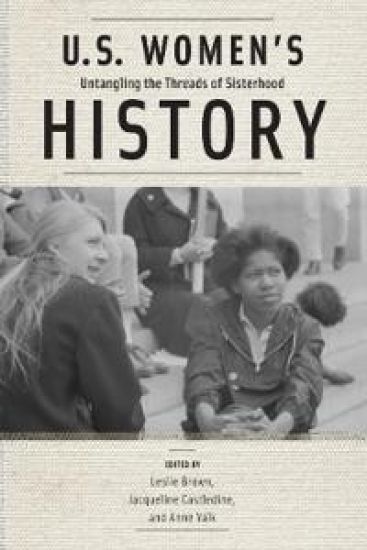
U.S. Women's History

U.S. Women's History

Deborah Gray White

Rutgers University Press
2017
nidottu
In the 1970s, feminist slogans proclaimed “Sisterhood is powerful,” and women’s historians searched through the historical archives to recover stories of solidarity and sisterhood. However, as feminist scholars have started taking a more intersectional approach—acknowledging that no woman is simply defined by her gender and that affiliations like race, class, and sexual identity are often equally powerful—women’s historians have begun to offer more varied and nuanced narratives. The ten original essays in U.S. Women's History represent a cross-section of current research in the field. Including work from both emerging and established scholars, this collection employs innovative approaches to study both the causes that have united American women and the conflicts that have divided them. Some essays uncover little-known aspects of women’s history, while others offer a fresh take on familiar events and figures, from Rosa Parks to Take Back the Night marches. Spanning the antebellum era to the present day, these essays vividly convey the long histories and ongoing relevance of topics ranging from women’s immigration to incarceration, from acts of cross-dressing to the activism of feminist mothers. This volume thus not only untangles the threads of the sisterhood mythos, it weaves them into a multi-textured and multi-hued tapestry that reflects the breadth and diversity of U.S. women’s history.