Kirjojen hintavertailu. Mukana 12 363 183 kirjaa ja 12 kauppaa.

Kirjahaku

Etsi kirjoja tekijän nimen, kirjan nimen tai ISBN:n perusteella.

5 kirjaa tekijältä Deborah J. Yashar

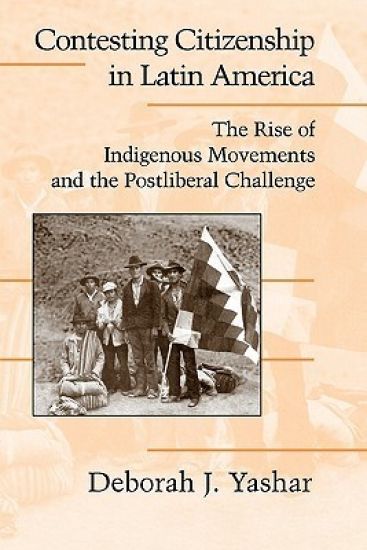
Contesting Citizenship in Latin America

Contesting Citizenship in Latin America

Deborah J. Yashar

Cambridge University Press
2005
pokkari
Indigenous people in Latin America have mobilized in unprecedented ways - demanding recognition, equal protection, and subnational autonomy. These are remarkable developments in a region where ethnic cleavages were once universally described as weak. Recently, however, indigenous activists and elected officials have increasingly shaped national political deliberations. Deborah Yashar explains the contemporary and uneven emergence of Latin American indigenous movements - addressing both why indigenous identities have become politically salient in the contemporary period and why they have translated into significant political organizations in some places and not others. She argues that ethnic politics can best be explained through a comparative historical approach that analyzes three factors: changing citizenship regimes, social networks, and political associational space. Her argument provides insight into the fragility and unevenness of Latin America's third wave democracies and has broader implications for the ways in which we theorize the relationship between citizenship, states, identity, and social action.
Contesting Citizenship in Latin America

Contesting Citizenship in Latin America

Deborah J. Yashar

Cambridge University Press
2005
sidottu
Indigenous people in Latin America have mobilized in unprecedented ways - demanding recognition, equal protection, and subnational autonomy. These are remarkable developments in a region where ethnic cleavages were once universally described as weak. Recently, however, indigenous activists and elected officials have increasingly shaped national political deliberations. Deborah Yashar explains the contemporary and uneven emergence of Latin American indigenous movements - addressing both why indigenous identities have become politically salient in the contemporary period and why they have translated into significant political organizations in some places and not others. She argues that ethnic politics can best be explained through a comparative historical approach that analyzes three factors: changing citizenship regimes, social networks, and political associational space. Her argument provides insight into the fragility and unevenness of Latin America's third wave democracies and has broader implications for the ways in which we theorize the relationship between citizenship, states, identity, and social action.

Homicidal Ecologies

Homicidal Ecologies

Deborah J. Yashar

Cambridge University Press
2018
sidottu
Why has violence spiked in Latin America's contemporary democracies? What explains its temporal and spatial variation? Analyzing the region's uneven homicide levels, this book maps out a theoretical agenda focusing on three intersecting factors: the changing geography of transnational illicit political economies; the varied capacity and complicity of state institutions tasked with providing law and order; and organizational competition to control illicit territorial enclaves. These three factors inform the emergence of 'homicidal ecologies' (subnational regions most susceptible to violence) in Latin America. After focusing on the contemporary causes of homicidal violence, the book analyzes the comparative historical origins of weak and complicit public security forces and the rare moments in which successful institutional reform takes place. Regional trends in Latin America are evaluated, followed by original case studies of Central America, which claims among the highest homicide rates in the world.
Homicidal Ecologies

Homicidal Ecologies

Deborah J. Yashar

Cambridge University Press
2018
pokkari
Why has violence spiked in Latin America's contemporary democracies? What explains its temporal and spatial variation? Analyzing the region's uneven homicide levels, this book maps out a theoretical agenda focusing on three intersecting factors: the changing geography of transnational illicit political economies; the varied capacity and complicity of state institutions tasked with providing law and order; and organizational competition to control illicit territorial enclaves. These three factors inform the emergence of 'homicidal ecologies' (subnational regions most susceptible to violence) in Latin America. After focusing on the contemporary causes of homicidal violence, the book analyzes the comparative historical origins of weak and complicit public security forces and the rare moments in which successful institutional reform takes place. Regional trends in Latin America are evaluated, followed by original case studies of Central America, which claims among the highest homicide rates in the world.