Kirjojen hintavertailu. Mukana 11 699 587 kirjaa ja 12 kauppaa.

Kirjahaku

Etsi kirjoja tekijän nimen, kirjan nimen tai ISBN:n perusteella.

13 kirjaa tekijältä Deborah James

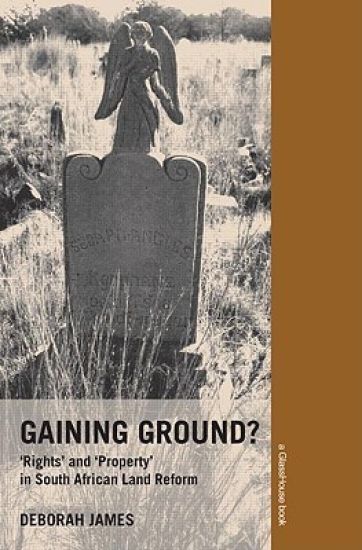
Gaining Ground?

Gaining Ground?

Deborah James

Routledge Cavendish
2006
nidottu
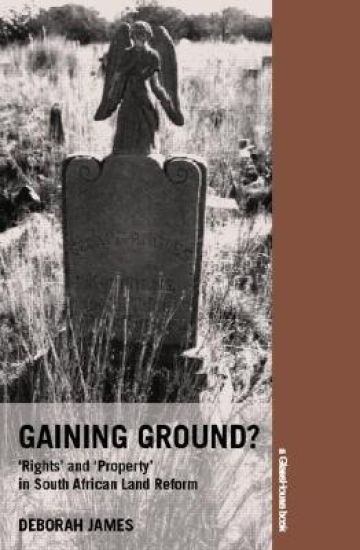
Gaining Ground? Rights and Property in South African Land Reform examines how land reform policy and practice in post-apartheid South Africa have been produced and contested. Set in the province of Mpumalanga, the book gives an ethnographic account of local initiatives and conflicts, showing how the poorest sectors of the landless have defied the South African state's attempts to privatize land holdings and create a new class of African farmers. They insist that the 'rights-based' rather than the 'market-driven' version of land reform should prevail and that land restitution was intended to benefit all Africans. However their attempts to gain land access often backfire. Despite state assurances that land reform would benefit all, illegal land selling and 'brokering' are pervasive, representing one of the only feasible routes to land access by the poor.This book shows how human rights lawyers, NGOs and the state, in interaction with local communities, have tried to square these symbolic and economic claims on land.Winner of the inaugural Elliott P. Skinner Book Award of the Association of Africanist Anthropology, 2008
An Audit of a Murder

An Audit of a Murder

Deborah James

Mickie Dalton Foundation
2019
pokkari
Allison Bentley is a successful IT Consultant with an old-fashioned accounting firm in Chicago. She is also gay. She causes anger in some partners by her criticisms of the firm's obsolete technology and business practices and she is fired. She joins another firm and begins to take business from her old employers. They become increasingly frightened of her actions and the damage she is doing to the firm's business and the partners start to take action but find themselves descending a dangerous path to that can only lead to one bloody conclusion.
Songs of the Women Migrants

Songs of the Women Migrants

Deborah James

Edinburgh University Press
1999
nidottu
This book gives an account of how migrant women, whose lives and experiences have heretofore been neglected in the pages of academic scholarship, dance and sing the vibrant and expressive musical style of kiba. In so doing, they build an identity as autonomous breadwinners whose aspirations and values are nonetheless rooted in 'tradition'.
Money from Nothing

Money from Nothing

Deborah James

Stanford University Press
2014
sidottu
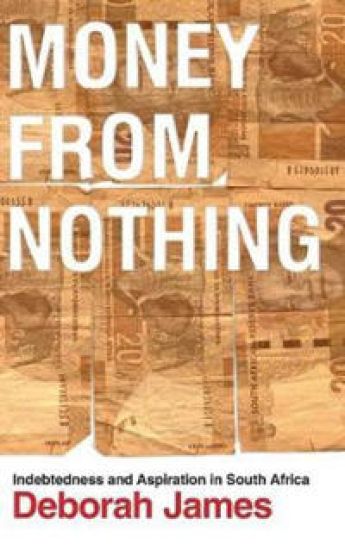
Money from Nothing explores the dynamics surrounding South Africa's national project of financial inclusion—dubbed "banking the unbanked"—which aimed to extend credit to black South Africans as a critical aspect of broad-based economic enfranchisement. Through rich and captivating accounts, Deborah James reveals the varied ways in which middle- and working-class South Africans' access to credit is intimately bound up with identity, status-making, and aspirations of upward mobility. She draws out the deeply precarious nature of both the aspirations and the economic relations of debt which sustain her subjects, revealing the shadowy side of indebtedness and its potential to produce new forms of oppression and disenfranchisement in place of older ones. Money from Nothing uniquely captures the lived experience of indebtedness for those many millions who attempt to improve their positions (or merely sustain existing livelihoods) in emerging economies.
Money from Nothing

Money from Nothing

Deborah James

Stanford University Press
2014
pokkari
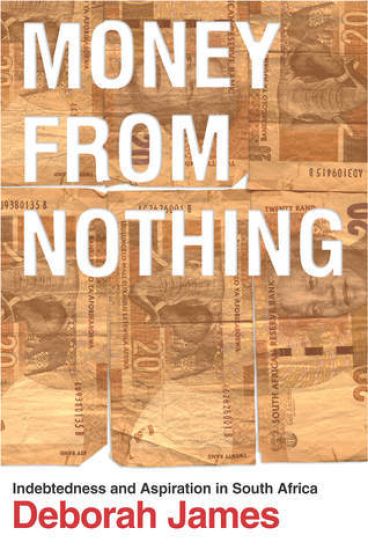
Money from Nothing explores the dynamics surrounding South Africa's national project of financial inclusion—dubbed "banking the unbanked"—which aimed to extend credit to black South Africans as a critical aspect of broad-based economic enfranchisement. Through rich and captivating accounts, Deborah James reveals the varied ways in which middle- and working-class South Africans' access to credit is intimately bound up with identity, status-making, and aspirations of upward mobility. She draws out the deeply precarious nature of both the aspirations and the economic relations of debt which sustain her subjects, revealing the shadowy side of indebtedness and its potential to produce new forms of oppression and disenfranchisement in place of older ones. Money from Nothing uniquely captures the lived experience of indebtedness for those many millions who attempt to improve their positions (or merely sustain existing livelihoods) in emerging economies.
Clawing Back

Clawing Back

Deborah James

STANFORD UNIVERSITY PRESS
2025
sidottu
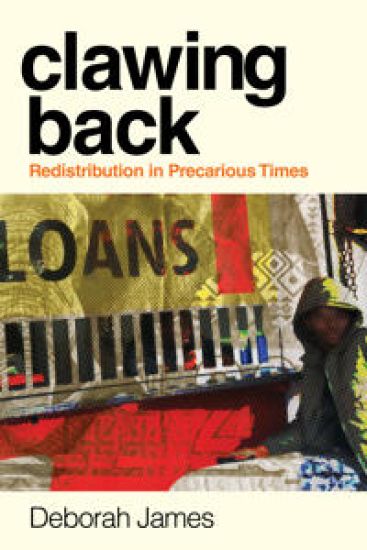
The impulse to redistribute wealth is said to be a tool to counter inequalities, applied by the state or society to curb the worst excesses of capitalist exploitation and free trade. In settings where previous political regimes are reformed, or toppled and replaced by new ones, redistribution can also be a policy specifically oriented at redress, one exercised at the formal level of policy. Drawing on a comparative ethnography in South Africa and the United Kingdom, Clawing Back explores how notions of reallocation and payout are intimately connected with those of compensation for a loss. Where financialization is accompanied by increased informalization, redistribution can equally involve the market as well as kinship and social networks. Drawing on a rich ethnography of the human relationships at the center of redistribution, Deborah James shows how borrowing can provide negotiation opportunities to wage earners and welfare beneficiaries alike: they make use of debt to constitute relations and futures, to engage with the state, to convert between commodified and non-commodified relationships. Rather than suggesting that financialization is serving either a totally negative or wholly beneficial purpose, James posits a different way of visualizing the relationship between the finance industry and the world of everyday needs.
Clawing Back

Clawing Back

Deborah James

STANFORD UNIVERSITY PRESS
2025
pokkari
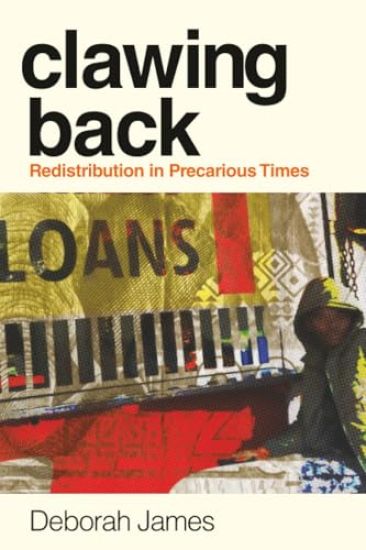
The impulse to redistribute wealth is said to be a tool to counter inequalities, applied by the state or society to curb the worst excesses of capitalist exploitation and free trade. In settings where previous political regimes are reformed, or toppled and replaced by new ones, redistribution can also be a policy specifically oriented at redress, one exercised at the formal level of policy. Drawing on a comparative ethnography in South Africa and the United Kingdom, Clawing Back explores how notions of reallocation and payout are intimately connected with those of compensation for a loss. Where financialization is accompanied by increased informalization, redistribution can equally involve the market as well as kinship and social networks. Drawing on a rich ethnography of the human relationships at the center of redistribution, Deborah James shows how borrowing can provide negotiation opportunities to wage earners and welfare beneficiaries alike: they make use of debt to constitute relations and futures, to engage with the state, to convert between commodified and non-commodified relationships. Rather than suggesting that financialization is serving either a totally negative or wholly beneficial purpose, James posits a different way of visualizing the relationship between the finance industry and the world of everyday needs.
How to Live When You Could Be Dead

How to Live When You Could Be Dead

Deborah James

Sourcebooks
2022
nidottu
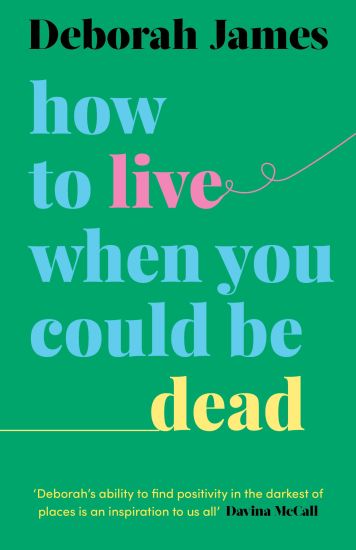
A profoundly moving and inspiring personal memoir on how to turn your mind from a negative spiral into realistic and rebellious hope."I was alive when I should have been dead. In another movie, I missed the sliding door and departed this wondrous life long ago. Like so many others, I had to learn to live not knowing if I have a tomorrow, because, statistically, I didn't. At the age of 35, I was blindsided by incurable bowel cancer--I was given less than an 8 percent chance of surviving five years. Five years later, my only option was to live in the now and to value one day at a time."When Deborah James was diagnosed with incurable bowel cancer at just 35, she learned a powerful lesson: the way we respond to any given situation empowers or destroys us. And with the right skills and approach, we can all face huge challenges and find strength and hope in the darkest of places.How to Live When You Could Be Dead, a Sunday Times bestseller, will show you how. It will awaken you to question your life as if you didn't have a tomorrow and live it in the way you want to today. By harnessing the power of positivity and valuing each day as though it could be your last, you'll find out, as Deborah did, that it is possible to live with joy and purpose, no matter what.Praise for How to Live When You Could Be Dead: "Deborah James has captured the heart of the nation." --The Duke and Duchess of Cambridge @KensingtonRoyal"Brave, bright, beautiful." --Lorraine Kelly"Deborah's ability to find positivity in the darkest of places is an inspiration to us all." --Davina McCall
F*** You Cancer

F*** You Cancer

Deborah James

Vermilion
2018
pokkari
**As seen on BBC Breakfast**You are stronger than you know, more positive than you ever thought and you can still LIVE with cancer.Drink more green juices, eat turmeric, walk for three hours a day... Arghh, I wanted to scream, run away and tell every well-meaning person to go and do one!Whilst this book doesn’t advocate throwing all advice down the kitchen sink, it will empower you to do things your way as you navigate the big C roller coaster. Deborah James, campaigner and co-presenter of the top-charting podcast You, Me and the Big C, will take you through every twist and turn, reminding you that it’s okay to feel one hundred different things in the space of a minute and showing you how you can still live your life and BE YOURSELF with cancer. Taking you from diagnosis (welcome to the club you never wanted to join), to coping with family and friends (can everyone just fuck off sometimes?!), looking good and feeling better (drink the wine), and celebrating milestones along the way (drink more wine!), this inspiring cancer coach in a book will transform your outlook and encourage you to shout #FUCKYOUCANCER as loudly as you can!
How to Live When You Could Be Dead

How to Live When You Could Be Dead

Deborah James

Vermilion
2022
sidottu
THE SUNDAY TIMES NO.1 BESTSELLER'Deborah James has captured the heart of the nation' - The Duke and Duchess of Cambridge @KensingtonRoyal'Brave, bright, beautiful' - Lorraine Kelly'Deborah's ability to find positivity in the darkest of places is an inspiration to us all' - Davina McCall'This book has shaken me awake. I gulped it down in one sitting, then sat and cried... [But] hope is a character on every single page' - Christie Watson -------------------I was alive when I should have been dead. In another movie, I missed the sliding door and departed this wondrous life long ago. Like so many others, I had to learn to live not knowing if I have a tomorrow, because, statistically, I didn't. At the age of 35, I was blindsided by incurable bowel cancer - I was given less than an 8 per cent chance of surviving five years. Five years later, my only option was to live in the now and to value one day at a time. --------------------How do you turn your mind from a negative spiral into realistic and rebellious hope? How do you stop focusing on the why and realise that 'why not me' is just as valid a question?When Deborah James was diagnosed with incurable bowel cancer at just 35, she learned a powerful lesson: the way we respond to any given situation empowers or destroys us. And with the right skills and approach, we can all face huge challenges and find strength and hope in the darkest of places.How to Live When You Could Be Dead will show you how. It will awaken you to question your life as if you didn't have a tomorrow and live it in the way you want to today. By harnessing the power of positivity and valuing each day as though it could be your last, you'll find out, as Deborah did, that it is possible to live with joy and purpose, no matter what.Ebury, a division of Penguin Random House, will pay £3 from the sale of each copy of How To Live When You Could Be Dead by Deborah James sold in the UK to Bowelbabe Fund for Cancer Research UK. Cancer Research UK is a charity registered in England and Wales (1089464), Scotland (SC041666), Isle of Man (1103) and Jersey (247).
How to Live When You Could Be Dead

How to Live When You Could Be Dead

Deborah James

Ebury Publishing
2023
pokkari
THE SUNDAY TIMES No 1 BESTSELLER'Deborah James captured the heart of the nation' - The Duke and Duchess of Cambridge @KensingtonRoyal'Brave, bright, beautiful' - Lorraine Kelly'Deborah's ability to find positivity in the darkest of places is an inspiration to us all' - Davina McCall'This book has shaken me awake. I gulped it down in one sitting, then sat and cried... [But] hope is a character on every single page' - Christie Watson-------------------I was alive when I should have been dead. In another movie, I missed the sliding door and departed this wondrous life long ago. Like so many others, I had to learn to live not knowing if I have a tomorrow, because, statistically, I didn't. At the age of 35, I was blindsided by incurable bowel cancer - I was given less than an 8 per cent chance of surviving five years. Five years later, my only option was to live in the now and to value one day at a time.--------------------How do you turn your mind from a negative spiral into realistic and rebellious hope? How do you stop focusing on the why and realise that 'why not me' is just as valid a question?When Deborah James was diagnosed with incurable bowel cancer at just 35, she learned a powerful lesson: the way we respond to any given situation empowers or destroys us. And with the right skills and approach, we can all face huge challenges and find strength and hope in the darkest of places.How to Live When You Could Be Dead will show you how. It will awaken you to question your life as if you didn't have a tomorrow and live it in the way you want to today. By harnessing the power of positivity and valuing each day as though it could be your last, you'll find out, as Deborah did, that it is possible to live with joy and purpose, no matter what.Ebury, a division of Penguin Random House, will pay £2.50 from the sale of each paperback copy of How To Live When You Could Be Dead by Deborah James sold in the UK to Bowelbabe Fund for Cancer Research UK.Cancer Research UK is a charity registered in England and Wales (1089464), Scotland (SC041666), Isle of Man (1103) and Jersey (247).
Gaining Ground?

Gaining Ground?

Deborah James

Routledge Cavendish
2006
sidottu
Gaining Ground? Rights and Property in South African Land Reform examines how land reform policy and practice in post-apartheid South Africa have been produced and contested. Set in the province of Mpumalanga, the book gives an ethnographic account of local initiatives and conflicts, showing how the poorest sectors of the landless have defied the South African state's attempts to privatize land holdings and create a new class of African farmers. They insist that the 'rights-based' rather than the 'market-driven' version of land reform should prevail and that land restitution was intended to benefit all Africans. However their attempts to gain land access often backfire. Despite state assurances that land reform would benefit all, illegal land selling and 'brokering' are pervasive, representing one of the only feasible routes to land access by the poor.This book shows how human rights lawyers, NGOs and the state, in interaction with local communities, have tried to square these symbolic and economic claims on land.Winner of the inaugural Elliott P. Skinner Book Award of the Association of Africanist Anthropology, 2008