Kirjojen hintavertailu. Mukana 11 627 466 kirjaa ja 12 kauppaa.

Kirjahaku

Etsi kirjoja tekijän nimen, kirjan nimen tai ISBN:n perusteella.

2 tulosta hakusanalla "Clawing Back"

Clawing Back

Clawing Back

Deborah James

STANFORD UNIVERSITY PRESS
2025
sidottu
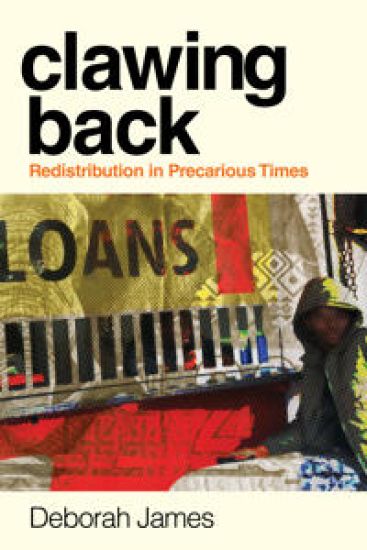
The impulse to redistribute wealth is said to be a tool to counter inequalities, applied by the state or society to curb the worst excesses of capitalist exploitation and free trade. In settings where previous political regimes are reformed, or toppled and replaced by new ones, redistribution can also be a policy specifically oriented at redress, one exercised at the formal level of policy. Drawing on a comparative ethnography in South Africa and the United Kingdom, Clawing Back explores how notions of reallocation and payout are intimately connected with those of compensation for a loss. Where financialization is accompanied by increased informalization, redistribution can equally involve the market as well as kinship and social networks. Drawing on a rich ethnography of the human relationships at the center of redistribution, Deborah James shows how borrowing can provide negotiation opportunities to wage earners and welfare beneficiaries alike: they make use of debt to constitute relations and futures, to engage with the state, to convert between commodified and non-commodified relationships. Rather than suggesting that financialization is serving either a totally negative or wholly beneficial purpose, James posits a different way of visualizing the relationship between the finance industry and the world of everyday needs.

Clawing Back

Clawing Back

Deborah James

STANFORD UNIVERSITY PRESS
2025
pokkari
The impulse to redistribute wealth is said to be a tool to counter inequalities, applied by the state or society to curb the worst excesses of capitalist exploitation and free trade. In settings where previous political regimes are reformed, or toppled and replaced by new ones, redistribution can also be a policy specifically oriented at redress, one exercised at the formal level of policy. Drawing on a comparative ethnography in South Africa and the United Kingdom, Clawing Back explores how notions of reallocation and payout are intimately connected with those of compensation for a loss. Where financialization is accompanied by increased informalization, redistribution can equally involve the market as well as kinship and social networks. Drawing on a rich ethnography of the human relationships at the center of redistribution, Deborah James shows how borrowing can provide negotiation opportunities to wage earners and welfare beneficiaries alike: they make use of debt to constitute relations and futures, to engage with the state, to convert between commodified and non-commodified relationships. Rather than suggesting that financialization is serving either a totally negative or wholly beneficial purpose, James posits a different way of visualizing the relationship between the finance industry and the world of everyday needs.