Kirjojen hintavertailu. Mukana 11 244 527 kirjaa ja 12 kauppaa.

Kirjahaku

Etsi kirjoja tekijän nimen, kirjan nimen tai ISBN:n perusteella.

6 kirjaa tekijältä Deborah L. Parsons

Streetwalking the Metropolis

Streetwalking the Metropolis

Deborah L. Parsons

Oxford University Press
2000
sidottu
Can there be a flaneuse, and what form might she take? This is the central question of Streetwalking the Metropolis, an important contribution to ongoing debates on the city and modernity in which Deborah Parsons re-draws the gendered map of urban modernism. Assessing the cultural and literary history of the concept of the flaneur, the urban observer/writer traditionally gendered as masculine, the author advances critical space for the discussion of a female 'flaneuse', focused around a range of women writers from the 1880's to World War Two. Cutting across period boundaries, this wide-ranging study offers stimulating accounts of works by writers including Amy Levy, Dorothy Richardson, Virginia Woolf, Rosamund Lehmann, Jean Rhys, Janet Flanner, Djuna Barnes, Anais Nin, Elizabeth Bowen and Doris Lessing, highlighting women's changing relationship with the social and psychic spaces of the city, and drawing attention to the ways in which the perceptions and experiences of the street are translated into the dynamics of literary texts.
Streetwalking the Metropolis

Streetwalking the Metropolis

Deborah L. Parsons

Oxford University Press
2000
nidottu
Can there be a flaneuse, and what form might she take? This is the central question of Streetwalking the Metropolis, an important contribution to ongoing debates on the city and modernity in which Deborah Parsons re-draws the gendered map of urban modernism. Assessing the cultural and literary history of the concept of the flaneur, the urban observer/writer traditionally gendered as masculine, the author advances critical space for the discussion of a female 'flaneuse', focused around a range of women writers from the 1880s to World War Two. Cutting across period boundaries, this wide-ranging study offers stimulating accounts of works by writers including Amy Levy, Dorothy Richardson, Virginia Woolf, Rosamund Lehmann, Jean Rhys, Janet Flanner, Djuna Barnes, Anais Nin, Elizabeth Bowen and Doris Lessing, highlighting women's changing relationship with the social and psychic spaces of the city, and drawing attention to the ways in which the perceptions and experiences of the street are translated into the dynamics of literary texts.
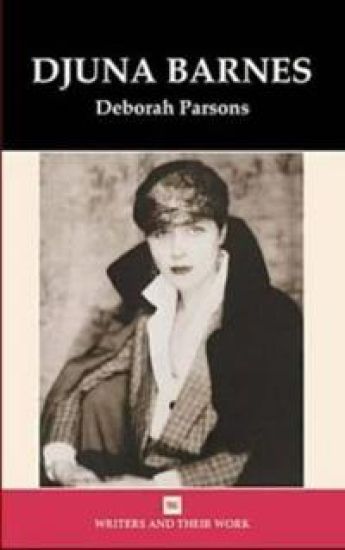
Djuna Barnes

Djuna Barnes

Deborah L. Parsons

Northcote House Publishers Ltd
2003
nidottu
Djuna Barnes once described herself as one of the most famous unknowns of the century. Revisionary accounts of female modernist writers have re-awakened interest in her work, yet she remains a unique and idiosyncratic figure, unassimilated by models of American expatriate or Sapphic modernism. In this illuminating and lucid study, Deborah Parsons examines the range of Barnes’s oeuvre; her early journalism, short stories and one act dramas, poetry, the family chronicle Ryder, the Ladies Almanack, and her late play The Antiphon, as well as her modernist classic Nightwood. She explores the psychological and stylistic aspect of Barnes’s work through close analysis of the texts within their social, cultural and aesthetic context, and provides an indispensable and enriching guide to Barnes’s artistic identity and poetic vision. Barnes’s determined inversion of generic and social norms, sexology, degeneration, ethnography and decadence, her unusual childhood, her professional friendships with T.S. Eliot and James Joyce, and her controversial lesbianism are all highlighted and discussed in this introduction to a bold and enigmatic writer.
Djuna Barnes

Djuna Barnes

Deborah L. Parsons

Northcote House Publishers Ltd
2003
sidottu
Djuna Barnes once described herself as one of the most famous unknowns of the century. Revisionary accounts of female modernist writers have re-awakened interest in her work, yet she remains a unique and idiosyncratic figure, unassimilated by models of American expatriate or Sapphic modernism. In this illuminating and lucid study, Deborah Parsons examines the range of Barnes’s oeuvre; her early journalism, short stories and one act dramas, poetry, the family chronicle Ryder, the Ladies Almanack, and her late play The Antiphon, as well as her modernist classic Nightwood. She explores the psychological and stylistic aspect of Barnes’s work through close analysis of the texts within their social, cultural and aesthetic context, and provides an indispensable and enriching guide to Barnes’s artistic identity and poetic vision. Barnes’s determined inversion of generic and social norms, sexology, degeneration, ethnography and decadence, her unusual childhood, her professional friendships with T.S. Eliot and James Joyce, and her controversial lesbianism are all highlighted and discussed in this introduction to a bold and enigmatic writer.
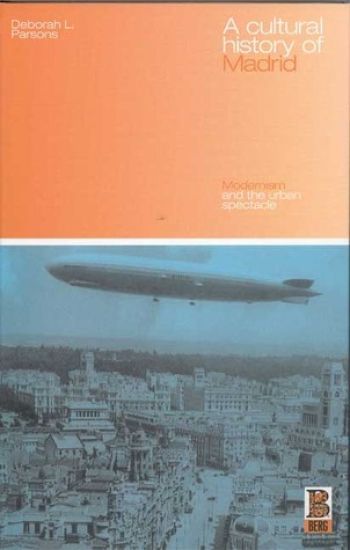
A Cultural History of Madrid

A Cultural History of Madrid

Deborah L. Parsons

Berg Publishers
2003
sidottu
Despite its international significance, Madrid has been almost entirely ignored by urban, literary and cultural studies published in English. A Cultural History of Madrid: Modernism and the Urban Spectacle corrects that oversight by presenting an urban and cultural history of the city from the turn of the century to the early 1930s. Between 1900 and 1930, Madrids population doubled to almost one million, with less than half the population being indigenous to the city itself. Far from the Castilian capital it was made out to be, Madrid was fast becoming a socially magnetic, increasingly secular and cosmopolitan metropolis. Parsons explores the interface between elite, mass and popular culture in Madrid while considering the construction of a modern madrileo identity that developed alongside urban and social modernization. She emphasizes the interconnection of art and popular culture in the creation of a metropolitan personality and temperament. The book draws on literary, theatrical, cinematic and photographic texts, including the work of such figures as Ramn Mesonero Romanos, Benito Prez Galds, Po Baroja, Ramn Gomez de la Serna, Ramn Valle-Incln and Maruja Mallo. In addition, the author examines the development of new urban-based art forms and entertainments such as the zarzuela, music halls and cinema, and considers their interaction with more traditional cultural identities and activities. In arguing that traditional aspects of culture were incorporated into the everyday life of urban modernity, Parsons shows how the boundaries between high and low culture became increasingly blurred as a new identity influenced by modern consumerism emerged. She investigates the interaction of the geographical landscape of the city with its expression in both the popular imagination and in aesthetic representations, detailing and interrogating the new freedoms, desires and perspectives of the Madrid modernista.
A Cultural History of Madrid

A Cultural History of Madrid

Deborah L. Parsons

Berg Publishers
2003
nidottu
This title is an urban and cultural history of Madrid from the turn of the 20th century to the 1930s. It examines the development of new urban-based art forms and entertainments such as zarzuela, music halls and cinema, and considers their interaction with more traditional cultural identities.