Kirjojen hintavertailu. Mukana 11 699 587 kirjaa ja 12 kauppaa.

Kirjahaku

Etsi kirjoja tekijän nimen, kirjan nimen tai ISBN:n perusteella.

5 kirjaa tekijältä Deborah Nelson

Tough Enough

Tough Enough

Deborah Nelson

University of Chicago Press
2017
nidottu
This book focuses on six brilliant women who are often seen as particularly tough-minded: Simone Weil, Hannah Arendt, Mary McCarthy, Susan Sontag, Diane Arbus, and Joan Didion. Aligned with no single tradition, they escape straightforward categories. Yet their work evinces an affinity of style and philosophical viewpoint that derives from a shared attitude toward suffering. What Mary McCarthy called a "cold eye" was not merely a personal aversion to displays of emotion: it was an unsentimental mode of attention that dictated both ethical positions and aesthetic approaches.Tough Enough traces the careers of these women and their challenges to the pre-eminence of empathy as the ethical posture from which to examine pain. Their writing and art reveal an adamant belief that the hurts of the world must be treated concretely, directly, and realistically, without recourse to either melodrama or callousness. As Deborah Nelson shows, this stance offers an important counter-tradition to the common postwar poles of emotional expressivity on the one hand and cool irony on the other. Ultimately, in its insistence on facing reality without consolation or compensation, this austere "school of the unsentimental" offers new ways to approach suffering in both its spectacular forms and all of its ordinariness.
Pursuing Privacy in Cold War America

Pursuing Privacy in Cold War America

Deborah Nelson

Columbia University Press
2001
sidottu
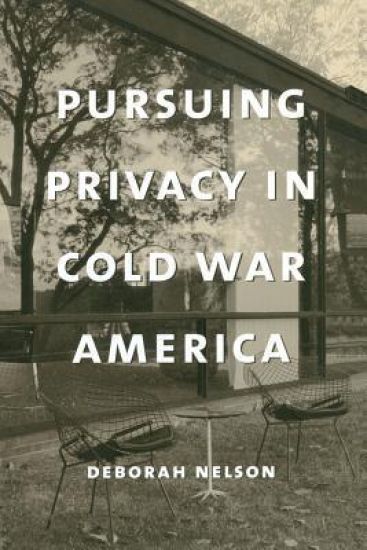
Pursuing Privacy in Cold War America explores the relationship between confessional poetry and constitutional privacy doctrine, both of which emerged at the end of the 1950s. While the public declarations of the Supreme Court and the private declamations of the lyric poet may seem unrelated, both express the upheavals in American notions of privacy that marked the Cold War era. Nelson situates the poetry and legal decisions as part of a far wider anxiety about privacy that erupted across the social, cultural, and political spectrum during this period. She explores the panic over the "death of privacy" aroused by broad changes in postwar culture: the growth of suburbia, the advent of television, the popularity of psychoanalysis, the arrival of computer databases, and the spectacles of confession associated with McCarthyism. Examining this interchange between poetry and law at its most intense moments of reflection in the 1960s, '70s, and '80s, Deborah Nelson produces a rhetorical analysis of a privacy concept integral to postwar America's self-definition and to bedrock contradictions in Cold War ideology. Nelson argues that the desire to stabilize privacy in a constitutional right and the movement toward confession in postwar American poetry were not simply manifestations of the anxiety about privacy. Supreme Court justices and confessional poets such as Anne Sexton, Robert Lowell, W. D. Snodgrass, and Sylvia Plath were redefining the nature of privacy itself. Close reading of the poetry alongside the Supreme Court's shifting definitions of privacy in landmark decisions reveals a broader and deeper cultural metaphor at work.
Pursuing Privacy in Cold War America

Pursuing Privacy in Cold War America

Deborah Nelson

Columbia University Press
2001
pokkari
Pursuing Privacy in Cold War America explores the relationship between confessional poetry and constitutional privacy doctrine, both of which emerged at the end of the 1950s. While the public declarations of the Supreme Court and the private declamations of the lyric poet may seem unrelated, both express the upheavals in American notions of privacy that marked the Cold War era. Nelson situates the poetry and legal decisions as part of a far wider anxiety about privacy that erupted across the social, cultural, and political spectrum during this period. She explores the panic over the "death of privacy" aroused by broad changes in postwar culture: the growth of suburbia, the advent of television, the popularity of psychoanalysis, the arrival of computer databases, and the spectacles of confession associated with McCarthyism. Examining this interchange between poetry and law at its most intense moments of reflection in the 1960s, '70s, and '80s, Deborah Nelson produces a rhetorical analysis of a privacy concept integral to postwar America's self-definition and to bedrock contradictions in Cold War ideology. Nelson argues that the desire to stabilize privacy in a constitutional right and the movement toward confession in postwar American poetry were not simply manifestations of the anxiety about privacy. Supreme Court justices and confessional poets such as Anne Sexton, Robert Lowell, W. D. Snodgrass, and Sylvia Plath were redefining the nature of privacy itself. Close reading of the poetry alongside the Supreme Court's shifting definitions of privacy in landmark decisions reveals a broader and deeper cultural metaphor at work.