Kirjojen hintavertailu. Mukana 11 244 527 kirjaa ja 12 kauppaa.

Kirjahaku

Etsi kirjoja tekijän nimen, kirjan nimen tai ISBN:n perusteella.

13 kirjaa tekijältä Deborah P. Britzman

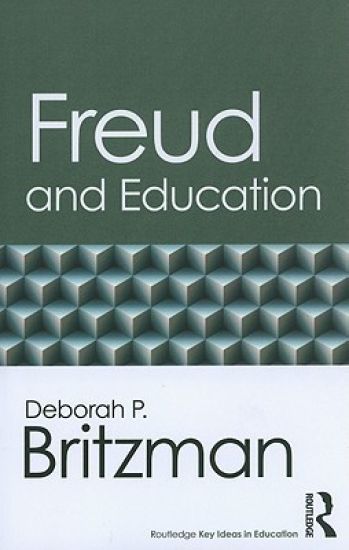
Freud and Education

Freud and Education

Deborah P. Britzman

Routledge
2010
sidottu
The concept of education—its dangers and promises and its illusions and revelations—threads throughout Sigmund Freud’s body of work. This introductory volume by psychoanalytic authority, Deborah P. Britzman, explores key controversies of education through a Freudian approach. It defines how fundamental Freudian concepts such as the psychical apparatus, the drives, the unconscious, the development of morality, and transference have changed throughout Freud’s oeuvre. An ideal text for courses in education studies, human development, and curriculum studies, Freud and Education concludes with new Freudian-influenced approaches to the old dilemmas of educational research, theory, and practice.
Freud and Education

Freud and Education

Deborah P. Britzman

Routledge
2010
nidottu
The concept of education—its dangers and promises and its illusions and revelations—threads throughout Sigmund Freud’s body of work. This introductory volume by psychoanalytic authority, Deborah P. Britzman, explores key controversies of education through a Freudian approach. It defines how fundamental Freudian concepts such as the psychical apparatus, the drives, the unconscious, the development of morality, and transference have changed throughout Freud’s oeuvre. An ideal text for courses in education studies, human development, and curriculum studies, Freud and Education concludes with new Freudian-influenced approaches to the old dilemmas of educational research, theory, and practice.
Lost Subjects, Contested Objects

Lost Subjects, Contested Objects

Deborah P. Britzman

State University of New York Press
1998
pokkari
A study of love and hate in learning and an argument for why educators might begin with consideration of these psychical dynamics when interpreting the conflictive dreams of education.This book argues for education's reconsideration of what psychoanalytic theories of love and hate might mean to the design of learning and pedagogy. Britzman sets in tension three perspectives: studies of education, studies in psychoanalysis, and studies of ethics to consider how larger social and cultural histories live in the small history of the subject. Britzman casts her net widely to consider questions of sex education, the work of Anna Freud in reencountering the Diary of Anne Frank, reading practices in pedagogy, anti-racist pedagogy and the question of love, and the arguments between education and psychoanalysis.
After-Education

After-Education

Deborah P. Britzman

State University of New York Press
2003
sidottu
Uses psychoanalytic theories of learning to explore contemporary issues in education.In After-Education Deborah P. Britzman raises the startling question, What is education that it should give us such trouble? She explores a series of historic and contemporary psychoanalytic arguments over the nature of reality and fantasy for thinking through the force and history of education. Drawing from the theories of Anna Freud and Melanie Klein, she analyzes experiences of difficult knowledge, pedagogy, group psychology, theory, and questions of loneliness in learning education. Throughout the book, education appears and is transformed in its various guises: as a nervous condition, as social relation, as authority, as psychological knowledge, as quality of psychical reality, as fact of natality, as the thing between teachers and students, as an institution, and as a play between reality and fantasy.
After-Education

After-Education

Deborah P. Britzman

State University of New York Press
2003
pokkari
Uses psychoanalytic theories of learning to explore contemporary issues in education.In After-Education Deborah P. Britzman raises the startling question, What is education that it should give us such trouble? She explores a series of historic and contemporary psychoanalytic arguments over the nature of reality and fantasy for thinking through the force and history of education. Drawing from the theories of Anna Freud and Melanie Klein, she analyzes experiences of difficult knowledge, pedagogy, group psychology, theory, and questions of loneliness in learning education. Throughout the book, education appears and is transformed in its various guises: as a nervous condition, as social relation, as authority, as psychological knowledge, as quality of psychical reality, as fact of natality, as the thing between teachers and students, as an institution, and as a play between reality and fantasy.
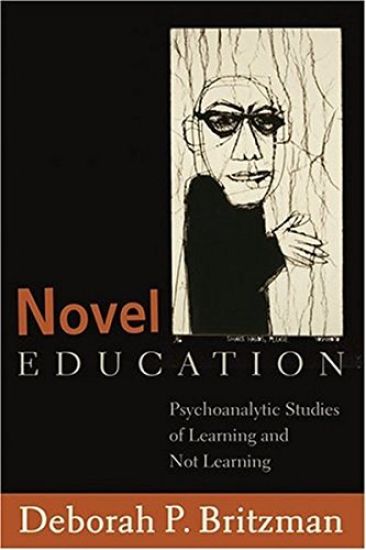
Novel Education

Novel Education

Deborah P. Britzman

Peter Lang Publishing Inc
2006
sidottu
What is a novel education like? The surprising reply supposes that fiction affects the crisis of understanding work within the human professions of teaching and psychoanalysis. The studies of learning and not learning presented begin with the delicate surprise made from representing affective experiences and conflicts within self/other relations. Freud's question of presenting psychoanalysis to others, and the accidental pedagogy made, continues to animate our debates on the uses of affected learning. "Novel Education" analyzes the perils and pleasures of inviting, narrating, and interpreting emotional experience in learning and not learning. Drawing upon contemporary psychoanalytic debates on the relation between understanding and therapeutic action, these studies open discussion on the unusual world of psychoanalytic methods and link free association and the transference to the aesthetic conflicts made from thinking about sexuality, and the difficulties of inhibition in learning, listening, and the teacher's memory of remembering learning to teach. "Novel Education" highlights a discussion of the teacher's depression and the difficulty of formulating subjective knowledge from practices, philosophies, and theories in the human professions. It raises the question of how fields of thought and practice affect themselves. How may we describe the human idiom made in pedagogical and psychoanalytic relationships? And why join learning to not learning? This thought-provoking book is essential reading on a broad range of fields for undergraduate and graduate students, as well as faculty members.
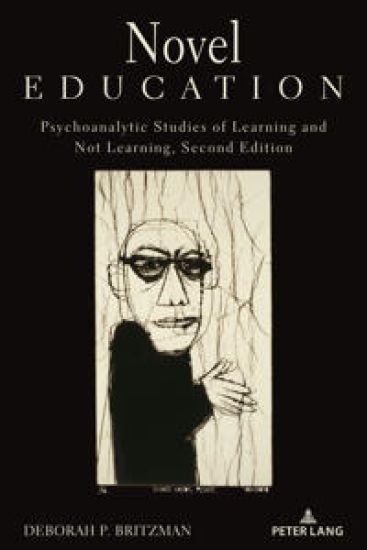
Novel Education

Novel Education

Deborah P. Britzman

PETER LANG PUBLISHING INC
2022
nidottu
An invitation to write, to play, to be affected, to be permissive in taking note: all these gestures of freedom compose Novel Education. Britzman opens the crypt of research to and finds the perils and pleasures of narrating life in the human professions. It is at once an introduction to psychoanalytic theories of everyday education and a guide to perplexed learning. Each chapter considers the situation of pedagogy through the dream of education and analyzes learning through its emotional experiences and passions. New attention is given to aesthetic conflicts made from trying to know intersubjective life. Topics include studies of inhibition, sexuality, aggression and depression, the problems of sexual enlightenement, the uses of free association and the transference, and the play between creativity and anxiety. The second edition includes a new opening note on the problems of experience and case writing for the human sciences. A concluding chapter, "Writing on the Mind" joins a theory of group psychology to new formulations on creativity for students, teachers, parents, analysts, and children. This thought-provoking book is essential reading for undergraduates and graduates students, those teaching and learning in professional education in the fields of counseling, social work, education, and psychotherapy and anyone involved in the learning lives of others. An invitation to write, to play, to be affected, to be permissive in our note taking: All these gestures of freedom compose the play of novel education.
The Very Thought of Education

The Very Thought of Education

Deborah P. Britzman

State University of New York Press
2010
pokkari
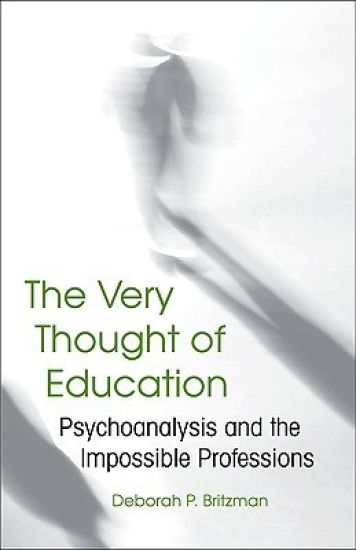
A startling reading of the educational enterprise through a psychoanalytic lens.Winner of the 2009 Gary A. Olson Award presented by JAC - a journal of rhetoric, culture, and politics For anyone who has ever been to school, the very thought of education recalls an emotional world denounced. What happens then if we try to understand the emotional scenery of education? Author Deborah P. Britzman proposes that the psychoanalysis of love and hate in learning provides creative commentary on our contemporary educational controversies. Drawing upon novels, art, psychoanalytic theory, clinical material, and philosophical debates on human nature, Britzman presents a psychoanalytic education of uncertainty. She focuses on key encounters: thinking, development, reading, psychology, transference, countertransference, and learning a profession. From the collapse of contemporary pedagogical themes to the work of reparation, Britzman explores the fantasies of education for the purpose of returning ideas of grace, hope, humor, and humility to the impossible professions (education, government, and medicine).
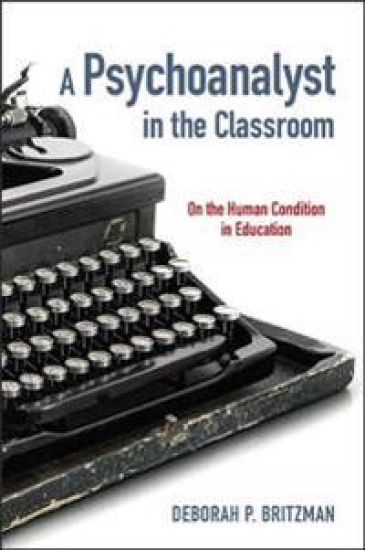
A Psychoanalyst in the Classroom

A Psychoanalyst in the Classroom

Deborah P. Britzman

State University of New York Press
2016
pokkari
Offers a new view of pedagogical practices to psychoanalysts interested in pedagogy.A Psychoanalyst in the Classroom provides rich descriptions of the surprising ways individuals handle matters of love and hate when dealing with reading and writing in the classroom. With wit and sharp observations, Deborah P. Britzman advocates for a generous recognition of the vulnerabilities, creativity, and responsibilities of university learning. Britzman develops themes that include the handling of technique in psychoanalysis and pedagogy, the uses of theory, regression to adolescence, the inner life of gender, the untold story of the writing block, and everyday mistakes in teaching and learning. She also examines the relationship between mental health and experiences of teaching and learning.
When History Returns

When History Returns

Deborah P. Britzman

STATE UNIVERSITY OF NEW YORK PRESS
2024
pokkari
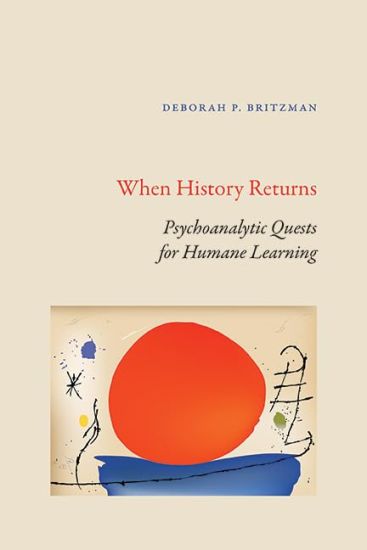
Turns to theories and cultural representations of psychosocial life to reflect on, and better understand, the challenges of learning in times of social strife.When History Returns brings together psychoanalytic theories of learning with the antinomies of social strife. From a psychoanalytic perspective, history returns through transitional scenes of inheriting a past one could not make, experiencing a present affected by what came before, and facing a future one can neither know nor predict. Taking such scenes as the subject of education, Deborah P. Britzman provides new approaches and vocabulary for conceptualizing experience and understanding, as expressed in psychoanalysis, literature, film, clinical case studies, and warm pedagogy. Britzman argues that novel quests for humane responsibility take hold in the fallout of understanding, in the feel of history, in imaginative dialogues and missed encounters, and in searches for friendship, belonging, and affiliation. Each chapter charts these quests in contemporary education, carrying readers into the heart of learning and the emotional situations that urge the transitions of difficult knowledge into care for thinking and the questions that follow.
When History Returns

When History Returns

Deborah P. Britzman

STATE UNIVERSITY OF NEW YORK PRESS
2024
sidottu
Turns to theories and cultural representations of psychosocial life to reflect on, and better understand, the challenges of learning in times of social strife.When History Returns brings together psychoanalytic theories of learning with the antinomies of social strife. From a psychoanalytic perspective, history returns through transitional scenes of inheriting a past one could not make, experiencing a present affected by what came before, and facing a future one can neither know nor predict. Taking such scenes as the subject of education, Deborah P. Britzman provides new approaches and vocabulary for conceptualizing experience and understanding, as expressed in psychoanalysis, literature, film, clinical case studies, and warm pedagogy. Britzman argues that novel quests for humane responsibility take hold in the fallout of understanding, in the feel of history, in imaginative dialogues and missed encounters, and in searches for friendship, belonging, and affiliation. Each chapter charts these quests in contemporary education, carrying readers into the heart of learning and the emotional situations that urge the transitions of difficult knowledge into care for thinking and the questions that follow.
Melanie Klein

Melanie Klein

Deborah P. Britzman

Springer International Publishing AG
2015
nidottu
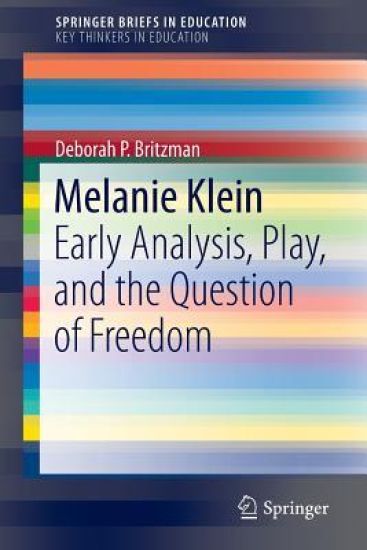
This volume introduces the psychoanalyst Melanie Klein to the general field of education and traces her theories of mental life as an emotional situation, through to problems of self/other relations in our own time. The case is made for Klein’s relevance and the difficulties her theories pose to the activities of learning and pedagogical relation. Klein’s vocabulary—the paranoid/schizoid and depressive positions, phantasy, object relations, projective identification, anxiety, envy, and the urge for reparation and gratitude— are discussed in terms of their evolution and the designs of her main questions, all stemming from the problem of inhibition. Her contribution to an understanding of symbolization and the shift from concrete thinking to greater freedom of mind is analyzed. The essay develops the following questions: why is learning an emotional situation? How did Klein’s life and larger history influence her views? What are her central theories of mental life? Why did Klein focus on anxiety and phantasies as making up the life of the mind? What is object relations theory? And, what does Klein’s model of the self proffer to contemporary education in schools and in universities?
The Very Thought of Education

The Very Thought of Education

Deborah P. Britzman

State University of New York Press
2009
sidottu
A startling reading of the educational enterprise through a psychoanalytic lens. Winner of the 2009 Gary A. Olson Award presented by JAC - a journal of rhetoric, culture, and politics For anyone who has ever been to school, the very thought of education recalls an emotional world denounced. What happens then if we try to understand the emotional scenery of education? Author Deborah P. Britzman proposes that the psychoanalysis of love and hate in learning provides creative commentary on our contemporary educational controversies. Drawing upon novels, art, psychoanalytic theory, clinical material, and philosophical debates on human nature, Britzman presents a psychoanalytic education of uncertainty. She focuses on key encounters: thinking, development, reading, psychology, transference, countertransference, and learning a profession. From the collapse of contemporary pedagogical themes to the work of reparation, Britzman explores the fantasies of education for the purpose of returning ideas of grace, hope, humor, and humility to the impossible professions (education, government, and medicine).