Kirjojen hintavertailu. Mukana 12 354 639 kirjaa ja 12 kauppaa.

Kirjahaku

Etsi kirjoja tekijän nimen, kirjan nimen tai ISBN:n perusteella.

9 kirjaa tekijältä Deborah Parker

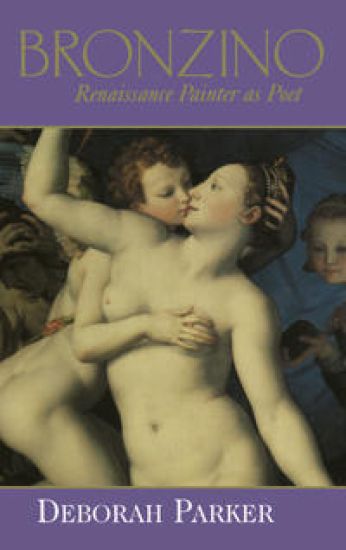
Bronzino: Renaissance Painter as Poet

Bronzino: Renaissance Painter as Poet

Deborah Parker

Cambridge University Press
2011
pokkari
Bronzino's stature as one of the great painters of the Florentine Renaissance has long been recognized. By contrast, his literary achievements as a poet have been neglected. Originally published in 2000, this study focuses on the poetry of Bronzino. His work in two media places him in a distinguished group of artist-poets that includes Michelangelo, William Blake and Dante Gabriel Rossetti. In clarifying the meaning of Bronzino's poems, Deborah Parker argues that they are considerable literary achievements. Importantly, she demonstrates that our understanding of Bronzino's paintings is incomplete without careful attention to his creative work as a poet. Situating Bronzino's achievements within a broader social and cultural context of mid-sixteenth-century Florence, this study also contains numerous translations of Bronzino's poetry.
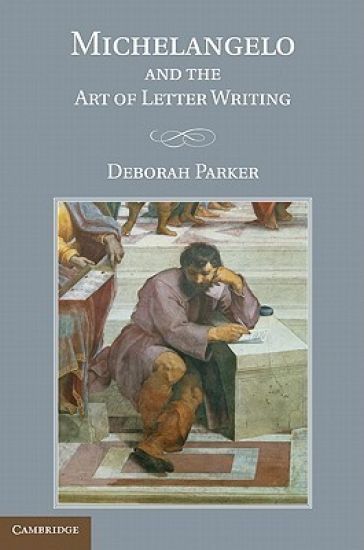
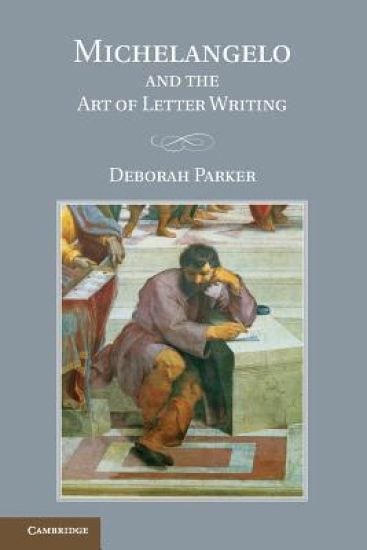
Michelangelo and the Art of Letter Writing

Michelangelo and the Art of Letter Writing

Deborah Parker

Cambridge University Press
2010
sidottu
Michelangelo's extant correspondence is the most abundant of any artist. Spanning 67 years, it comprises roughly 1,400 letters, of which 500 were written by Michelangelo himself. Biographers and art historians have combed the letters for insight into Michelangelo's views on art, his contractual obligations, and his relationships. Literary scholars have explored parallels between the letters and Michelangelo's poetry. Nevertheless, this is the first book to study the letters for their intrinsically literary qualities. In this volume, Deborah Parker examines Michelangelo's use of language as a means of understanding the creative process of this extraordinary artist. His letters often revel in witticisms, rhetorical flourishes, and linguistic ingenuity. Close study of his mastery of words and modes of self-presentation shows Michelangelo to be a consummate artist who deploys the resources of language to considerable effect.
Bronzino: Renaissance Painter as Poet

Bronzino: Renaissance Painter as Poet

Deborah Parker

Cambridge University Press
2000
sidottu
Bronzino’s stature as one of the great painters of the Florentine Renaissance has long been recognized. By contrast, his literary achievements as a poet have been neglected. This is the first modern study to focus on the poetry of Bronzino. His work in two media places him in a distinguished group of artist-poets that includes Michelangelo, William Blake and Dante Gabriel Rossetti. In clarifying the meaning of Bronzino’s poems, Deborah Parker argues that they are considerable literary achievements. Importantly, she demonstrates that our understanding of Bronzino’s paintings is incomplete without careful attention to his creative work as a poet. Situating Bronzino’s achievements within a broader social and cultural context of mid-sixteenth century Florence, this study also contains numerous translations of Bronzino’s poetry.
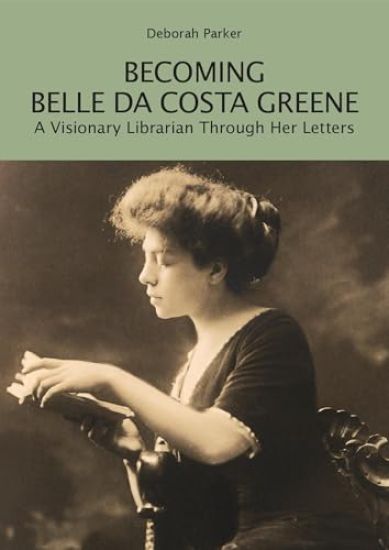
Becoming Belle da Costa Greene

Becoming Belle da Costa Greene

Deborah Parker

HARVARD UNIVERSITY PRESS
2024
nidottu
In Becoming Belle da Costa Greene: A Visionary Librarian through Her Letters, Deborah Parker chronicles the making and empowerment of a female connoisseur, curator, and library director in a world where such positions were held by men. Belle da Costa Greene (1879–1950) was Pierpont Morgan’s personal librarian (1908–1913) and the first Director of the Morgan Library (1924–1948). She was also the daughter of two mixed-race parents and passed for white. In the nearly six hundred letters that Greene sent to art historian Bernard Berenson (1865–1959), Parker identifies Greene’s energetic pursuit of exceptional opportunities, illuminating the artistry and imaginative features of Greene’s writing—her self-invention, her vibrant responses to books and art, and her pathbreaking work as a librarian. As Greene transformed a private library into a magnificent public institution, she also transformed herself: hers was a life both lived and writ large.
Commentary and Ideology

Commentary and Ideology

Deborah Parker

Duke University Press
1992
sidottu
Dante's Divine Comedy played a dual role in its relation to Italian Renaissance culture, actively shaping the fabric of that culture and, at the same time, being shaped by it. This productive relationship is examined in Commentary and Ideology, Deborah Parker's thorough compendium on the reception of Dante's chief work. By studying the social and historical circumstances under which commentaries on Dante were produced, the author clarifies the critical tradition of commentary and explains the ways in which this important body of material can be used in interpreting Dante's poem.Parker begins by tracing the criticism of Dante commentaries from the nineteenth century to the present and then examines the tradition of commentary from the Middle Ages to the Renaissance. She shows how the civic, institutional, and social commitments of commentators shaped their response to the Comedy, and how commentators tried to use the poem as an authoritative source for various kinds of social legitimation. Parker discusses how different commentators dealt with a deeply political section of the poem: the damnation of Brutus and Cassius. The scope and importance of Commentary and Ideology will command the attention of a broad group of scholars, including Italian specialists on Dante, late medievalists, students and professionals in early modern European literature, bibliographers, critical theorists, historians of literary criticism and theory, and cultural and intellectual historians.
Michelangelo and the Art of Letter Writing

Michelangelo and the Art of Letter Writing

Deborah Parker

Cambridge University Press
2014
pokkari
Michelangelo's extant correspondence is the most abundant of any artist. Spanning 67 years, it comprises roughly 1,400 letters, of which 500 were written by Michelangelo himself. Biographers and art historians have combed the letters for insight into Michelangelo's views on art, his contractual obligations, and his relationships. Literary scholars have explored parallels between the letters and Michelangelo's poetry. Nevertheless, this is the first book to study the letters for their intrinsically literary qualities. In this volume, Deborah Parker examines Michelangelo's use of language as a means of understanding the creative process of this extraordinary artist. His letters often revel in witticisms, rhetorical flourishes, and linguistic ingenuity. Close study of his mastery of words and modes of self-presentation shows Michelangelo to be a consummate artist who deploys the resources of language to considerable effect.
Sucking Up

Sucking Up

Deborah Parker; Mark L. Parker

University of Virginia Press
2017
sidottu
Suck-up. Ass-kisser. Brownnoser. Bootlicker. Lickspittle. Toadeater... Found in every walk of life, both real and imagined, sycophants surround us. But whether we grumble about sycophancy or grudgingly tolerate it as a price of getting along in a complex society, we rarely examine it closely. This book humorously considers that slavish art from the historical past to our current political environment, and particularly through the revealing lens of literature. Some of the grandest examples of yes-men appear in these pages--from Dante's flatterers and Dickens's Uriah Heep to Kellyanne Conway, who urged us to "go buy Ivanka's stuff," and the obsequious soul who apologized to Vice President Cheney for being shot by him.More relevant now than ever, as sucking up becomes the master trope of the Trump era, this choice romp through the spectacular world of bowing and scraping will entertain and enlighten.
Sucking Up

Sucking Up

Deborah Parker; Mark L. Parker

University of Virginia Press
2018
nidottu
Suck-up. Ass-kisser. Brownnoser. Bootlicker. Lickspittle. Toadeater... Found in every walk of life, both real and imagined, sycophants surround us. But whether we grumble about sycophancy or grudgingly tolerate it as a price of getting along in a complex society, we rarely examine it closely. This book humorously considers that slavish art from the historical past to our current political environment, and particularly through the revealing lens of literature. Some of the grandest examples of yes-men appear in these pages--from Dante's flatterers and Dickens's Uriah Heep to Kellyanne Conway, who urged us to "go buy Ivanka's stuff," and the obsequious soul who apologized to Vice President Cheney for being shot by him.More relevant now than ever, as sucking up becomes the master trope of the Trump era, this choice romp through the spectacular world of bowing and scraping will entertain and enlighten.
Care of Older Adults

Care of Older Adults

Wendy Moyle; Deborah Parker; Marguerite Bramble

Cambridge University Press
2014
pokkari
Care of Older Adults is a comprehensive introduction to aged care for the nursing profession in clinical practice. By taking a strengths-based approach, the book encourages practice with a focus on individuals' potential and capacities rather than their limits. Theories of ageing are linked with the older individual's strengths to ensure the text is well framed from an evidence base, as well as a clinical orientation. The book presents the topic from a healthy ageing perspective through to chronic illness, frailty and end of life. Each chapter includes discussion and reflective questions, and concludes with a list of key points summarising the central content. Case studies combine evidence-based knowledge with practical examples in a number of aged-care settings. Written by internationally renowned authors with extensive practical experience in aged care, Care of Older Adults provides undergraduate students in Australia and New Zealand with local content with a nursing focus.