Kirjojen hintavertailu. Mukana 12 016 292 kirjaa ja 12 kauppaa.

Kirjahaku

Etsi kirjoja tekijän nimen, kirjan nimen tai ISBN:n perusteella.

5 kirjaa tekijältä Deborah Pellow

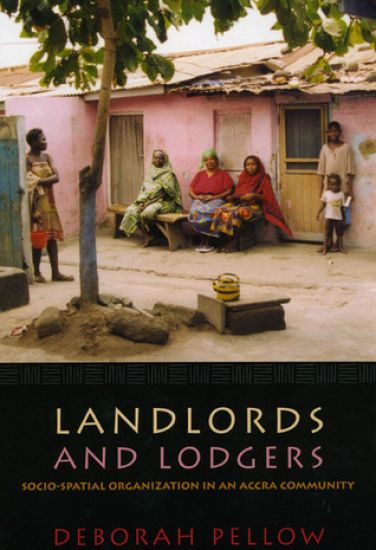
Landlords and Lodgers

Landlords and Lodgers

Deborah Pellow

University of Chicago Press
2008
nidottu
"Landlords and Lodgers" analyzes the results of a long-term study of a Ghanaian zongo, or "stranger quarter" - a place of refuge for Hausa migrants from northern Nigeria who have relocated to the city of Accra. Deborah Pellow explores the relationships among community members both in terms of the built structures - rooms, doors, communal structures, and hallways - and of the social networks, institutions, and routine activities that define this unique urban neighborhood. This volume will be useful to students and scholars of the relationships between architecture, migration, and social change.
Landlords and Lodgers

Landlords and Lodgers

Deborah Pellow

Praeger Publishers Inc
2002
sidottu
Based on 25 years of research on and in Sabon Zongo, one of the oldest migrant communities in Accra, Ghana, this book is about the spatial and social production of this community within this urban setting. While Sabon Zongo is clearly part of the larger urban landscape of Accra, it is also culturally distinct, representing the melding of a migrant Hausa ethos, informed by Islam, its values and its institutions, and the metropolitan knowledge shared by all city dwellers. The author explores the interconnections of community residents to one another both in terms of built space—the boundaries of community, community structures, and compounds—and social space—the social networks, institutions, activities, and routines through which Sabon Zongo residents reproduce meaning as constituted by and in their built environment.There is no body of data similar to this study's both in breadth and depth of understanding relating to this particular urban community. Much of the material has never been published. Both theoretically and substantively, this book makes a unique contribution to the literature on African urban life. Written in a clear, open style, this book will appeal to specialists and interested general readers alike.
Setting Boundaries

Setting Boundaries

Deborah Pellow

Praeger Publishers Inc
1996
sidottu
Proxemic studies concentrate on the structure and organization of space, its design and use, allocation, and the relations encoded in it as aspects of cultural communication. Space is perceived through the senses, and since cultures use the senses differently, they create boundaries differently. Pellow, in her edited collection of boundary studies, focuses on the social conception and production of boundedness. The essays by 10 scholars, eight of them anthropologists, explore the nature of boundaries in terms of change, space and place, society and culture, politics, class, urbanization, housing, and secular and spiritual life.
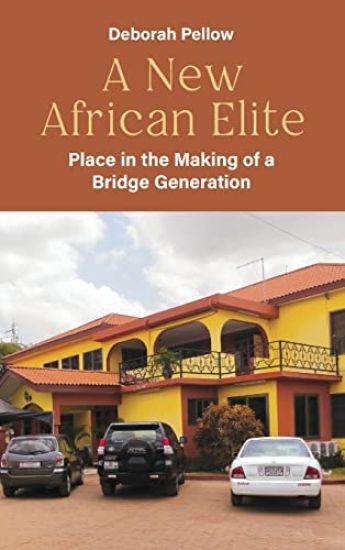
A New African Elite

A New African Elite

Deborah Pellow

BERGHAHN BOOKS
2022
sidottu
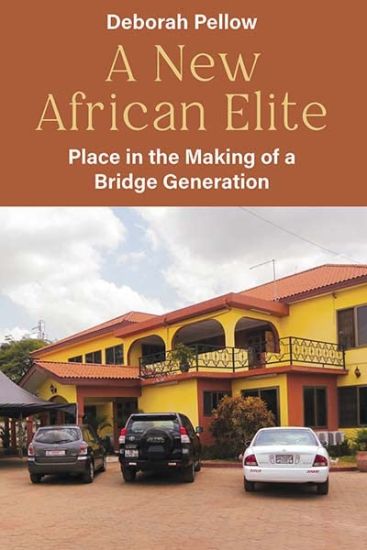
Focusing on a sub-set of the Dagomba of northern Ghana, this book looks at the first generation to go through secondary school in the north. After university and post-graduate education, they relocate to Accra, the capital, hundreds of miles south. They crossed social and physical space and have become cosmopolitan while holding on to tradition and attachment to their home town. This bridge generation are patrons to those living up north. This book charts their path into elite status and argues that they use the tools gained through education and social connections to influence politics back home.
A New African Elite

A New African Elite

Deborah Pellow

BERGHAHN BOOKS
2026
pokkari
Focusing on a sub-set of the Dagomba of northern Ghana, this book looks at the first generation to go through secondary school in the north. After university and post-graduate education, they relocate to Accra, the capital, hundreds of miles south. They crossed social and physical space and have become cosmopolitan while holding on to tradition and attachment to their home town. This bridge generation are patrons to those living up north. This book charts their path into elite status and argues that they use the tools gained through education and social connections to influence politics back home.