Kirjojen hintavertailu. Mukana 11 699 587 kirjaa ja 12 kauppaa.

Kirjahaku

Etsi kirjoja tekijän nimen, kirjan nimen tai ISBN:n perusteella.

4 kirjaa tekijältä Deborah Valenze

Milk

Milk

Deborah Valenze

Yale University Press
2012
pokkari
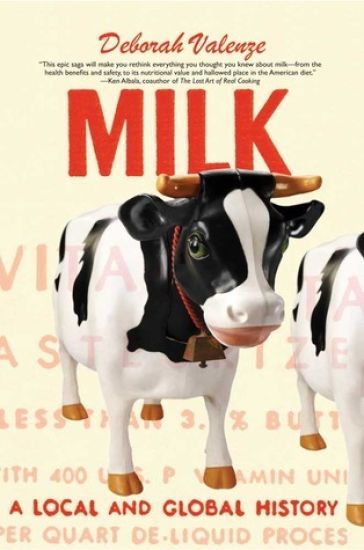
A historian reveals the illuminating history of milk, from ancient myth to modern grocery store How did an animal product that spoils easily, carries disease, and causes digestive trouble for many of its consumers become a near-universal symbol of modern nutrition? In the first cultural history of milk, historian Deborah Valenze traces the rituals and beliefs that have governed milk production and consumption since its use in the earliest societies.Covering the long span of human history, Milk reveals how developments in technology, public health, and nutritional science made this once-rare elixir a modern-day staple. The book looks at the religious meanings of milk, along with its association with pastoral life, which made it an object of mystery and suspicion during medieval times and the Renaissance. As early modern societies refined agricultural techniques, cow's milk became crucial to improving diets and economies, launching milk production and consumption into a more modern phase. Yet as business and science transformed the product in the nineteenth and twentieth centuries, commercial milk became not only a common and widely available commodity but also a source of uncertainty when used in place of human breast milk for infant feeding. Valenze also examines the dairy culture of the developing world, looking at the example of India, currently the world's largest milk producer.Ultimately, milk's surprising history teaches us how to think about our relationship to food in the present, as well as in the past. It reveals that although milk is a product of nature, it has always been an artifact of culture.
The Invention of Scarcity

The Invention of Scarcity

Deborah Valenze

YALE UNIVERSITY PRESS
2023
sidottu
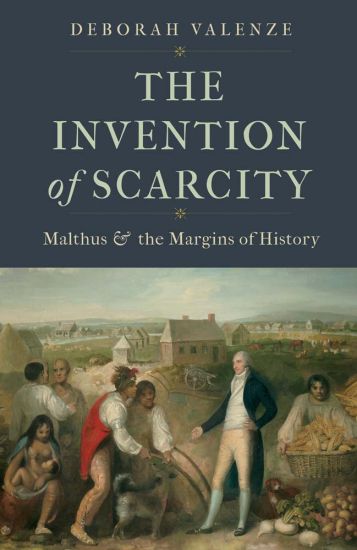
A radical new reading of eighteenth-century British theorist Thomas Robert Malthus, which recovers diverse ideas about subsistence production and environments later eclipsed by classical economics With the publication of Essay on the Principle of Population and its projection of food shortages in the face of ballooning populations, British theorist Thomas Robert Malthus secured a leading role in modern political and economic thought. In this startling new interpretation, Deborah Valenze reveals how canonical readings of Malthus fail to acknowledge his narrow understanding of what constitutes food production. Valenze returns to the eighteenth-century contexts that generated his arguments, showing how Malthus mobilized a redemptive narrative of British historical development and dismissed the varied ways that people adapted to the challenges of subsistence needs. She uses history, anthropology, food studies, and animal studies to redirect our attention to the margins of Malthus’s essay, where activities such as hunting, gathering, herding, and gardening were rendered extraneous. She demonstrates how Malthus’s omissions and his subsequent canonization provided a rationale for colonial imposition of British agricultural models, regardless of environmental diversity. By broadening our conception of human livelihoods, Valenze suggests pathways to resistance against the hegemony of Malthusian political economy. The Invention of Scarcity invites us to imagine a world where monoculture is in retreat and the margins are recentered as spaces of experimentation, nimbleness, and human flourishing.
The Social Life of Money in the English Past

The Social Life of Money in the English Past

Deborah Valenze

Cambridge University Press
2006
pokkari
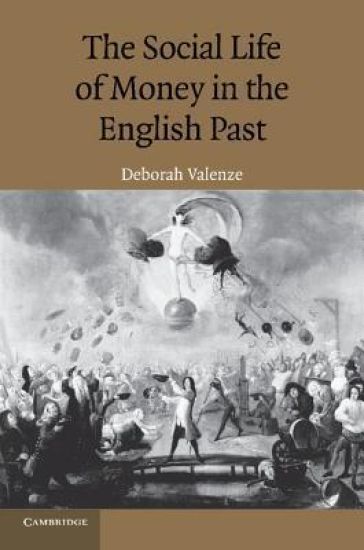
In an age when authoritative definitions of currency were in flux and small change was scarce, money enjoyed a rich and complex social life. Deborah Valenze shows how money became involved in relations between people in ways that moved beyond what we understand as its purely economic functions. This highly original investigation covers the formative period of commercial and financial development in England between 1630 and 1800. In a series of interwoven essays, Valenze examines religious prohibitions related to avarice, early theories of political economy and exchange practices of the Atlantic economy. In applying monetary measurements to women, servants, colonial migrants, and local vagrants, this era was distinctive in its willingness to blur boundaries between people and things. Lucid and highly readable, the book revises the way we see the advance of commercial society at the threshold of modern capitalism.
The Social Life of Money in the English Past

The Social Life of Money in the English Past

Deborah Valenze

Cambridge University Press
2006
sidottu
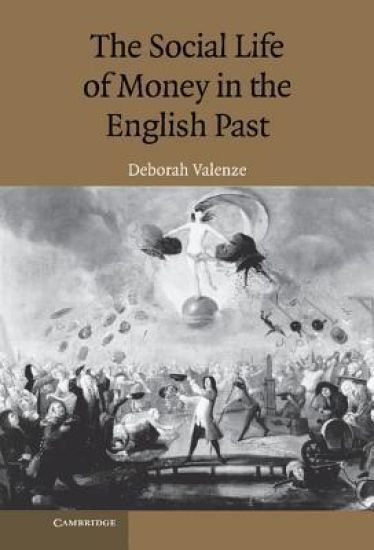
In an age when authoritative definitions of currency were in flux and small change was scarce, money enjoyed a rich and complex social life. Deborah Valenze shows how money became involved in relations between people in ways that moved beyond what we understand as its purely economic functions. This highly original investigation covers the formative period of commercial and financial development in England between 1630 and 1800. In a series of interwoven essays, Valenze examines religious prohibitions related to avarice, early theories of political economy and exchange practices of the Atlantic economy. In applying monetary measurements to women, servants, colonial migrants, and local vagrants, this era was distinctive in its willingness to blur boundaries between people and things. Lucid and highly readable, the book revises the way we see the advance of commercial society at the threshold of modern capitalism.