Kirjojen hintavertailu. Mukana 12 365 978 kirjaa ja 12 kauppaa.

Kirjahaku

Etsi kirjoja tekijän nimen, kirjan nimen tai ISBN:n perusteella.

5 kirjaa tekijältä Delos Hughes

Historic Alabama Courthouses

Historic Alabama Courthouses

Delos Hughes

UNIVERSITY OF GEORGIA PRESS
2017
nidottu
Alabama’s oldest courthouses have witnessed a panorama of history. Historic Alabama Courthouses resurrects historical facts and images of buildings that were the centers of much of the state’s public life during its first century. Photographs of more than 120 buildings, the earliest that the author could find for each structure, are gathered in this significant volume along with historical, architectural, social, legal, and political accounts of their contributions to the landscape of Alabama.Historic Alabama Courthouses also emphasizes architects and builders. Although the names of many of the principals are unknown, those who can be identified play large roles in the stories told in the book. Not only are the architects’ personal histories important, but also the history of the architecture profession in the state can be observed through the relationships and projects they created. Finally, the stories of Alabama’s courthouse builders and contractors are accounts of technical innovation, entrepreneurship, and sometimes imitation, revealing that fashions spread as widely and rapidly in building design and construction as in any other endeavor.
Houses, Hotels, and Homesteads

Houses, Hotels, and Homesteads

Delos Hughes

UNIVERSITY OF GEORGIA PRESS
2023
sidottu
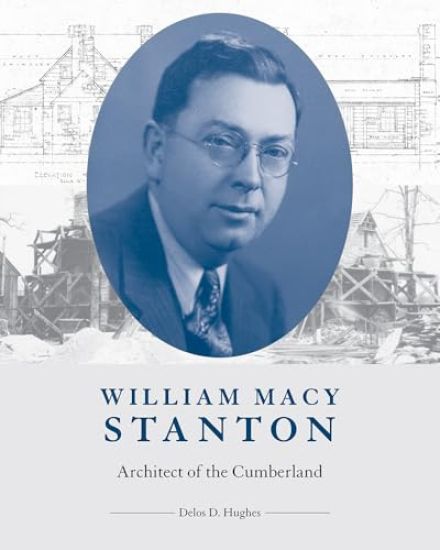
Strewn across the United States in the era of debilitating depression, the New Deal, undertook a variety of approaches to and solutions of problems not often seen before. In Tennessee, the Roosevelt administration drew engineers and a variety of do-gooders associated with solutions promised by die-hard Jeffersonians, back-to-the-land advocates of all sorts, Quakers experienced through the American Friends Service Committee programs, to address two problems depressing the state's Cumberland Plateau: the need to develop furhter the nearby Tennessee River valley and the necessity of rescuing homeless, jobless, destitute farmers and miners of that area. The Pennsylvania architect, William Macy Stanton, was himself a victim of the depression, without means to earn a living and support a family when demand for new buildings—hotels, and commercial buildings in particular—collapsed for this well-educated, skillful and experienced architect. His widespread circle of friends, particularly Quaker friends, brought him to Tennessee to help plan TVA housing. In 1933-34 Stanton was chosen both to design and supervise the construction of 250 family houses and associated buildings settled on a tract of several thousand acres the New Deal would develop at its largest subsistence Homesteads project, near Crossville, Tennessee—Cumberland Homesteads. Houses, Hotels, and Homesteads guides the reader through Stanton's early years as student, teacher, and independent architect, then directly to an account of Stanton's Tennessee years and steps to develop Cumberland Homesteads, to design the buildings, to train inexperienced homesteaders who would live in them, to build with resources on the tract, milling the trees, collecting the stone for their houses, and even to be masons assembling the local "Crab Orchard" stone into the buildings that still stand on the site today.
William Macy Stanton

William Macy Stanton

Delos Hughes

University of Tennessee Press
2025
sidottu
In 1933, President Franklin Roosevelt's New Deal launched the Tennessee Valley Authority and the Subsistence Homesteads Division to help bring economic relief to families and communities devastated by the Great Depression. With the creation of these new programs came a need for the infrastructure that could support them, and for this, the Roosevelt administration turned to William Macy Stanton. Born to a Quaker family in Ohio in 1888, Stanton worked as an instructor of drawing and design at the University of Illinois School of Architecture before establishing an independent practice in Philadelphia in the early 1920s. During the Depression, he worked on architectural projects in Tennessee for the TVA—including the town of Norris, where the builders of Norris Dam would live. As the New Deal era dawned, Stanton moved to Crossville to design the proposed Cumberland Homesteads. In addition to this work, Stanton is widely regarded for his hotel designs, including The Lafayette and James Madison Hotels in Atlantic City, as well as his restoration of Quaker meetinghouses. In this new biography, Delos D. Hughes weaves the story of Stanton's life and career together with the broader historical context of the Great Depression and New Deal initiatives. The book is divided into three parts, exploring Stanton's life and work before, during, and after his involvement with the Cumberland Homesteads; Hughes examines the intersection of architecture and social policy throughout. Rich with historical photographs, Stanton's own architectural drawings, and other original imagery on nearly every page, Hughes's work will delight architectural history enthusiasts and Tennessee history scholars.
No Place Like Home

No Place Like Home

Ann Pearson; Delos Hughes; Emily Sparrow; Ralph B. Draughon

UNIVERSITY OF GEORGIA PRESS
2020
sidottu
Auburn is well known as a college town and as a historic Southern village in central Alabama. The architecture that presently constitutes Auburn's built environment deserves the same level of recognition. From structures on the campus of Auburn University to historic churches and other buildings across the town, Auburn's architectural record is worth celebrating and protecting. In No Place Like Home: An Architectural Study of Auburn, Alabama—a companion volume to Lost Auburn: A Village Remembered in Period Photographs—co-authors Delos Hughes, Ralph Draughon Jr., Emily Sparrow, and Ann Pearson highlight the buildings of Auburn that are distinguished by age, celebrated residents, distinctive design, and historical importance. The architectural character of Old Auburn lives on in the enduring structures found throughout the city. Anchored by a strong sense of place, No Place Like Home will inspire readers to a greater appreciation of the shared past that connects us all through historic homes and meeting places.
Lost Auburn

Lost Auburn

Ann Pearson; Delos Hughes; Ralph B. Draughon

UNIVERSITY OF GEORGIA PRESS
2022
nidottu
Lost Auburn: A Village Remembered in Period Photographs offers a dynamic record of the buildings that once stood in Auburn, Alabama, which have fallen to natural disaster, war, poverty, and neglect, and to what some would call progress. More than two hundred photographs of lost buildings give three historians the opportunity to relate stories of those who once worshipped, learned, and lived in Auburn. Together, these photographs and the accompanying text vividly convey the uniqueness of the village of Auburn that was.Lost Auburn is more than just a document about the lost architectural fabric of a charming village. It is both a volume of insightful commentary and an opportunity to reflect on the role of community in the life of a Southern town.