Kirjojen hintavertailu. Mukana 12 083 983 kirjaa ja 12 kauppaa.

Kirjahaku

Etsi kirjoja tekijän nimen, kirjan nimen tai ISBN:n perusteella.

5 kirjaa tekijältä Delphine Red Shirt

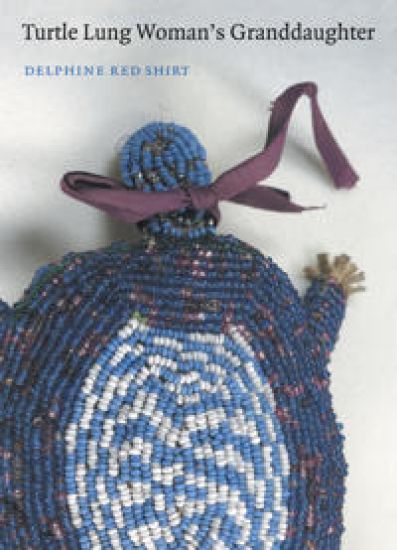
Turtle Lung Woman's Granddaughter

Turtle Lung Woman's Granddaughter

Delphine Red Shirt

University of Nebraska Press
2002
sidottu
Turtle Lung Woman's Granddaughter is the unforgettable story of several generations of Lakota women, told in their words. Delphine Red Shirt-like her mother, Lone Woman, and her mother's grandmother, Turtle Lung Woman-grew up on the wide open Plains of northern Nebraska and southern South Dakota. Lone Woman told her daughter the story of her life growing up on Pine Ridge in the early and mid-twentieth century. Remarkably, Lone Woman also recounted the life of her own grandmother, Turtle Lung Woman, who had grown up Lakota before her people had been forced to live on reservations in the late nineteenth century. These two women's lives overlapped by fifteen years, allowing the younger to learn many fascinating details and stories about the life and times of the elder. Delphine Red Shirt has delicately woven the life stories of her mother and great-grandmother into a continuous narrative that succeeds triumphantly as a moving, epic saga of Lakota women from traditional times to the present. Especially revealing and riveting are Turtle Lung Woman's relationship with her husband, Paints His Face with Clay Land, her healing practice as a medicine woman (where turtle shells become animated and crawl during the Yuw'pi ceremony), Lone Woman's hardships and celebrations growing up in the early twentieth century, and many wonderful details of their domestic lives before and during the early reservation years. Lone Woman passed away just after telling her story to her daughter. This splendid, magical story is a legacy for her and for all Lakota women. Delphine Red Shirt is a member of the Oglala Sioux Tribe and is an adjunct professor of American studies and English at Yale University. She is a columnist and correspondent for Indian Country Today and is the author of Bead on an Anthill: A Lakota Childhood (Nebraska 1997).

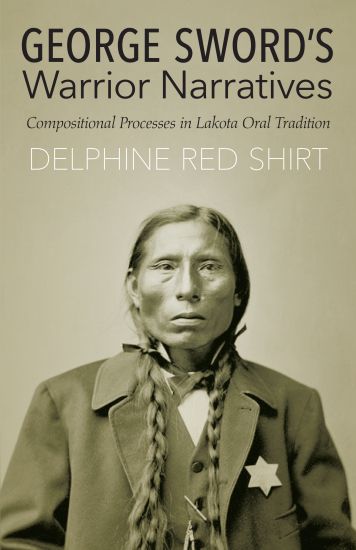
George Sword's Warrior Narratives

George Sword's Warrior Narratives

Delphine Red Shirt

University of Nebraska Press
2016
sidottu
Published through the Recovering Languages and Literacies of the Americas initiative, supported by the Andrew W. Mellon Foundation The general focus in Lakota oral literary research has been on content rather than process within oral traditions. In this groundbreaking study of the characteristics of Lakota oral style, Delphine Red Shirt shows how its composition and structure are reflected in the work of George Sword, who composed 245 pages of text in the Lakota language using the English alphabet. What emerges in Sword’s Lakota narratives are the formulaic patterns inherent in the Lakota language that are used to tell the narratives, as well as recurring themes and story patterns. Red Shirt’s primary conclusion is that this cadence originates from a distinctly Lakota oral tradition. Red Shirt analyzes historical documents and original texts in Lakota to answer the question: How is Lakota literature defined? Her pioneering work uncovers the epistemological basis of this literature, which can provide material for literary studies, anthropological and traditional linguistics, and translation studies. Her analysis of Sword’s texts discloses tools that can be used to determine whether the origin of any given narrative in Lakota tradition is oral, thereby opening avenues for further research.
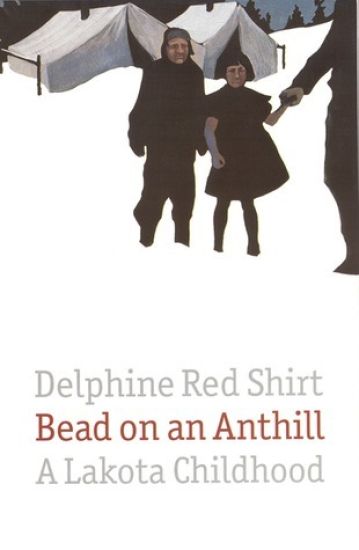
Bead on an Anthill

Bead on an Anthill

Delphine Red Shirt

University of Nebraska Press
1999
pokkari
Bead on an Anthill is the story of a Lakota girl's experiences growing up in Nebraska and on the Pine Ridge Reservation in the 1960s and 1970s. Raised in a home without books, Delphine Red Shirt relied on family and friends as her "books" and wove their stories into her own. Like her ancestors, she felt a powerful connection to the openness of the Plains. She participated in coming-of-age ceremonies and learned the special rules for stringing beads together and the messages conveyed by hairstyles. At the same time, Red Shirt became increasingly aware of the distance between her world and that of her ancestors. Ringing with insight and honesty, this memoir gives voice to an emerging generation of Lakota women who attempt to navigate the difficult paths of a bicultural world.
Turtle Lung Woman's Granddaughter

Turtle Lung Woman's Granddaughter

Delphine Red Shirt

University of Nebraska Press
2003
pokkari
Told in their own words, Turtle Lung Woman’s Granddaughter is the unforgettable story of several generations of Lakota women who grew up on the open plains of northern Nebraska and southern South Dakota. Delphine Red Shirt has delicately woven the life stories of her mother, Lone Woman, and Red Shirt’s great-grandmother, Turtle Lung Woman, into a continuous narrative that succeeds triumphantly as a moving, epic saga of Lakota women from traditional times in the mid–nineteenth century to the present. Especially revealing are Turtle Lung Woman’s relationship with her husband, Paints His Face with Clay, her healing practice as a medicine woman, Lone Woman’s hardships and celebrations growing up in the early twentieth century, and many wonderful details of their domestic lives before and during the early reservation years.
George Sword's Warrior Narratives

George Sword's Warrior Narratives

Delphine Red Shirt

University of Nebraska Press
2017
pokkari
Published through the Recovering Languages and Literacies of the Americas initiative, supported by the Andrew W. Mellon Foundation The general focus in Lakota oral literary research has been on content rather than process within oral traditions. In this groundbreaking study of the characteristics of Lakota oral style, Delphine Red Shirt shows how its composition and structure are reflected in the work of George Sword, who composed 245 pages of text in the Lakota language using the English alphabet. What emerges in Sword’s Lakota narratives are the formulaic patterns inherent in the Lakota language that are used to tell the narratives, as well as recurring themes and story patterns. Red Shirt’s primary conclusion is that this cadence originates from a distinctly Lakota oral tradition. Red Shirt analyzes historical documents and original texts in Lakota to answer the question: How is Lakota literature defined? Her pioneering work uncovers the epistemological basis of this literature, which can provide material for literary studies, anthropological and traditional linguistics, and translation studies. Her analysis of Sword’s texts discloses tools that can be used to determine whether the origin of any given narrative in Lakota tradition is oral, thereby opening avenues for further research.