Kirjojen hintavertailu. Mukana 11 699 587 kirjaa ja 12 kauppaa.

Kirjahaku

Etsi kirjoja tekijän nimen, kirjan nimen tai ISBN:n perusteella.

4 kirjaa tekijältä Denise E. Bates

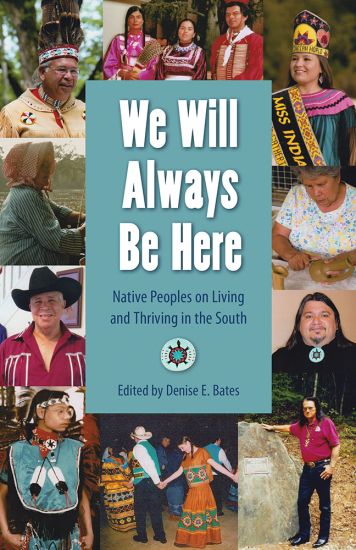
We Will Always Be Here

We Will Always Be Here

Denise E. Bates

University Press of Florida
2016
sidottu
The history of Native Americans in the U.S. South is a turbulent one, rife with conflict and inequality. Since the arrival of Spanish conquistadors in the fifteenth century, Native peoples have struggled to maintain their land, cultures, and ways of life. In We Will Always Be Here, contemporary tribal leaders, educators, and activists share their struggles for Indian identity, self-determination, and community development.Reflecting on such issues as poverty, education, racism, cultural preservation, and tribal sovereignty, the contributors to this volume offer a glimpse into the historical struggles of southern Native peoples, examine their present day efforts, and share their hopes for the future. They also share examples of cultural practices that have either endured or been revitalized. In a country that still faces challenges to civil rights and misconceptions about Indian identity and tribal sovereignty, this timely book builds a deeper understanding of modern Native peoples within a region where they are often overlooked.
The Other Movement

The Other Movement

Denise E. Bates

THE UNIVERSITY OF ALABAMA PRESS
2022
nidottu
Examines the most visible outcome of the Southern Indian Rights Movement: state Indian affairs commissions In recalling political activism in the post-World War II South, rarely does one consider the political activities of American Indians as they responded to desegregation, the passing of the Civil Rights Acts, and the restructuring of the American political party system. Native leaders and activists across the South created a social and political movement all their own, which drew public attention to the problems of discrimination, poverty, unemployment, low educational attainment, and poor living conditions in tribal communities. While tribal-state relationships have historically been characterized as tense, most southern tribes—particularly non-federally recognized ones—found that Indian affairs commissions offered them a unique position in which to negotiate power. Although individual tribal leaders experienced isolated victories and generated some support through the 1950s and 1960s, the creation of the inter-tribal state commissions in the 1970s and 1980s elevated the movement to a more prominent political level. Through the formalization of tribal-state relationships, Indian communities forged strong networks with local, state, and national agencies while advocating for cultural preservation and revitalization, economic development, and the implementation of community services. This book looks specifically at Alabama and Louisiana, places of intensive political activity during the civil rights era and increasing Indian visibility and tribal reorganization in the decades that followed. Between 1960 and 1990, U.S. census records show that Alabama’s Indian population swelled by a factor of twelve and Louisiana’s by a factor of five. Thus, in addition to serving as excellent examples of the national trend of a rising Indian population, the two states make interesting case studies because their Indian commissions brought formerly disconnected groups, each with different goals and needs, together for the first time, creating an assortment of alliances and divisions.
Basket Diplomacy

Basket Diplomacy

Denise E. Bates

University of Nebraska Press
2020
sidottu
Before the Coushatta Tribe of Louisiana became one of the state’s top private employers-with its vast landholdings and economic enterprises-they lived well below the poverty line and lacked any clear legal status. After settling near Bayou Blue in 1884, they forged friendships with their neighbors, sparked local tourism, and struck strategic alliances with civic and business leaders, aid groups, legislators, and other tribes. The Coushattas also engaged the public with stories about the tribe’s culture, history, and economic interests that intersected with the larger community, all while battling legal marginalization exacerbated by inconsistent government reports regarding their citizenship, treaty status, and eligibility for federal Indian services. Well into the twentieth century, the tribe had to overcome several major hurdles, including lobbying the Louisiana legislature to pass the state’s first tribal recognition resolution (1972), convincing the Department of the Interior to formally acknowledge the Coushatta Tribe through administrative channels (1973), and engaging in an effort to acquire land and build infrastructure.Basket Diplomacy demonstrates how the Coushatta community worked together-each generation laying a foundation for the next-and how they leveraged opportunities so that existing and newly acquired knowledge, timing, and skill worked in tandem.
Basket Diplomacy

Basket Diplomacy

Denise E. Bates

University of Nebraska Press
2023
pokkari
Before the Coushatta Tribe of Louisiana became one of the state’s top private employers-with its vast landholdings and economic enterprises-they lived well below the poverty line and lacked any clear legal status. After settling near Bayou Blue in 1884, they forged friendships with their neighbors, sparked local tourism, and struck strategic alliances with civic and business leaders, aid groups, legislators, and other tribes. The Coushattas also engaged the public with stories about the tribe’s culture, history, and economic interests that intersected with the larger community, all while battling legal marginalization exacerbated by inconsistent government reports regarding their citizenship, treaty status, and eligibility for federal Indian services. Well into the twentieth century, the tribe had to overcome several major hurdles, including lobbying the Louisiana legislature to pass the state’s first tribal recognition resolution (1972), convincing the Department of the Interior to formally acknowledge the Coushatta Tribe through administrative channels (1973), and engaging in an effort to acquire land and build infrastructure.Basket Diplomacy demonstrates how the Coushatta community worked together-each generation laying a foundation for the next-and how they leveraged opportunities so that existing and newly acquired knowledge, timing, and skill worked in tandem.