Kirjojen hintavertailu. Mukana 11 244 527 kirjaa ja 12 kauppaa.

Kirjahaku

Etsi kirjoja tekijän nimen, kirjan nimen tai ISBN:n perusteella.

8 kirjaa tekijältä Dennis Must

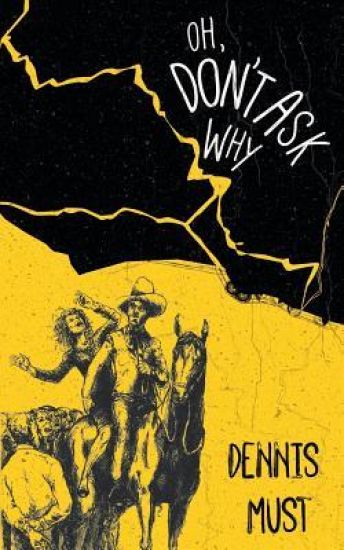
OH, DON'T ASK WHY

OH, DON'T ASK WHY

Dennis Must

Red Hen Press
2017
pokkari
In Oh, Don't Ask Why, Dennis Must's dark humor and use of jarringly raw language confront a number of anxieties and complexities with which his characters grapple. From overwhelming sorrow to suicidal reflection, this compilation of stories reaches deep into the internal and touches readers to the core.
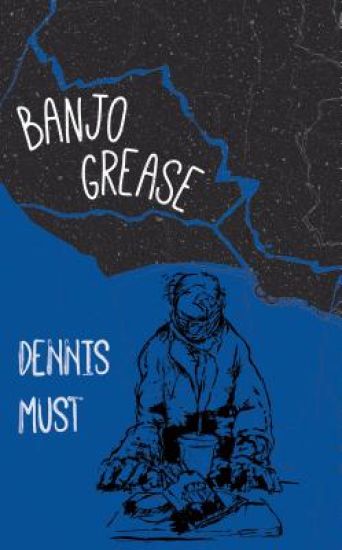
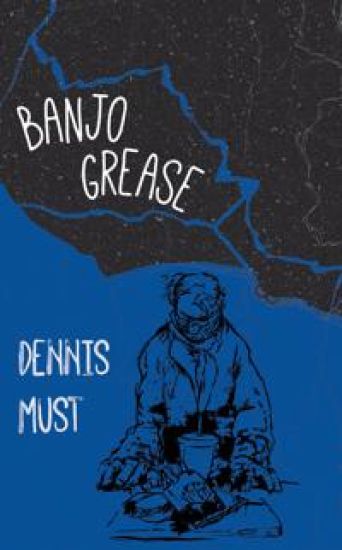
Banjo Grease

Banjo Grease

Dennis Must

Red Hen Press
2020
pokkari
But it’s the dead folks that do him the damage. It’s the dead ones that lay quiet in one place and don’t try to hold him, that he can’t escape from. —William Faulkner, Light in August There is an inexplicable gravity in a small town. It can be read and enjoyed like a favorite book for most of its inhabitants. Comforting are its streets and institutions, its wedding and obituary announcements. Banjo Grease is about life and death in a mill town where at each epiphany and rite of passage, the narrator yields a ration of innocence. Characters portray class as a marker as strong as race and gender, and distrust that they will ever escape in their lifetimes. Faulkner uses the term “eager fatalism.” These stories’ cumulative effect asks: When exchanging naivete for worldliness, what is lost in denying one’s past?
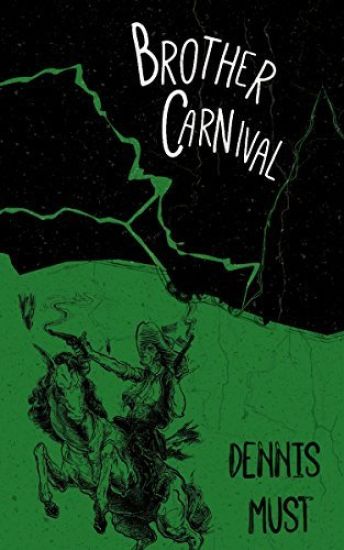
Brother Carnival

Brother Carnival

Dennis Must

Red Hen Press
2019
pokkari
Ethan Mueller, the narrator of Brother Carnival, has suffered a crisis of faith and is on the brink of taking his own life when he is informed by his father that he has an estranged brother who is an author. Whereupon he is handed a collection of his sibling’s stories and novel excerpts and urged to seek him out. “These stories are his effort to find you, Ethan. He’s been where you are now. Seek him out but it won’t be easy.” In effect, “Christopher Daugherty’s” writings function as the protagonist’s brother in absentia, thus creating the “dialogue” and suspenseful interplay between them. By immersing himself in the pieces, Ethan Mueller’s pursuit of his brother is a quest to discover himself.
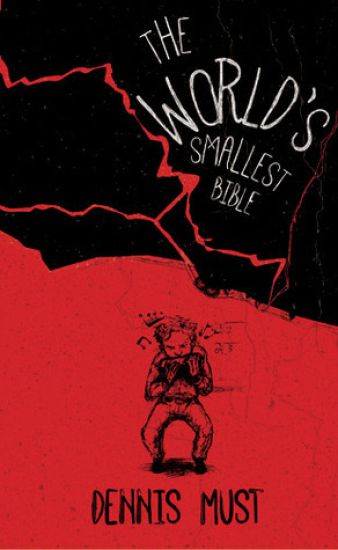
The World's Smallest Bible

The World's Smallest Bible

Dennis Must

Red Hen Press
2014
nidottu
The World’s Smallest Bible chronicles the seriocomic boyhood of Ethan and Jeremiah Mueller in mill town Pennsylvania during the height of World War II. As they lose friends and neighbors to the front lines, the boys try to make sense of the mounting darkness with their imaginations—except in their world, no one ever dies. In a private, laconic language, they invent stories that mirror the irrational world around them: a chaplain with bad news becomes the Angel of Death, skeletal Nazis lurk around the corner, and the ghost of a dead playmate taps at their bedroom window in the night. With startling lyricism and narrative grace, Dennis Must has fashioned an indelible vision of the Mueller boys’ blighted youth.
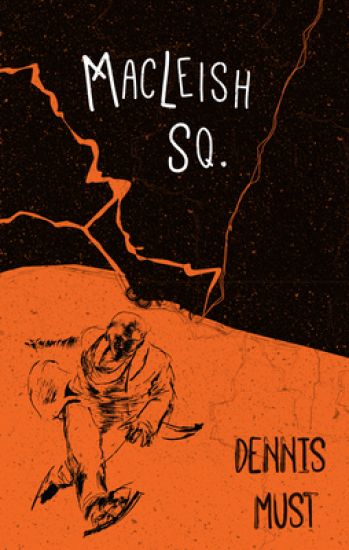
MacLeish Sq.

MacLeish Sq.

Dennis Must

Red Hen Press
2022
pokkari
John Proctor, about to turn seventy, spies a disconsolate young man eyeing him from outside his remote studio window. Invited inside from the bitter cold and fed dinner, the visitor, who calls himself Eli, implies that he is no stranger to the man, having been told by his grandmother that “you might take me in.” Astonished to learn that the woman was his wife who decades earlier had aborted their marriage, which lasted “but the length of a wedding candle,” the narrator ruefully explains he has since relished living alone by making no lasting connections to anybody or anything. Whereupon Eli confides, “She also said you had profaned my mother,” the daughter John Proctor never knew he had. Thus commences MacLeish Sq., a tale of awakened remorse and familial longing recounted by an aging recluse when his life is abruptly upturned by the young visitor—captive to a mythical past of his own creation—who intimates that he and the narrator are unlikely strangers. Their unresolved relationship ultimately challenges the reader to question if he and his coincidental guest are one and the same . . . that Eli may be who the narrator has carefully hidden from himself throughout his adult life.
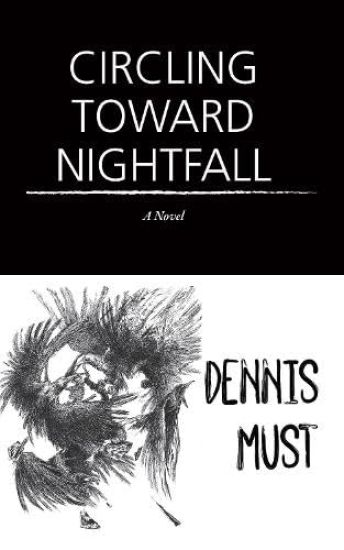
Circling Toward Nightfall

Circling Toward Nightfall

Dennis Must

Red Hen Press
2025
pokkari
AWARD–WINNING AUTHOR OF HUSH NOW, DON’T EXPLAIN • 2014 USA BEST BOOK AWARD LITERARY FICTION FINALIST • Dennis Must explores the boundaries of reality and myth in his final book in a series, CIRCLING TOWARD NIGHTFALLCircling Toward Nightfall is a lyrical rendering of the myth of blood and duality, an attempt to reconcile the body and innermost self in a search for origins. Jeremiah Coombs, its narrator, may be the only man on earth who has two fathers.
Circling Toward Nightfall

Circling Toward Nightfall

Dennis Must

Red Hen Press
2025
sidottu
AWARD–WINNING AUTHOR OF HUSH NOW, DON’T EXPLAIN • 2014 USA BEST BOOK AWARD LITERARY FICTION FINALIST • Dennis Must explores the boundaries of reality and myth in his final book in a series, CIRCLING TOWARD NIGHTFALLCircling Toward Nightfall is a lyrical rendering of the myth of blood and duality, an attempt to reconcile the body and innermost self in a search for origins. Jeremiah Coombs, its narrator, may be the only man on earth who has two fathers.
Banjo Grease

Banjo Grease

Dennis Must

Red Hen Press
2025
sidottu
But it’s the dead folks that do him the damage. It’s the dead ones that lay quiet in one place and don’t try to hold him, that he can’t escape from. —William Faulkner, Light in August There is an inexplicable gravity in a small town. It can be read and enjoyed like a favorite book for most of its inhabitants. Comforting are its streets and institutions, its wedding and obituary announcements. Banjo Grease is about life and death in a mill town where at each epiphany and rite of passage, the narrator yields a ration of innocence. Characters portray class as a marker as strong as race and gender, and distrust that they will ever escape in their lifetimes. Faulkner uses the term “eager fatalism.” These stories’ cumulative effect asks: When exchanging naivete for worldliness, what is lost in denying one’s past?