Kirjojen hintavertailu. Mukana 11 627 467 kirjaa ja 12 kauppaa.

Kirjahaku

Etsi kirjoja tekijän nimen, kirjan nimen tai ISBN:n perusteella.

3 kirjaa tekijältä Dennis Romano

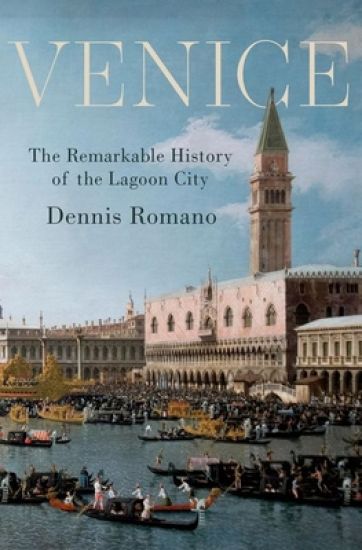
Venice

Venice

Dennis Romano

OXFORD UNIVERSITY PRESS INC
2024
sidottu
A sweeping and comprehensive history of Venice--from its formation in the early Middle Ages to the present day--that traces its evolution as a city, city-state, regional power, and overseas empire. No city stirs the imagination more than Venice. From the richly ornamented palaces emerging from the waters of the Grand Canal to the dazzling sites of Piazza San Marco, visitors and residents alike sense they are entering, as fourteenth-century poet Petrarch remarked, "another world." During the Middle Ages and Renaissance, Venice was celebrated as a model republic in an age of monarchs. In the seventeenth and eighteenth centuries, it became famous for its freewheeling lifestyle characterized by courtesans, casinos, and Carnival. When the city fell on hard times following the collapse of the Republic in 1797, a darker vision of Venice as a place of decay, disease, and death took hold. Today tourists from around the globe flock to the world heritage site as rising sea levels threaten its very foundations. This comprehensive account reveals the adaptations to its geographic setting that have been a constant feature of living on water from Venice's origins to the present. It examines the lives of the women and men, noble and common, rich and poor, Christian, Jew, and Muslim, who built not only the city but also its vast empire that stretched from Northern Italy to the eastern Mediterranean. It details the urban transformations that Venice underwent in response to environmental vulnerability, industrialization, and mass tourism. Alongside the city's commercial prominence has been its dramatically changing political role, including its power as a city-state, regional stronghold, and overseas empire, as well as its impact on the development of fascism. Throughout, Dennis Romano highlights the city's cultural achievements in architecture, painting, and music, particularly opera. This richly illustrated volume offers a stunning portrait of this most singular of cities.
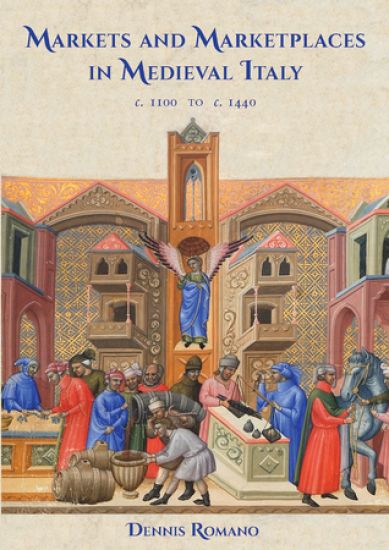
Markets and Marketplaces in Medieval Italy, c. 1100 to c. 1440
Cathedrals and civic palaces stand to this day as symbols of the dynamism and creativity of the city-states that flourished in Italy during the Middle Ages. Markets and Marketplaces in Medieval Italy argues that the bustling yet impermanent sites of markets played an equally significant role, not only in the economic life of the Italian communes, but in their political, social, and cultural life as well. Drawing on a range of evidence from cities and towns across northern and central Italy, Dennis Romano explores the significance of the marketplace as the symbolic embodiment of the common good; its regulation and organization; the ethics of economic exchange; and how governments and guilds sought to promote market values. With a special focus on the spatial, architectural, and artistic elements of the marketplace, Romano adds new dimensions to our understanding of the evolution of the market economy and the origins of commercial capitalism and Renaissance individualism.
Patricians and Popolani

Patricians and Popolani

Dennis Romano

Johns Hopkins University Press
2020
pokkari
Originally published in 1987. Since Machiavelli, historians and political theorists have sought the sources of the stability that earned for Venice the appellation La Serenissima, the Most Serene Republic. In Patricians and Popolani, Dennis Romano looks to the private lives of early Renaissance Venetians for an explanation. Fourteenth-century Venice escaped the tumultuous upheavals of the other Italian city-republics, Romano contends, because the patricians and common people of the city did not divide sharply along class or factional lines in their personal associations. Rather, Venetians of the era moved in a variety of intersecting social networks that were shaped and influenced by an overriding sense of civic community. Drawing on the private archives of Venice—notarial registers, collections of testaments, and records of estates maintained by the procurators of San Marco—Romano analyzes the primary social bonds in the lives of the city's inhabitants. In separate chapters, Patricians and Popolani examines the forms of association in everyday Venetian life: marriage and family structure; artisan workshops and relations among tradesmen; the role of the parish clergy and the "sacred networks" that formed around convents, hospitals, and confraternities; and neighborhood and patron–client ties. By the beginning of the fifteenth century, Romano argues, all these networks of association had been transformed as a new hierarchical spirit took hold and overwhelmed the older, more freewheeling tendencies of Venetian society. The old sense of community yielded to a new and equally compelling sense of place, and La Serenissima remained stable throughout the later Renaissance.