Kirjojen hintavertailu. Mukana 11 699 587 kirjaa ja 12 kauppaa.

Kirjahaku

Etsi kirjoja tekijän nimen, kirjan nimen tai ISBN:n perusteella.

17 kirjaa tekijältä Derek Bok

Attacking the Elites

Attacking the Elites

Derek Bok

YALE UNIVERSITY PRESS
2024
sidottu
A former Harvard president reflects on how elite universities are responding to critiques from the left and the right, and how they can do better “People have lost faith, trust and confidence [in higher education]. Anyone wanting to understand why even the best American universities are in such a state will learn a lot by reading [these] reflections.”—Leslie Lenkowsky, Wall Street Journal Elite American universities, such as Yale, Harvard, and Princeton, are admired throughout the world. They attract highly qualified applicants, and most of their graduates go on to lead successful lives. Scholars and researchers at elite universities contribute to knowledge that benefits the public in countless ways, from the discovery of ancient texts to breakthroughs at the forefront of medical technology. These same elite institutions, however, are beset by criticism from both sides of America’s ideological divide. Liberals press them to enroll more low-income students and to use their reputations and endowments to induce corporations to adopt more just, equitable, and environmentally sound policies. Conservative politicians accuse the universities’ predominantly liberal faculty of indoctrinating students. The Supreme Court has recently prohibited universities from giving preference to Black and Hispanic applicants for admission, sparking a wider debate over the policies of elite universities in choosing their student body. Drawing on over fifty years of experience as a student, professor, dean, and president of Harvard University, Derek Bok examines the current disputes involving admissions, diversity, academic freedom and political correctness, curriculum and teaching, and even athletics in order to determine which complaints are unsubstantiated, which are valid, and how elite universities can best respond to their critics.

Attacking the Elites

Attacking the Elites

Derek Bok

YALE UNIVERSITY PRESS
2025
pokkari
A former Harvard president reflects on how elite universities are responding to critiques from the left and the right, and how they can do better “People have lost faith, trust and confidence [in higher education]. Anyone wanting to understand why even the best American universities are in such a state will learn a lot by reading [these] reflections.”—Leslie Lenkowsky, Wall Street Journal Elite American universities, such as Yale, Harvard, and Princeton, are admired throughout the world. They attract highly qualified applicants, and most of their graduates go on to lead successful lives. Scholars and researchers at elite universities contribute to knowledge that benefits the public in countless ways, from the discovery of ancient texts to breakthroughs at the forefront of medical technology. These same elite institutions, however, are beset by criticism from both sides of America’s ideological divide. Liberals press them to enroll more low-income students and to use their reputations and endowments to induce corporations to adopt more just, equitable, and environmentally sound policies. Conservative politicians accuse the universities’ predominantly liberal faculty of indoctrinating students. The Supreme Court has recently prohibited universities from giving preference to Black and Hispanic applicants for admission, sparking a wider debate over the policies of elite universities in choosing their student body. Drawing on over fifty years of experience as a student, professor, dean, and president of Harvard University, Derek Bok examines the current disputes involving admissions, diversity, academic freedom and political correctness, curriculum and teaching, and even athletics in order to determine which complaints are unsubstantiated, which are valid, and how elite universities can best respond to their critics.

The Trouble with Government

The Trouble with Government

Derek Bok

Harvard University Press
2002
nidottu
In the past thirty years, Americans have lost faith in their government and the politicians who lead it. They have blamed Washington for a long list of problems, ranging from poor schools to costly medical care to high rates of violent crime. After investigating these complaints and determining that many are justified, Derek Bok seeks to determine the main reasons for the failings and frustrations associated with government.Discounting three common explanations--deteriorating leadership, the effect of the media on the political process, and the influence of interest groups--Bok identifies four weaknesses that particularly need explaining: a persistent tendency by Congress to design programs poorly; to impose expensive and often quixotic regulations that produce only modest results; to do less than other leading democracies to protect working people from illness, unemployment, and other basic hazards of life; and to leave large numbers of people, especially children, living in poverty.Bok goes on to explore the reasons for these fundamental weaknesses and to discuss popular remedies such as term limits, devolution, "reinventing" government, and campaign finance reform. While some of these proposals have merit, Bok finds a deeper, more troubling paradox: Americans want to gain more power over their government, but are devoting less time to exerting a constructive influence. Their dissatisfaction with government is growing as their participation in the political process is declining. These contradictory trends, Bok argues, contribute to the problems of our democracy. Fortunately, there are many concrete steps that Americans can take to be politically engaged and to help their government improve its performance."Democracy," Bok concludes, "is a collective venture which falters or flourishes depending on the efforts citizens invest in its behalf."
The Harvard–MIT Division of Health Sciences and Technology
Since 1970 a medical sciences curriculum has been taught jointly by Harvard Medical School and the Massachusetts Institute of Technology. In 1978, a doctoral program was founded to prepare physical scientists and engineers to address research at the interface of technology and clinical medicine. This volume describes, analyzes, and evaluates those first 25 years of the largest lasting collaborative educational and research program between two neighboring research universities.Containing introductory comments by the presidents of both institutions at the time of the inauguration of the program, this volume presents historiographic and autobiographical chapters by senior officials and faculty of both universities who helped to guide it through its first quarter century. Evaluation of the program and follow-up data on the first graduates are included as well. Courses are listed in the appendices, as are curricula, faculty, theses topics, and major research projects.
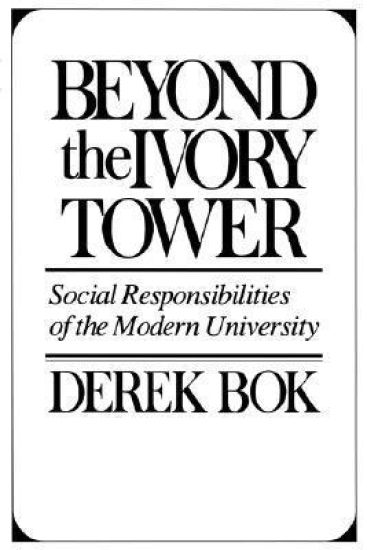
Beyond the Ivory Tower

Beyond the Ivory Tower

Derek Bok

Harvard University Press
1984
nidottu
Derek Bok examines the complex ethical and social issues facing modern universities today, and suggests approaches that will allow the academic institution both to serve society and to continue its primary mission of teaching and research.
The State of the Nation

The State of the Nation

Derek Bok

Harvard University Press
1998
nidottu
Never before have Americans been so anxious about the future of their society. But rarely has anyone offered a clear statement about why, in a nation so prosperous, free, and stable, we tend to assume that the country is in dire straits and that the government can do little to help. This book is just such a statement, an eloquent assessment of where America stands, how our society has changed in the past half-century, and who or what is responsible for our current frustrations.Derek Bok examines the nation's progress in five areas that Americans generally consider to be of paramount importance: economic prosperity, quality of life, opportunity, personal security, and societal values. He shows that although we are better off today in most areas than we were in 1960, we have performed poorly overall compared with other leading industrial nations. And when it comes to providing adequate health care at a reasonable cost, educating our young people for high-skilled jobs, alleviating poverty and urban blight, and reducing crime, our record has been dismal. Comparing the United States with other leading industrial nations on more than sixty key indicators, Bok shows that we rank below average in more than two-thirds of the cases and at the bottom in more than half.What has caused this decline, and what can be done about it? In virtually all important areas of American life, Bok concludes, government policies have played a significant, often decisive role in accounting for our successes as well as our failures. But whereas others call for downsizing the federal government, Bok argues that government is essential to achieving America's goals. In short, Ronald Reagan was only half right. Government is the problem. But it is also the most important part of the solution. By assessing the state of the nation and identifying the reasons for its current condition, this book helps set the agenda for improving America's performance in the future.
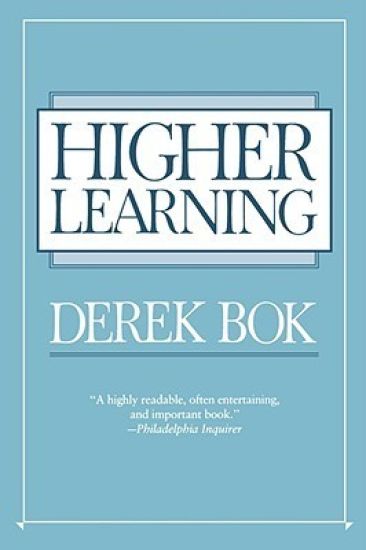
Higher Learning

Higher Learning

Derek Bok

Harvard University Press
1988
nidottu
What is distinctive, Derek Bok asks, about the American system of higher education, and how well does it perform? In particular, just how good is the education our universities offer? Are they doing all they can to educate their students, or do teaching and learning get lost in the pressure for ever more prestigious research and publication? Bok concludes that the competition characteristic of American higher education—competition for the best students, the most advanced scholarship, the most successful scientific research, the best facilities—has helped to produce venturesome, adaptable, and varied universities. But because the process of learning itself is imperfectly understood, it is difficult to achieve sustained progress in the quality of education or even to determine which educational innovations actually enhance learning.Despite these problems, the last fifteen years have produced many promising developments, such as experimental curricula, computer-assisted learning, much-expanded offerings for nontraditional students, clinical legal education, schools of public policy to prepare students for public service careers, and many more. Such initiatives need a more secure and central place within the regular curriculum. In addition to the traditional focus on program and curriculum, Bok stresses the need to pay greater attention to improving the effectiveness of teaching and learning. He calls for a number of steps, including a sustained program of research directed toward evaluating educational programs and methods of teaching. Only through careful experimentation and evaluation of its own efforts, through many small improvements and occasional inspired advances, can each university move toward the goal of giving its students the best possible preparation for life in an increasingly complex world.
Universities in the Marketplace

Universities in the Marketplace

Derek Bok

Princeton University Press
2004
pokkari
Is everything in a university for sale if the price is right? In this book, one of America's leading educators cautions that the answer is all too often "yes." Taking the first comprehensive look at the growing commercialization of our academic institutions, Derek Bok probes the efforts on campus to profit financially not only from athletics but increasingly, from education and research as well. He shows how such ventures are undermining core academic values and what universities can do to limit the damage. Commercialization has many causes, but it could never have grown to its present state had it not been for the recent, rapid growth of money-making opportunities in a more technologically complex, knowledge-based economy. A brave new world has now emerged in which university presidents, enterprising professors, and even administrative staff can all find seductive opportunities to turn specialized knowledge into profit. Bok argues that universities, faced with these temptations, are jeopardizing their fundamental mission in their eagerness to make money by agreeing to more and more compromises with basic academic values. He discusses the dangers posed by increased secrecy in corporate-funded research, for-profit Internet companies funded by venture capitalists, industry-subsidized educational programs for physicians, conflicts of interest in research on human subjects, and other questionable activities. While entrepreneurial universities may occasionally succeed in the short term, reasons Bok, only those institutions that vigorously uphold academic values, even at the cost of a few lucrative ventures, will win public trust and retain the respect of faculty and students. Candid, evenhanded, and eminently readable, Universities in the Marketplace will be widely debated by all those concerned with the future of higher education in America and beyond.
Our Underachieving Colleges

Our Underachieving Colleges

Derek Bok

Princeton University Press
2008
pokkari
Drawing on a large body of empirical evidence, former Harvard President Derek Bok examines how much progress college students actually make toward widely accepted goals of undergraduate education. His conclusions are sobering. Although most students make gains in many important respects, they improve much less than they should in such important areas as writing, critical thinking, quantitative skills, and moral reasoning. Large majorities of college seniors do not feel that they have made substantial progress in speaking a foreign language, acquiring cultural and aesthetic interests, or learning what they need to know to become active and informed citizens. Overall, despite their vastly increased resources, more powerful technology, and hundreds of new courses, colleges cannot be confident that students are learning more than they did fifty years ago. Looking further, Bok finds that many important college courses are left to the least experienced teachers and that most professors continue to teach in ways that have proven to be less effective than other available methods. In reviewing their educational programs, however, faculties typically ignore this evidence. Instead, they spend most of their time discussing what courses to require, although the lasting impact of college will almost certainly depend much more on how the courses are taught. In his final chapter, Bok describes the changes that faculties and academic leaders can make to help students accomplish more. Without ignoring the contributions that America's colleges have made, Bok delivers a powerful critique--one that educators will ignore at their peril.
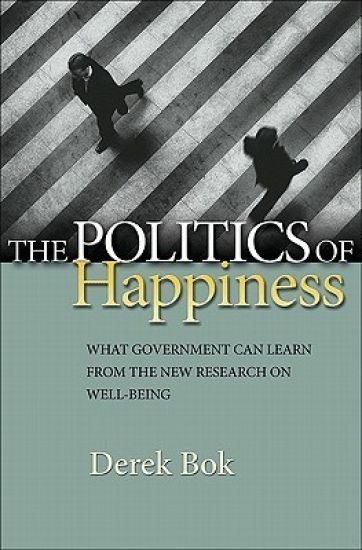
The Politics of Happiness

The Politics of Happiness

Derek Bok

Princeton University Press
2010
sidottu
During the past forty years, thousands of studies have been carried out on the subject of happiness. Some have explored the levels of happiness or dissatisfaction associated with typical daily activities, such as working, seeing friends, or doing household chores. Others have tried to determine the extent to which income, family, religion, and other factors are associated with the satisfaction people feel about their lives. The Gallup organization has begun conducting global surveys of happiness, and several countries are considering publishing periodic reports on the growth or decline of happiness among their people. One nation, tiny Bhutan, has actually made 'Gross National Happiness' the central aim of its domestic policy. How might happiness research affect government policy in the United States - and beyond? In "The Politics of Happiness", former Harvard president Derek Bok examines how governments could use the rapidly growing research data on what makes people happy - in a variety of policy areas to increase well-being and improve the quality of life for all their citizens. Bok first describes the principal findings of happiness researchers. He considers how reliable the results appear to be and whether they deserve to be taken into account in devising government policies. Recognizing both the strengths and weaknesses of happiness research, Bok looks at the policy implications for economic growth, equality, retirement, unemployment, health care, mental health, family programs, education, and government quality, among other subjects. Timely and incisive, "The Politics of Happiness" sheds new light on what makes people happy and how government policy could foster greater satisfaction for all.
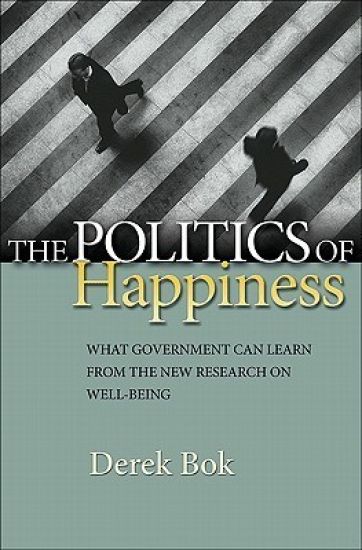
The Politics of Happiness

The Politics of Happiness

Derek Bok

Princeton University Press
2011
pokkari
During the past forty years, thousands of studies have been carried out on the subject of happiness. Some have explored the levels of happiness or dissatisfaction associated with typical daily activities, such as working, seeing friends, or doing household chores. Others have tried to determine the extent to which income, family, religion, and other factors are associated with the satisfaction people feel about their lives. The Gallup organization has begun conducting global surveys of happiness, and several countries are considering publishing periodic reports on the growth or decline of happiness among their people. One nation, tiny Bhutan, has actually made "Gross National Happiness" the central aim of its domestic policy. How might happiness research affect government policy in the United States--and beyond? In The Politics of Happiness, former Harvard president Derek Bok examines how governments could use the rapidly growing research data on what makes people happy--in a variety of policy areas to increase well-being and improve the quality of life for all their citizens. Bok first describes the principal findings of happiness researchers. He considers how reliable the results appear to be and whether they deserve to be taken into account in devising government policies. Recognizing both the strengths and weaknesses of happiness research, Bok looks at the policy implications for economic growth, equality, retirement, unemployment, health care, mental health, family programs, education, and government quality, among other subjects. Timely and incisive, The Politics of Happiness sheds new light on what makes people happy and how government policy could foster greater satisfaction for all.
Higher Education in America

Higher Education in America

Derek Bok

Princeton University Press
2013
sidottu
Higher Education in America is a landmark work--a comprehensive and authoritative analysis of the current condition of our colleges and universities from former Harvard president Derek Bok, one of the nation's most respected education experts. Sweepingly ambitious in scope, this is a deeply informed and balanced assessment of the many strengths as well as the weaknesses of American higher education today. At a time when colleges and universities have never been more important to the lives and opportunities of students or to the progress and prosperity of the nation, Bok provides a thorough examination of the entire system, public and private, from community colleges and small liberal arts colleges to great universities with their research programs and their medical, law, and business schools. Drawing on the most reliable studies and data, he determines which criticisms of higher education are unfounded or exaggerated, which are issues of genuine concern, and what can be done to improve matters. Some of the subjects considered are long-standing, such as debates over the undergraduate curriculum and concerns over rising college costs. Others are more recent, such as the rise of for-profit institutions and massive open online courses (MOOCs). Additional topics include the quality of undergraduate education, the stagnating levels of college graduation, the problems of university governance, the strengths and weaknesses of graduate and professional education, the environment for research, and the benefits and drawbacks of the pervasive competition among American colleges and universities. Offering a rare survey and evaluation of American higher education as a whole, this book provides a solid basis for a fresh public discussion about what the system is doing right, what it needs to do better, and how the next quarter century could be made a period of progress rather than decline.
Higher Education in America

Higher Education in America

Derek Bok

Princeton University Press
2015
pokkari
Higher Education in America is a landmark work--a comprehensive and authoritative analysis of the current condition of our colleges and universities from former Harvard president Derek Bok, one of the nation's most respected education experts. Sweepingly ambitious in scope, this is a deeply informed and balanced assessment of the many strengths as well as the weaknesses of American higher education today. At a time when colleges and universities have never been more important to the lives and opportunities of students or to the progress and prosperity of the nation, Bok provides a thorough examination of the entire system, public and private, from community colleges and small liberal arts colleges to great universities with their research programs and their medical, law, and business schools. Drawing on the most reliable studies and data, he determines which criticisms of higher education are unfounded or exaggerated, which are issues of genuine concern, and what can be done to improve matters. Some of the subjects considered are long-standing, such as debates over the undergraduate curriculum and concerns over rising college costs. Others are more recent, such as the rise of for-profit institutions and massive open online courses (MOOCs). Additional topics include the quality of undergraduate education, the stagnating levels of college graduation, the problems of university governance, the strengths and weaknesses of graduate and professional education, the environment for research, and the benefits and drawbacks of the pervasive competition among American colleges and universities. Offering a rare survey and evaluation of American higher education as a whole, this book provides a solid basis for a fresh public discussion about what the system is doing right, what it needs to do better, and how the next quarter century could be made a period of progress rather than decline.
The Struggle to Reform Our Colleges

The Struggle to Reform Our Colleges

Derek Bok

Princeton University Press
2017
sidottu
Why efforts to improve American higher educational attainment haven't worked, and where to go from here During the first decade of this century, many commentators predicted that American higher education was about to undergo major changes that would be brought about under the stimulus of online learning and other technological advances. Toward the end of the decade, the president of the United States declared that America would regain its historic lead in the education of its workforce within the next ten years through a huge increase in the number of students earning "quality" college degrees. Several years have elapsed since these pronouncements were made, yet the rate of progress has increased very little, if at all, in the number of college graduates or the nature and quality of the education they receive. In The Struggle to Reform Our Colleges, Derek Bok seeks to explain why so little change has occurred by analyzing the response of America's colleges; the influence of students, employers, foundations, accrediting organizations, and government officials; and the impact of market forces and technological innovation. In the last part of the book, Bok identifies a number of initiatives that could improve the performance of colleges and universities. The final chapter examines the process of change itself and describes the strategy best calculated to quicken the pace of reform and enable colleges to meet the challenges that confront them.
Higher Expectations

Higher Expectations

Derek Bok

PRINCETON UNIVERSITY PRESS
2020
sidottu
How our colleges and universities can respond to the changing hopes and needs of societyIn recent decades, cognitive psychologists have cast new light on human development and given colleges new possibilities for helping students acquire skills and qualities that will enhance their lives and increase their contributions to society. In this landmark book, Derek Bok explores how colleges can reap the benefits of these discoveries and create a more robust undergraduate curriculum for the twenty-first century.Prior to this century, most psychologists thought that creativity, empathy, resilience, conscientiousness, and most personality traits were largely fixed by early childhood. What researchers have now discovered is that virtually all of these qualities continue to change through early adulthood and often well beyond. Such findings suggest that educators may be able to do much more than was previously thought possible to teach students to develop these important characteristics and thereby enable them to flourish in later life.How prepared are educators to cultivate these qualities of mind and behavior? What do they need to learn to capitalize on the possibilities? Will college faculties embrace these opportunities and make the necessary changes in their curricula and teaching methods? What can be done to hasten the process of innovation and application? In providing answers to these questions, Bok identifies the hurdles to institutional change, proposes sensible reforms, and demonstrates how our colleges can help students lead more successful, productive, and meaningful lives.
Higher Expectations

Higher Expectations

Derek Bok

PRINCETON UNIVERSITY PRESS
2022
pokkari
How our colleges and universities can respond to the changing hopes and needs of societyIn recent decades, cognitive psychologists have cast new light on human development and given colleges new possibilities for helping students acquire skills and qualities that will enhance their lives and increase their contributions to society. In this landmark book, Derek Bok explores how colleges can reap the benefits of these discoveries and create a more robust undergraduate curriculum for the twenty-first century.Prior to this century, most psychologists thought that creativity, empathy, resilience, conscientiousness, and most personality traits were largely fixed by early childhood. What researchers have now discovered is that virtually all of these qualities continue to change through early adulthood and often well beyond. Such findings suggest that educators may be able to do much more than was previously thought possible to teach students to develop these important characteristics and thereby enable them to flourish in later life.How prepared are educators to cultivate these qualities of mind and behavior? What do they need to learn to capitalize on the possibilities? Will college faculties embrace these opportunities and make the necessary changes in their curricula and teaching methods? What can be done to hasten the process of innovation and application? In providing answers to these questions, Bok identifies the hurdles to institutional change, proposes sensible reforms, and demonstrates how our colleges can help students lead more successful, productive, and meaningful lives.
Universities and the Future of America

Universities and the Future of America

Derek Bok

Duke University Press
1990
sidottu
Since World War II, says the author, industrialized nations have come to depend so heavily on expert knowledge, scientific discovery, and highly trained personnel that universities have become “the central institution in postindustrial society.”“If universities are so important to society and if ours are so superior, one might have thought that America would be flourishing in comparison to other industrialized countries of the world. Yet this is plainly not the case. . . . Our economic position in the world has deteriorated [and] we have climbed to the top, or near the top, of all advanced countries in the percentage of population who live in poverty, commit crimes, become addicted to drugs, have illegitimate children, or are classified as functionally illiterate.” In light of these results, “it is fair to ask whether our universities are doing all they can and should to help America surmount the obstacles that sap our economic strength and blight the lives of millions of our people.”Having posed this question, Derek Bok reviews what science can do to bring about greater productivity, what professional schools can do to improve the effectiveness of corporations, government, and public education, and what all parts of the university are doing to help students acquire higher levels of ethical and social responsibility. He concludes that Universities are contributing much less than the should to help the nation address its most urgent social problems. “A century after the death of Cardinal Newman, many university officials and faculty members continue to feel ambivalent about deliberate efforts to address practical problems of society. And though competition drives university leaders and their faculties to unremitting effort, what competition rewards is chiefly success in fields that command academic prestige rather than success in responding to important social needs.”Bok urges academic leaders, trustees, foundations, and government agencies to work together to help universities realign their priorities “so that they will be ready to make their full contribution when the nation turns its attention again to the broad agenda of reform. . . . Observing our difficulties competing abroad, our millions of people in poverty, our drug-ridden communities, our disintegrating families, our ineffective schools, those who help to shape our universities have reason to ask whether they too have any time to lose.”