Kirjojen hintavertailu. Mukana 12 279 127 kirjaa ja 12 kauppaa.

Kirjahaku

Etsi kirjoja tekijän nimen, kirjan nimen tai ISBN:n perusteella.

5 kirjaa tekijältä Derek Edwards, Neil Mercer

Common Knowledge (Routledge Revivals)

Common Knowledge (Routledge Revivals)

Derek Edwards; Neil Mercer

Routledge
2012
sidottu
First published in 1987, Common Knowledge offers a radical departure from the traditionally individualistic psychologies which have underpinned modern approaches to educational theory and practice. The authors present a study of education as the creation of ‘common knowledge’ or shared understanding between teacher and pupils. They show the presenting, receiving, sharing, controlling, negotiating, understanding and misunderstanding of knowledge in the classroom to be an intrinsically social communicative process which can be revealed only through close analysis of joint activity and classroom talk. Basing this analysis on a detailed examination of video-recorded school lessons with groups of 8 to 10-year-olds, they show how classroom communications take place against a background of implicit under-standing, some of which is never made explicit to pupils, while there develops during the lessons a context of assumed common knowledge about what has been said, done, or understood.This wide-ranging study makes an important contribution to the current debate about both teaching methods and the structure of education. It is essential reading for educationalists and developmental psychologists and has a clear practical relevance to teachers and teacher trainers.
Common Knowledge (Routledge Revivals)

Common Knowledge (Routledge Revivals)

Derek Edwards; Neil Mercer

Routledge
2013
nidottu
First published in 1987, Common Knowledge offers a radical departure from the traditionally individualistic psychologies which have underpinned modern approaches to educational theory and practice. The authors present a study of education as the creation of ‘common knowledge’ or shared understanding between teacher and pupils. They show the presenting, receiving, sharing, controlling, negotiating, understanding and misunderstanding of knowledge in the classroom to be an intrinsically social communicative process which can be revealed only through close analysis of joint activity and classroom talk. Basing this analysis on a detailed examination of video-recorded school lessons with groups of 8 to 10-year-olds, they show how classroom communications take place against a background of implicit under-standing, some of which is never made explicit to pupils, while there develops during the lessons a context of assumed common knowledge about what has been said, done, or understood.This wide-ranging study makes an important contribution to the current debate about both teaching methods and the structure of education. It is essential reading for educationalists and developmental psychologists and has a clear practical relevance to teachers and teacher trainers.
Discourse and Cognition

Discourse and Cognition

Derek Edwards

SAGE Publications Ltd
1996
sidottu
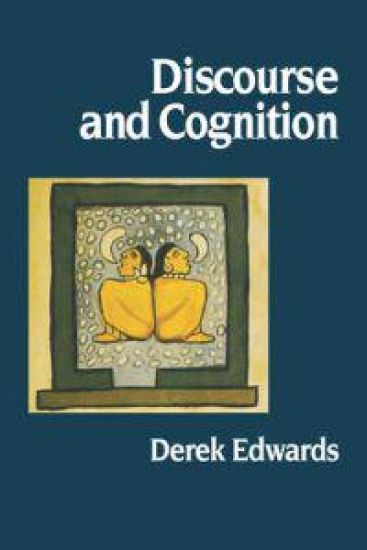
`For those already familiar with discursive work it will be a joy - Edwards writes with enormous clarity and insight. For psychologists whose work involves an understanding of the relations between language and cognition this book will be essential reading.... This is a demanding book that will repay close attention. It can also be dipped into as a resource for the brilliant reworkings of traditional psychological topic areas, such as emotion, language, cognition, categories, AI, narrative, scripts and developmental psychology. If you want a glimpse into the future of psychology, get this book - the end of cognitivism starts here' - History and Philosophy of Psychology The central project of this multidisciplinary volume is a wholesale reappraisal of psychological concepts of human action, mental states, language and social interactions. Derek Edwards reviews a wide range of thought and research to demonstrate how the dominant cognitive approach to psychology has failed. He makes a compelling case for language to be best understood as a kind of activity, as discourse. The argument draws upon ethnomethodology, conversation analysis, linguistic philosophy and social studies of science. These influences underpin a fascinating intellectual survey ranging across cognitivism, discursive psychology, shared knowledge, categories and metaphor, emotion and narrative. The emphasis throughout is on the value of close empirical study of text and talk, through which the topics of mind, world and `who we are' are seen as `ways of talking'.
Discourse and Cognition

Discourse and Cognition

Derek Edwards

SAGE Publications Ltd
1996
nidottu
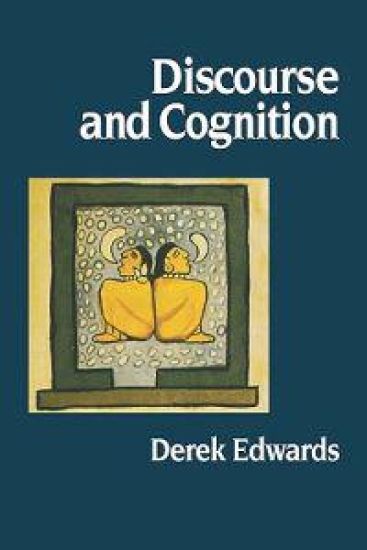
`For those already familiar with discursive work it will be a joy - Edwards writes with enormous clarity and insight. For psychologists whose work involves an understanding of the relations between language and cognition this book will be essential reading.... This is a demanding book that will repay close attention. It can also be dipped into as a resource for the brilliant reworkings of traditional psychological topic areas, such as emotion, language, cognition, categories, AI, narrative, scripts and developmental psychology. If you want a glimpse into the future of psychology, get this book - the end of cognitivism starts here' - History and Philosophy of Psychology The central project of this multidisciplinary volume is a wholesale reappraisal of psychological concepts of human action, mental states, language and social interactions. Derek Edwards reviews a wide range of thought and research to demonstrate how the dominant cognitive approach to psychology has failed. He makes a compelling case for language to be best understood as a kind of activity, as discourse. The argument draws upon ethnomethodology, conversation analysis, linguistic philosophy and social studies of science. These influences underpin a fascinating intellectual survey ranging across cognitivism, discursive psychology, shared knowledge, categories and metaphor, emotion and narrative. The emphasis throughout is on the value of close empirical study of text and talk, through which the topics of mind, world and `who we are' are seen as `ways of talking'.
Discursive Psychology

Discursive Psychology

Derek Edwards; Jonathan Potter

SAGE Publications Ltd
1992
nidottu
This accessible text introduces the key elements of a discursive approach to psychology. This focuses on how discourse - naturally occurring talk and text - can be studied and understood as the accomplishment of social action. Building on discourse analysis, the authors present an integrated discursive action model which leads to a radical reworking of some of psychology's most central concepts - language, cognition, truth, knowledge and reality. The implications of a discursive perspective for such topics are explored alongside a sustained argument against the perceptual-cognitivist emphasis that currently dominates psychology. A particular theme is the reconceptualization of memory and attribution. The authors examine the communicative and interactional work performed when individuals, with interests, describe and explain past events, construct factual reports and attribute mental states. They draw on a wide range of empirical materials to demonstrate the methods and analysis underpinning their approach. Reframing fundamental issues of language and mind as social practices realized in discourse, Discursive Psychology offers a profound challenge to existing orthodoxies while also establishing an exciting new agenda in the social and human sciences.