Kirjojen hintavertailu. Mukana 12 091 734 kirjaa ja 12 kauppaa.

Kirjahaku

Etsi kirjoja tekijän nimen, kirjan nimen tai ISBN:n perusteella.

5 kirjaa tekijältä Derek Gladwin

Ecological Exile

Ecological Exile

Derek Gladwin

Routledge
2019
nidottu
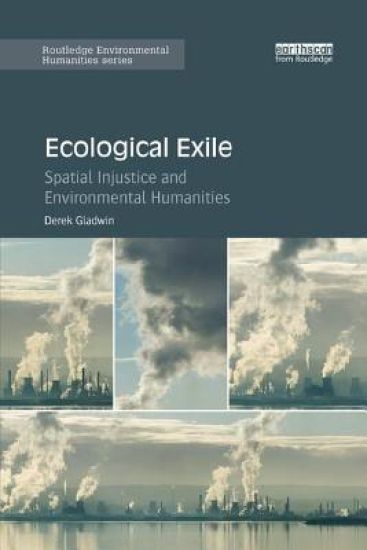
Ecological Exile explores how contemporary literature, film, and media culture confront ecological crises through perspectives of spatial justice – a facet of social justice that looks at unjust circumstances as a phenomenon of space. Growing instances of flooding, population displacement, and pollution suggest an urgent need to re-examine the ways social and geographical spaces are perceived and valued in the twentieth and twenty-first centuries. Maintaining that ecological crises are largely socially produced, Derek Gladwin considers how British and Irish literary and visual texts by Ian McEwan, Sarah Gavron, Eavan Boland, John McGrath, and China Miéville, among others, respond to and confront various spatial injustices resulting from fossil fuel production and the effects of climate change. This ambitious book offers a new spatial perspective in the environmental humanities by focusing on what the philosopher Glenn Albrecht has termed 'solastalgia' – a feeling of homesickness caused by environmental damage. The result of solastalgia is that people feel paradoxically ecologically exiled in the places they continue to live because of destructive environmental changes. Gladwin skilfully traces spatially produced instances of ecological injustice that literally and imaginatively abolish people’s sense of place (or place-home). By looking at two of the most pressing social and environmental concerns – oil and climate – Ecological Exile shows how literary and visual texts have documented spatially unjust effects of solastalgia. This interdisciplinary book will appeal to students, scholars, and professionals studying literary, film, and media texts that draw on environment and sustainability, cultural geography, energy cultures, climate change, and social justice.
Ecological Exile

Ecological Exile

Derek Gladwin

Routledge
2017
sidottu
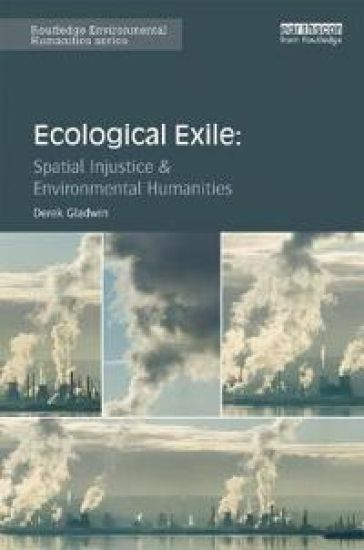
Ecological Exile explores how contemporary literature, film, and media culture confront ecological crises through perspectives of spatial justice – a facet of social justice that looks at unjust circumstances as a phenomenon of space. Growing instances of flooding, population displacement, and pollution suggest an urgent need to re-examine the ways social and geographical spaces are perceived and valued in the twentieth and twenty-first centuries. Maintaining that ecological crises are largely socially produced, Derek Gladwin considers how British and Irish literary and visual texts by Ian McEwan, Sarah Gavron, Eavan Boland, John McGrath, and China Miéville, among others, respond to and confront various spatial injustices resulting from fossil fuel production and the effects of climate change. This ambitious book offers a new spatial perspective in the environmental humanities by focusing on what the philosopher Glenn Albrecht has termed 'solastalgia' – a feeling of homesickness caused by environmental damage. The result of solastalgia is that people feel paradoxically ecologically exiled in the places they continue to live because of destructive environmental changes. Gladwin skilfully traces spatially produced instances of ecological injustice that literally and imaginatively abolish people’s sense of place (or place-home). By looking at two of the most pressing social and environmental concerns – oil and climate – Ecological Exile shows how literary and visual texts have documented spatially unjust effects of solastalgia. This interdisciplinary book will appeal to students, scholars, and professionals studying literary, film, and media texts that draw on environment and sustainability, cultural geography, energy cultures, climate change, and social justice.
Contentious Terrains

Contentious Terrains

Derek Gladwin

Cork University Press
2016
sidottu
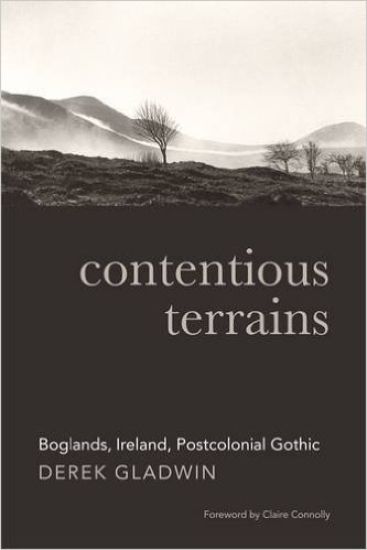
This book provides a political and geographical history of how boglands (or bogs) are represented in modern and contemporary Irish literature and culture (1880s-present). Drawing on a range of Irish writers, including Bram Stoker, Frank O'Connor, Sean O'Faolain, Daniel Corkery, Seamus Heaney, Marina Carr, Deirdre Kinahan, Erin Hart, and Tim Robinson, Contentious Terrains argues that the destabilizing capacities of the bog provide a space to explore historically fraught colonial tensions and social struggles through the postcolonial Gothic form. This study shows how bogs are more than mere landforms in the Irish landscape, but a kind of narrative that reveal some of the potentially unanswered questions in Irish literary history. Cultural and literary Gothic writings featuring bogs uncover some of the underlying questions during and after colonization in Ireland, and show how they relate to the larger social process in the development of modern Irish literary history, particularly during the Land Wars of the 1880s, the Irish War of Independence (1919-1921), the Troubles (1960s and 1970s), and the Celtic Tiger (1990s and 2000s).Contentious Terrains employs a cross-disciplinary scope and examines a diverse range of Irish writers in various literary genres, thus testifying to the pervasiveness and range of the bog's allure in Irish literary history and culture.
Rewriting Our Stories

Rewriting Our Stories

Derek Gladwin

Atrium
2021
nidottu
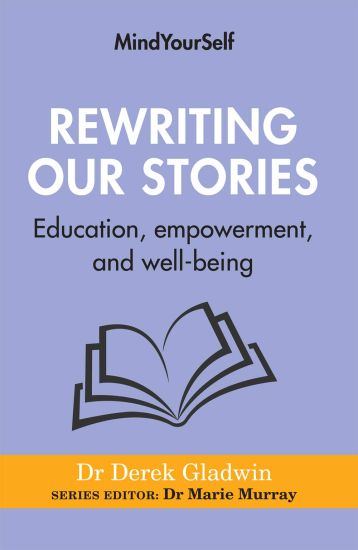
Rewriting Our Stories: Education, empowerment and well-being harnesses the therapeutic power of storytelling to convert feelings of fear and powerlessness into affirmative life narratives. Rather than seeing fear as an outcome, we can view it as a feeling in the moment largely governed by narratives. Many of our fears are stories we tell ourselves, even if they are largely fictional and rooted in sociocultural belief systems. The result is that we often feel helpless in the face of those fears. This transformational book considers a potent antidote: by recognising our recurring negative stories, we can rewrite and transform them to achieve greater empowerment and well-being in our lives. Storytelling is an antidote to fear. Throughout human existence, no matter where our place of origin or when in history, storytelling shapes our societies, influencing personal, sociocultural, educational, and public discourses that impact how we live. Creating and communicating the language of stories - to ourselves and others - enhances our innate voices and can empower us to engage in greater empathy, compassion, and possibility. Intended for educators, leaders, therapists, mental health professionals, change management, or youth organisations, as well as the general public, Derek Gladwin offers practical and positive tools for everyone to re-author their lives.
Becoming Ecological

Becoming Ecological

Derek Gladwin; Kedrick James

UNIVERSITY OF TORONTO PRESS
2026
sidottu
Our lives are profoundly connected to the planet’s unfolding ecological crisis, and the language we use—our words, stories, conversations, and beliefs—determines our ability to respond. Becoming Ecological offers a fresh and empowering perspective on the natural world by insisting that our relationship with language can transform issues of sustainability and environmental catastrophe. The book explores how language, meaning, and communication can help us in the ongoing process of “becoming ecological” in our daily lives, encouraging us to listen, relate, and act with greater awareness. Language and literacy experts, Derek Gladwin and Kedrick James subvert the norms of focusing on data and policy in conversations surrounding climate change, and instead centre communication and dialogue as the catalyst for ecological transformation. A powerful and unprecedented reframing – they argue that language has the profound ability to renew our personal and social awareness and steer the course of our future as a society. Drawing from various views on relationships, values, and responsibility, as well as topics like AI, food, compost, sound, economics, improvisation, extinction, climate anxiety, and even the nature of reality, Becoming Ecological is a hopeful invitation to engage with the world differently. Through everyday experiences, this book inspires readers to consider other perspectives, participate more playfully, and spark lasting ecological change.