Kirjojen hintavertailu. Mukana 11 244 527 kirjaa ja 12 kauppaa.

Kirjahaku

Etsi kirjoja tekijän nimen, kirjan nimen tai ISBN:n perusteella.

16 kirjaa tekijältä Derek Heater

A History of Education for Citizenship
In this unique examination of education for citizenship, Derek Heater covers two and a half millennia of history encompassing every continent. Education for citizenship is considered from its classical origins through to ideas of world citizenship and multiculturalism which are relevant today. The book reveals the constants of motives, policies, recommendations and practices in this field and the variables determined by political, social and economic circumstances, which in turn illustrate the reasons behind education for citizenship today.Sections covered include:* Classical origins* The age of rebellions and revolutions* Education for liberal democracy* Totalitarianism and transitions* Multiple citizenship education.A History of Education for Citizenship will be of interest to teachers and students of citizenship, particularly those concerned with citizenship education. It will also be of interest to those working in the field of politics of education and history of education.
Peace Through Education (Routledge Revivals)
First published in 1984, Peace Through Education records the history of the first 45 years of the Council for Education in World Citizenship (CEWC). It describes the rise in interest of increased international understanding in the years preceding the book’s publication and highlights the influential role of the CEWC in encouraging educators to make the rising generations aware of threats to world peace. Created in 1939, at a time of tense international crisis, the organization’s record is both an important and fascinating story. The book provides an overview of the history and work of the organization and assesses how far the Council has achieved its objectives, and how successful it has been in satisfying needs and wielding influence.
Peace Through Education (Routledge Revivals)
First published in 1984, Peace Through Education records the history of the first 45 years of the Council for Education in World Citizenship (CEWC). It describes the rise in interest of increased international understanding in the years preceding the book’s publication and highlights the influential role of the CEWC in encouraging educators to make the rising generations aware of threats to world peace. Created in 1939, at a time of tense international crisis, the organization’s record is both an important and fascinating story. The book sets out to provide an overview of the history and work of the organization as well as to assess how far the Council has achieved its objectives, and how successful it has been in satisfying needs and wielding influence.
Citizenship

Citizenship

Derek Heater

Manchester University Press
2004
nidottu
This book describes, analyses and interprets the topic of citizenship in a global context as it has developed historically, in its variations as a political concept and status, and the ways in which citizens have been and are being educated for that status. The book provides a historical survey which ranges from the Ancient Greeks to the twentieth century, and reveals the legacies which each era passed on to later centuries. It explains the meaning of citizenship, what political citizenship entails and the nature of citizenship as a status, and also tackles the issue of whether there can be a generally accepted, holistic understanding of the idea. For this new edition an epilogue has been written which demonstrates the intense nature of the academic and pedagogical debates on the subject as welll as the practical matters relating to the status since 1990.
A Brief History of Citizenship

A Brief History of Citizenship

Derek Heater

Edinburgh University Press
2004
sidottu
An introductory survey of the history of the principles and practice of citizenship, based on the premise that the current conditions and debates about citizenship cannot be fully understood without a knowledge of the historical background. This is provided through an analytical narrative of the functioning of citizenship and the major theorists from Sparta to the present day, including quotations from key texts. In addition the reader is asked to consider, based on the historical evidence presented, how citizenship differs from other forms of socio-political identity. In particular the commonly-held assumption that citizenship and nationality are synonymous is questioned on the grounds of historical experience and the difficulties it raises. Assuming no background knowledge, this is an ideal introduction to the history of citizenship. Key Features: *Fills a gap in the market by covering a neglected facet of the subject of Citizenship: its history *Comprehensive coverage, yet brief and easy-to-read *Combines narrative, analysis and quotations from key texts to offer a stimulating history of Citizenship
A Brief History of Citizenship

A Brief History of Citizenship

Derek Heater

Edinburgh University Press
2004
nidottu
An introductory survey of the history of the principles and practice of citizenship, based on the premise that the current conditions and debates about citizenship cannot be fully understood without a knowledge of the historical background. This is provided through an analytical narrative of the functioning of citizenship and the major theorists from Sparta to the present day, including quotations from key texts. In addition the reader is asked to consider, based on the historical evidence presented, how citizenship differs from other forms of socio-political identity. In particular the commonly-held assumption that citizenship and nationality are synonymous is questioned on the grounds of historical experience and the difficulties it raises. Assuming no background knowledge, this is an ideal introduction to the history of citizenship. Key Features: *Fills a gap in the market by covering a neglected facet of the subject of Citizenship: its history *Comprehensive coverage, yet brief and easy-to-read *Combines narrative, analysis and quotations from key texts to offer a stimulating history of Citizenship
Citizenship in Britain

Citizenship in Britain

Derek Heater

Edinburgh University Press
2006
sidottu
An historical introduction to the varieties of citizenship in Britain, starting in the Middle Ages and bringing the story right up to the present day. Both the status and understanding of citizenship in practice and the theoretical and advisory writings on the subject are introduced, and their inter-relationships are explored. Among the key themes to be examined are: * local and national strata * the issue of parliamentary suffrage * women excluded and included as citizens * the influence of classical ideas * nationhood and imperialism * the role of political and social theorists * interpretations by modern political parties * the role of education * environmental citizenship * multiculturalism * globalisation * human rights Organised chronologically, each chapter is divided into sections in order to present the reader with different themes in a manageable form. The focus throughout is on accessibility, with no previous knowledge of the subject being assumed. Key Features * Unique in its historical coverage of citizenship in Britain - moving from the Middle Ages to the present day * Reveals the great complexity of the development of citizenship in Britain * Leading campaigners, politicians and theorists enliven the story and analysis * Demonstrates the importance of an historical perspective in understanding the issue of citizenship in Britain today
Citizenship in Britain

Citizenship in Britain

Derek Heater

Edinburgh University Press
2006
nidottu
An historical introduction to the varieties of citizenship in Britain, starting in the Middle Ages and bringing the story right up to the present day. Both the status and understanding of citizenship in practice and the theoretical and advisory writings on the subject are introduced, and their inter-relationships are explored. Among the key themes to be examined are: * local and national strata * the issue of parliamentary suffrage * women excluded and included as citizens * the influence of classical ideas * nationhood and imperialism * the role of political and social theorists * interpretations by modern political parties * the role of education * environmental citizenship * multiculturalism * globalisation * human rights Organised chronologically, each chapter is divided into sections in order to present the reader with different themes in a manageable form. The focus throughout is on accessibility, with no previous knowledge of the subject being assumed. Key Features * Unique in its historical coverage of citizenship in Britain - moving from the Middle Ages to the present day * Reveals the great complexity of the development of citizenship in Britain * Leading campaigners, politicians and theorists enliven the story and analysis * Demonstrates the importance of an historical perspective in understanding the issue of citizenship in Britain today
A Brief History of Citizenship

A Brief History of Citizenship

Derek Heater

New York University Press
2004
sidottu
From Plato to Rorty, A Brief History of Citizenship provides a concise survey of the idea of citizenship. All major periods are covered, beginning with Greece and Rome, continuing on to the Middle Ages, the American and French Revolutions, and finally to the modern era. Heater effectively argues that we cannot begin to understand our current conditions until we have an understanding of the initial idea of "the citizen" and how that idea has evolved over the centuries. Important topics covered include how citizenship differs from other forms of sociopolitical identity, the differences between nationality and citizenship, and how multiculturalism has changed our ideas of citizenship in the twenty-first century. This concise and readable book is an ideal introduction to the history of citizenship.
A Brief History Of Citizenship

A Brief History Of Citizenship

Derek Heater

New York University Press
2004
pokkari
From Plato to Rorty, A Brief History of Citizenship provides a concise survey of the idea of citizenship. All major periods are covered, beginning with Greece and Rome, continuing on to the Middle Ages, the American and French Revolutions, and finally to the modern era. Heater effectively argues that we cannot begin to understand our current conditions until we have an understanding of the initial idea of "the citizen" and how that idea has evolved over the centuries. Important topics covered include how citizenship differs from other forms of sociopolitical identity, the differences between nationality and citizenship, and how multiculturalism has changed our ideas of citizenship in the twenty-first century. This concise and readable book is an ideal introduction to the history of citizenship.
World Citizenship

World Citizenship

Derek Heater

Continuum International Publishing Group Ltd.
2004
nidottu
Recent years have seen the development of a substantial literature on cosmopolitan political thought and the idea of world citizenship. In this book Derek Heater offers a concise and accessible survey of this complex debate. He aims both to interpret these concepts and to assist in their comprehension. Central to the organization of the book is Heater's claim that the notion of world citizenship remains weak unless it is able to stand alongside and be comparable to citizenship in its traditional state-embedded sense. Thus, the core chapters are arranged according to a basic breakdown of the key components of citizenship, covering: identity and morality; law and civil rights; social, economic and environmental citizenship; political citizenship; and competence and education. The author outlines and assesses both supporting and opposing arguments, illustrating his analysis with wide-ranging historical and political references, from the Stoics to the present day. This is an essential text for those studying citizenship and will also be of great interest to students of political theory.
A History of Education for Citizenship
In this unique examination of education for citizenship, Derek Heater covers two and a half millennia of history encompassing every continent. Education for citizenship is considered from its classical origins through to ideas of world citizenship and multiculturalism which are relevant today. The book reveals the constants of motives, policies, recommendations and practices in this field and the variables determined by political, social and economic circumstances, which in turn illustrate the reasons behind education for citizenship today.Sections covered include:* Classical origins* The age of rebellions and revolutions* Education for liberal democracy* Totalitarianism and transitions* Multiple citizenship education.A History of Education for Citizenship will be of interest to teachers and students of citizenship, particularly those concerned with citizenship education. It will also be of interest to those working in the field of politics of education and history of education.
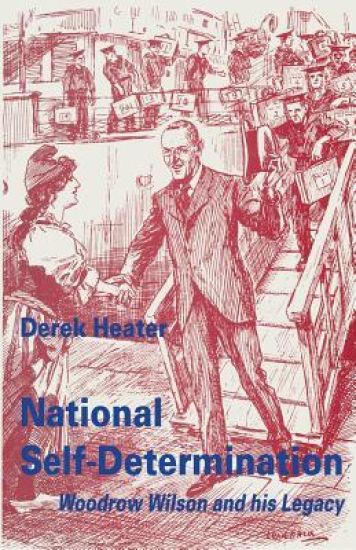
National Self-Determination

National Self-Determination

Derek Heater

Palgrave Macmillan
1994
nidottu
This study critically examines Woodrow Wilson's acceptance of the principle of national self-determination and his role in implementing it at the Paris Peace Conference of 1919. The assessment includes judgements by his contemporaries and historians of Wilson and the peace settlement. A survey of the manner in which national self-determination shaped the settlement leads to a discussion of the subsequent effects of the idea on the states and territories subject to the Versailles Treaty and related treaties.
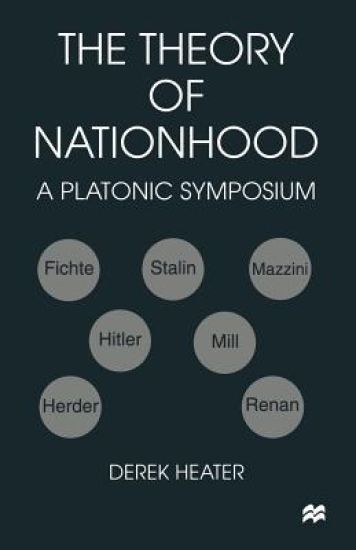
The Theory of Nationhood

The Theory of Nationhood

Derek Heater

Palgrave Macmillan
1998
nidottu
An innovative and entertaining examination of the theory of nationalism. Derek Heater brings together the seven most influential - for good or evil - European thinkers on nationalism from the late eighteenth to the early twentieth century. Herder, Fichte, Mazzini, Mill, Renan, Hitler and Stalin together debate their ideas in a platonic symposium, using the words from their own works in the central part of the book. The first part of the book introduces each thinker in the appropriate historical context, while the third part considers judgements on their thought.