Kirjojen hintavertailu. Mukana 11 342 296 kirjaa ja 12 kauppaa.

Kirjahaku

Etsi kirjoja tekijän nimen, kirjan nimen tai ISBN:n perusteella.

17 kirjaa tekijältä Derek Pugh

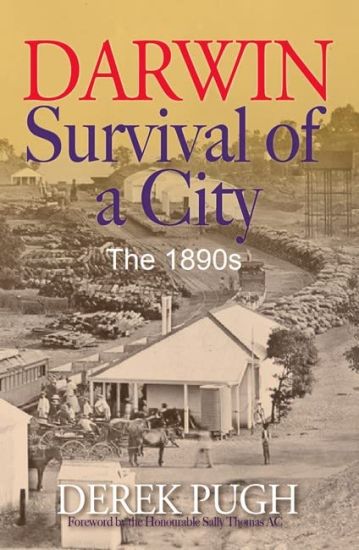
Darwin: Survival of a City, The 1890s
The last decade of the nineteenth century was a tough time for South Australia's Top End settlement of Palmerston. The major industries of mining, pastoralism, and agriculture suffered from downturn, disease and distance. The South Australians had had enough of their 'white elephant' and, when Palmerston blew away in the Great Hurricane of 1897, the calls for the Northern Territory's return to the British Colonial Government grew louder.But the Territory, as ever, was full of resilient and resourceful characters. They appear in these pages: judges, railway gangers, bushmen, buffalo hunters, hoteliers, Chinese miners, Aboriginal station hands, explorers, cross-country cyclists, murderers, and more.Territorians were, as Banjo Patterson described them, full of 'booze, blow and blasphemy' - but even he couldn't wait to return.Derek Pugh brings the Darwin of the 1890s alive. (Hon Sally Thomas AC).
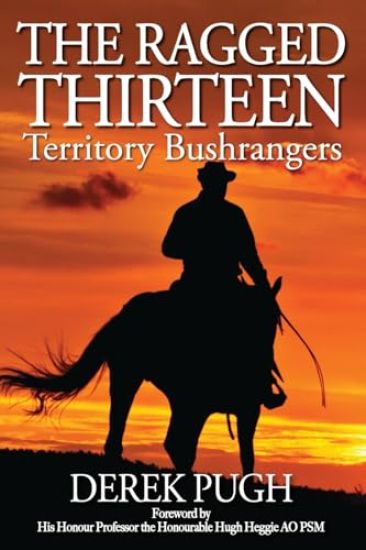
The Ragged Thirteen - Territory Bushrangers
In 1886, a notorious gang of horsemen wreaked havoc on the Overlanders' Trail that stretched across the Northern Territory into the wild Kimberley region. They stole cattle with audacity, brazenly held up pubs and cattle stations, and drove a herd of stolen horses with unmatched daring. As part of the Halls Creek goldrush, these men became infamous as the Ragged Thirteen.Dubbed by some as the "Tea and Sugar Bushrangers" and by others as "the scum of the four colonies, fugitives from justice", the Ragged Thirteen were more than outlaws. They were brilliant horsemen, masterful bushmen, lovers of bush poetry, and champions of the underdog.In this gripping, meticulously researched tale, Derek Pugh uncovers the real story of the Ragged Thirteen, following their 138-year-old trail across the rugged Top End. Their story isn't just history, it's an adventure.
Escape Cliffs

Escape Cliffs

Derek Pugh

Derek Pugh
2018
nidottu
This is a true story of greed, exploration, murder, wasted efforts, life and death struggles, insubordination, incredible seamanship, and extraordinary bushmanship, amid government bungling and Aboriginal resistance, during South Australia's first attempt at colonising their Northern Territory in 1864.The South Australians wanted their state to be the premier state of Australia. The new settlement was expected to open up a trading route across the country to Asia and beyond, and exploit the agricultural and mining opportunities of the interior. It was to be at no cost to the state, as the land was sold, unseen and unsurveyed, to investors in Adelaide and London, prior to the first Northern Territory Expedition even setting out.The investors were already calculating their returns, but then, as the saying goes, the fight really started..."A fantastic read: insightful, cohesive, sequential, and well-paced. Loved it. Plenty of photos and maps to set the scene, with the addition of well researched complementary first-hand accounts and primary records. Pugh has captured the essence of the time, place and characters: their personalities, hardships, successes and celebrations. I wanted to read it to find out what was going to happen next. Pugh's writing style is 'alive' and easy to read." - Jill Finch
Darwin 1869

Darwin 1869

Derek Pugh

Derek Pugh
2018
nidottu
Darwin, the unique and vibrant city in Australia's tropical north, was almost stillborn.The Northern Territory had its beginnings under the governance of South Australia. Land was sold to investors, unseen and unsurveyed and in an unknown location. The sales raised the funds needed to found the new colony of Palmerston, the future capital of the Northern Territory of South Australia. The First Northern Territory Expedition was sent north to make it a reality. But it failed miserably and the government faced huge losses and insufficient reserves to refund its investors.To mitigate the loss, a new venture was envisaged - The Second Northern Territory Expedition - and there was only one man thought capable of ensuring a successful survey of the north: the Surveyor General, George Woodroffe Goyder.Goyder was an extraordinary man, full of frenetic energy and with a phenomenal work ethic. The survey took him and his expert teams of surveyors and bushmen only eight months. It resulted in the laying out of the city of Palmerston (now called Darwin), three rural towns and hundreds of rural blocks spreading over almost 270,000 hectares, all pegged out in the bush and mapped. The blocks were carved out of Larrakia and Wulna lands - without permission or compensation - and conflict with the Aborigines was an ever-present danger. Two men were speared - one fatally.Darwin grew from these somewhat humble but tumultuous beginnings. It was the only pre-Federation Australian capital established late enough to be photographed from its first settlement, and it is a survivor of challenges and privations unheard of in more temperate climes.Darwin's story is written on its maps. Street names such as Knuckey, McLachlan, Daly, Woods, Bennett, Harvey and Smith Streets, recall the surveyors and their teams. Suburbs such as Millner, Larrakeyah, Bellamack and Stuart Park remind us of the city's earliest days. It is the story of how the courage and diligence of a few led to the founding of the city we know today.
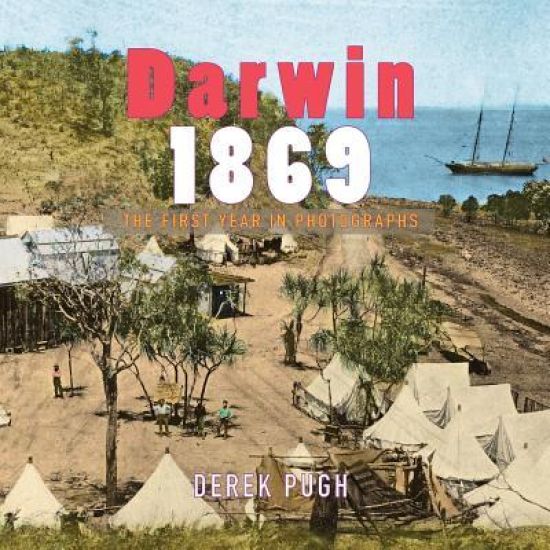
Darwin 1869: The First Year in Photographs
This is the story of the birth of the city of Darwin, the capital of the Northern Territory.At first called Palmertston, Darwin is the only pre-Federation capital city in Australia which is young enough to have been photographed since its earliest days. When George Goyder and his survey teams arrived in Port Darwin in February 5, 1869, one of the draftsmen, Joseph Brooks, doubled as the expedition's official photographer. He was later joined by Captain Samuel Sweet of the Gulnare, who helped Brooks and took his own collection of photographs.These precious images show the very first camp on the Darwin peninsula and the men of the Second Northern Territory Expedition working in the Northern Territory of South Australia in 1869.
Schoolies

Schoolies

Derek Pugh

Derek Pugh
2019
nidottu
It's Schoolies Week in Bali. Ras follows Jess to the party town of Kuta and finds that protecting his girl is easier said than done. He also has to learn how to handle his newfound freedom as an adult. What could possibly go wrong?
Darwin: Growth of a City. The 1880s.
The 1880s started with a boom in Palmerston and the Top End. South Australian investors flocked to put their money into gold mines, sugar and coffee plantations, and the pastoral industry. Cattle stations bigger than a British county were carved out of the bush. The Overland Telegraph Line stretched across the continent, and the Top End was alive with Aborigines, explorers, agriculturalists, pastoralists, and reef miners. Then came the railway builders, pearl divers, Chinese 'Coolies', and 'misfits, missionaries and mercenaries'.The story of Palmerston (Darwin) and the Top End in the 1880s is a story of murder and mayhem, fortunes won and lost, challenges taken up, tragedies unfolded, and golden opportunities grasped by extraordinary men and women. It was they who began to turn this remote area of Australia into what it is today, and they who forged a new Australian identity - that of the 'Territorian'.With a foreword by His Honour the Honourable Austin Asche AC QC, the 13th Administrator of the Northern Territory.
Twenty to the Mile: The Overland Telegraph Line
The greatest engineering problem facing Australia - the tyranny of distance - had a solution: the electric telegraph, and its champion was the sheep-farming colony of South Australia.In two years, Charles Heavitree Todd, leading hundreds of men, constructed a telegraph line across the centre of the continent from Port Augusta to Darwin. At nearly 3,000 kilometres long and using 36,000 poles at '20 to the mile', it was a mammoth undertaking but in October 1872, Adelaide was finally linked to London.The Overland Telegraph Line crossed Aboriginal lands first seen by John McDouall Stuart just 10 years before. Messages which previously took weeks to cross the country now took hours. Passing through eleven new repeater stations and the remotest parts of Australia, the line joined the vast global telegraph network, and a new era was ushered in.Each station held a staff of six. They became centres of white civilization and the cattle or sheep industry and, in many places, the Aborigines were displaced.The unique stories of how men and women lived and/or died on the line range from heroic through desperate to tragic, but they remain an indelible part of Australia's history.'...a book written with heart and determination ... a lasting tribute to the inventiveness and tenacity of the people behind the planning, building and execution of the Overland Telegraph - a true nation building endeavour.' - His Excellency, The Honourable Hieu Van Le, AC.