This book seeks to offer a chronological account of the development of Pierre Bourdieu's thinking. It is intended to guide readers towards and through the original texts and attempts to represent the French meaning of Bourdieu, hence the concentration on the French chronology.
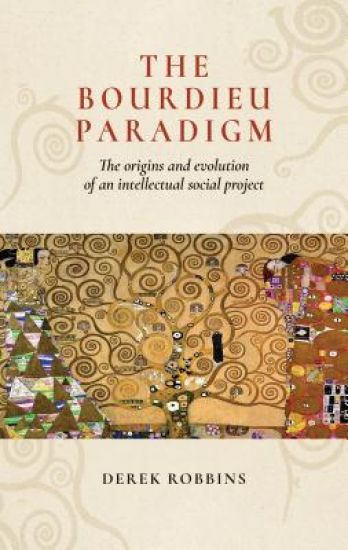
Analysing the work of Schutz, Gurwitsch, Merleau-Ponty and Bourdieu, this book considers the historical development of competing philosophies of social science. It examines the relations between phenomenology, Gestalt psychology and empirical social science in the first half of the twentieth century and then explores the way in which Bourdieu responded to this legacy by advocating a form of reflexive social-scientific investigation, which would remain faithful to primary experience without disowning accumulated intellectualism. The book asks whether the Bourdieu ‘paradigm’ retains value beyond the French conditions of its production. It offers an analysis of the development of Bourdieu’s thought and practice which constitutes an invitation to readers generally to reassess the value of the western tradition of the social function of the detached intellectual for mass democratic societies.
Derek Robbins has shown once again that he is one of the few Anglophone scholars with an exceptionally profound and impressively comprehensive knowledge of the history of modern European social thought. This book is a must for anybody interested in twentieth-century French social theory. The coverage is wide-ranging; the information provided is authoritative; complex ideas are presented in an accessible language; key controversies are explained in an eloquent and thought-provoking fashion; and, perhaps most importantly, seemingly abstract tensions between intellectual positions are put into historical context. - Dr Simon Susen, City University London Detailed, timely and original this book explores the trans-cultural transmission of social theory. Derek Robbins presents us with a chronological commentary on the intellectual production of five French social thinkers (Aron, Althusser, Foucault, Lyotard, Bourdieu) and on the English reception of their texts. The book: Sets up a Bourdieusian investigation of the habitus of the five thinkers and, comparatively, of the national sub-fields of intellectual discourse.Enables an inter-active generation of enquiry based on the primacy of individual experience.Challenges the social sciences to abandon their grand narratives and to advance the cause of social democratic inclusion.Reconciles the legacies of the work of Bourdieu and Lyotard in order to advance practically a socio-analytic recognition of dissensus or différence. By representing modern classics of French social thought in socio-political context, this in-depth study encourages all social researchers to reflect on their use of social theories in their practice.
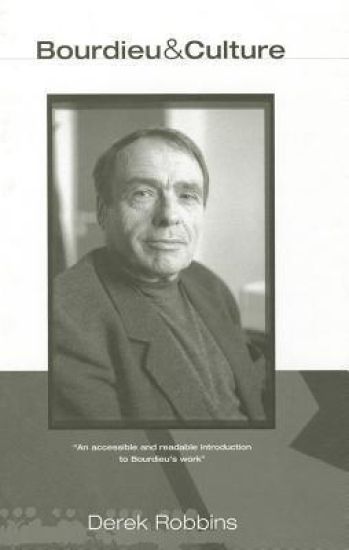
An accessible and readable introduction to Bourdieu's work, this book places him in intellectual and historical context, and shows how Bourdieu is best understood as a cultural analyst. It traces his development from his early work on education to his relationship to cultural sociology and cultural studies. The book also gives detailed examples, drawn from Bourdieu's own work, to show how he makes sense of contemporary culture. Robbins guides the reader authoritatively through Bourdieu's wide-ranging body of theoretical and analytical work and offers a framework within which the most recent aspects of that work can be understood.
An accessible and readable introduction to Bourdieu's work, this book places him in intellectual and historical context, and shows how Bourdieu is best understood as a cultural analyst. It traces his development from his early work on education to his relationship to cultural sociology and cultural studies. The book also gives detailed examples, drawn from Bourdieu's own work, to show how he makes sense of contemporary culture. Robbins guides the reader authoritatively through Bourdieu's wide-ranging body of theoretical and analytical work and offers a framework within which the most recent aspects of that work can be understood.
"The political and academic worlds are fractured by two competing discourses: the universalism of human rights and cultural relativism. This fracture is represented by the deep separation of cultural analysis and theories of international politics. Derek Robbins in a brilliant interrogation of European thinkers from Montesquieu to Pierre Bourdieu seeks to replace cultural relativism with cultural relationism as a step towards reconciling Enlightenment universalism and anthropological insistence on cultural difference. Inter alia he reflects on the tensions between political and social science and takes up the challenge from Raymond Aron to construct a sociology of international relations. A dazzling achievement." - Bryan S. Turner, The Graduate Center, CUNY Through historical studies of some of the work of Montesquieu, Comte, Durkheim, Boas, Morgenthau, Aron and Bourdieu, Derek Robbins examines the changing and competing conceptualisations of the political and the social in the Western European intellectual tradition. He suggests that we are now experiencing a new ‘dissociation of sensibility’ in which political thought and its consequences in action have become divorced from social and cultural experience. Developing further the ideas of Bourdieu which he has presented in books and articles over the last twenty years, Robbins argues that we need to integrate the recognition of cultural difference with the practice of international politics by accepting that the ‘field’ of international political discourse is a social construct which is contingent on encounters between diverse cultures. ‘Everything is relative’ (Comte) and ‘everything is social’ (Bourdieu), not least international politics.
Analysing the work of Schutz, Gurwitsch, Merleau-Ponty and Bourdieu, this book considers the historical development of competing philosophies of social science. It examines the relations between phenomenology, Gestalt psychology and empirical social science in the first half of the twentieth century and then explores the way in which Bourdieu responded to this legacy by advocating a form of reflexive social-scientific investigation, which would remain faithful to primary experience without disowning accumulated intellectualism. The book asks whether the Bourdieu ‘paradigm’ retains value beyond the French conditions of its production. It offers an analysis of the development of Bourdieu’s thought and practice which constitutes an invitation to readers generally to reassess the value of the western tradition of the social function of the detached intellectual for mass democratic societies.
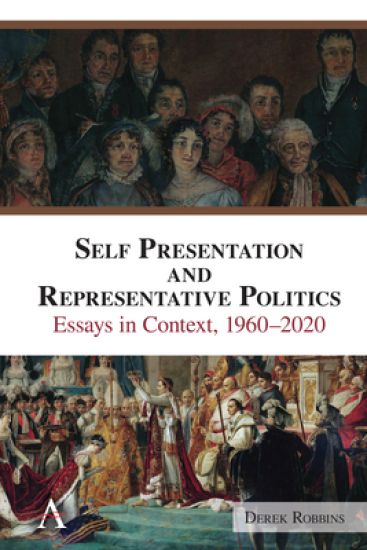
Through six articles written at intervals of about a decade between 1960 and 2020, the book provides an account of the author’s developing political awareness during the period in the context of political events and changes. In this way the book illustrates the social origins of political attitudes, while, at the same time, the articles raise questions about the increasing dominance of political discourse in society. The book suggests that politics is now excessively managed by political professionals and that the challenge for reviving democratic participation is to restore the social dimension of state membership.
Vers le style du XXe siècle (Towards a style for the 20th Century), by the «Uriage team» under the direction of Gilbert Gadoffre, was published by Seuil in 1945. It was the work of nine authors who had been involved with the «école de cadres» (leadership school) which ran from 1940 until 1945. At first the école was part of a programme initiated by the Youth Ministry of the Vichy government. After the German invasion of the «Unoccupied zone», the team cooperated clandestinely with the Resistance movement. The work offers their vision of how humanity should recover after the trauma of World War II. Known for his studies of the work of Pierre Bourdieu (1930–2002), Derek Robbins attempts to put into practice Bourdieu’s injunction that all intellectual works should be understood «socio-genetically», that is to say as bi-products of the social positions and trajectories of their authors. Towards a New Humanity: The Uriage Manifesto, 1945 offers a translation of the Uriage text, but it offers much more. Robbins examines the social backgrounds of the authors and considers how they adjusted their views in their subsequent careers as de Gaulle normalised much of what they had wanted to challenge. Produced during the Covid-19 pandemic lockdown, this book examines, as a case-study, the process by which nine privileged Frenchmen articulated a vision for the whole of humanity. Few of their proposals materialised, but their discussion is thought-provoking as we confront our future.
Through six articles written at intervals of about a decade between 1960 and 2020, the book provides an account of the author’s developing political awareness during the period in the context of political events and changes. In this way the book illustrates the social origins of political attitudes, while, at the same time, the articles raise questions about the increasing dominance of political discourse in society. The book suggests that politics is now excessively managed by political professionals and that the challenge for reviving democratic participation is to restore the social dimension of state membership.