
Kirjahaku
Etsi kirjoja tekijän nimen, kirjan nimen tai ISBN:n perusteella.
28 kirjaa tekijältä Derek Robinson



Set during the height of World War I in January 1918, Goshawk Squadron follows the misfortunes of a British flight squadron on the Western Front. For Stanley Woolley, commanding officer of Goshawk Squadron, the romance of chivalry in the clouds is just a myth. The code he drums into his men is simple and savage: shoot the enemy in the back before he knows you're there. Even so, he believes the whole squadron will be dead within three months. A monumental work at the time of its original release, Booker-shortlisted Goshawk Squadron is now viewed as a classic in the mode of Catch 22. Wry, brutal, cynical and hilarious, the men of Robinson's squadron are themselves an embodiment of the maddening contradictions of war: as much a refined troop of British gentleman as they are a viscous band of brothers hell-bent on staying alive and winning the war.
The Battle of Britain could not stop Operation Sealion, the planned German invasion. The historians got it wrong. This is a big claim to make, yet the reasoning behind it is remarkably straightforward. In Invasion 1940, author Derek Robinson asks why historians have dovetailed the Battle of Britain with Operation Sealion. Military experts say the Battle prevented an invasion, but they don't exactly explain how. Why is it taken for granted that an air battle could halt an assault from the sea? The skill and courage of the RAF pilots isn't in question, but did the Luftwaffe's failure to destroy them, plus bad weather, really persuade Hitler to cancel Sealion? That's what Hitler said, and Churchill claimed a great victory for 'The Few'. The Battle of Britain ended; Sealion died. One followed the other, so the first must have caused the second. But Derek Robinson challenges that assumption and reaches a startling conclusion. The real obstacle to invasion was a force that both Churchill and Hitler failed to acknowledge.In this fascinating reexamination, Robinson doesn't seek to downplay the heroism and achievements of the RAF; rather, he wants the true picture of that brilliant moment in history--Invasion, 1940-- to emerge.
Flight Lieutenant Silk, a twice-decorated Lancaster pilot in WW II, rejoins the R.A.F. and qualifies to fly the Vulcan bomber. Piloting a Vulcan is an unforgettable experience: no other aircraft comes close to matching its all-round performance. And as bombers go, it's drop-dead gorgeous. But there's a catch. The Vulcan has only one role: to make a second strike. To act in retaliation for a Russian nuclear attack. Silk knows that knows that if he ever flies his Vulcan in anger, he'll be flying from a smoking wasteland, a Britain obliterated. But in the mad world of Mutually Assured Destruction, the Vulcan is the last - the only - deterrent. Derek Robinson returns with another rip-roaring, gung-ho R.A.F. adventure, one that exposes and confronts the brinkmanship and sabre-rattling of the Cold War Era.
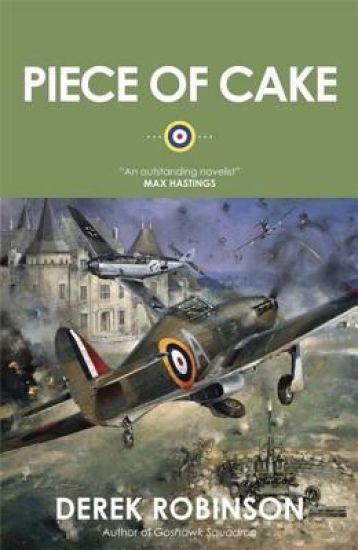
From the Phoney War of 1939 to the Battle of Britain in 1940, the pilots of Hornet Squadron learn their lessons the hard way. Hi-jinks are all very well on the ground, but once in a Hurricane's cockpit, the best killers keep their wits close. Newly promoted Commanding Officer Fanny Barton has a job on to whip the Hornets into shape before they face the Luftwaffe's seasoned pilots. And sometimes Fighter Command, with its obsolete tactics and stiff doctrines, is the real menace. As with all Robinson's novels, the raw dialogue, rich black humour and brilliantly rendered, adrenalin-packed dogfights bring the Battle of Britain, and the brave few who fought it, to life.
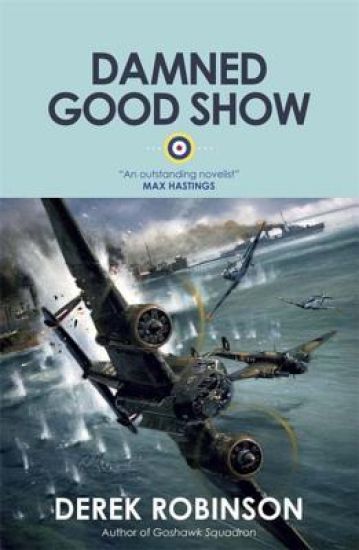
They joined an R.A.F. known as 'the best flying club in the world', but when war pitches the young pilots of 409 Squadron into battle over Germany, their training, tactics and equipment are soon found wanting, their twin-engined bombers obsolete from the off. Chances of completing a 30-operation tour? One in three. At best. Robinson's crooked salute to the dogged heroes of the R.A.F.'s early bombing campaign is a wickedly humourous portrait of men doing their duty in flying death traps, fully aware, in those dark days of war, there was nothing else to do but dig in and hang on.
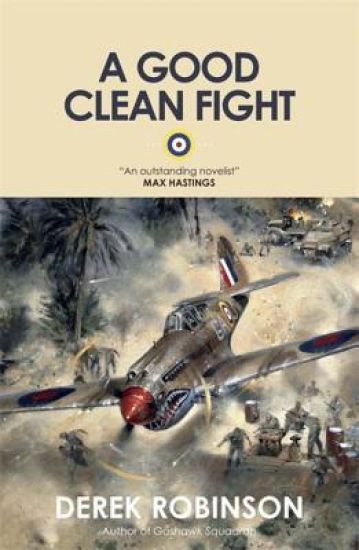
North Africa, 1942. Dust, heat, thirst, flies. A good clean fight, for those who like that sort of thing, and some do. From an advanced landing field, striking hard and escaping fast, our old friends from Hornet Squadron (Piece of Cake) play Russian roulette, flying their clapped-out Tomahawks on ground-strafing forays. Meanwhile, on the ground, the men of Captain Lampard's S.A.S. patrol drive hundreds of miles behind enemy lines to plant bombs on German aircraft. This is the story of a war of no glamour and few heroes, in a setting often more lethal than the enemy.
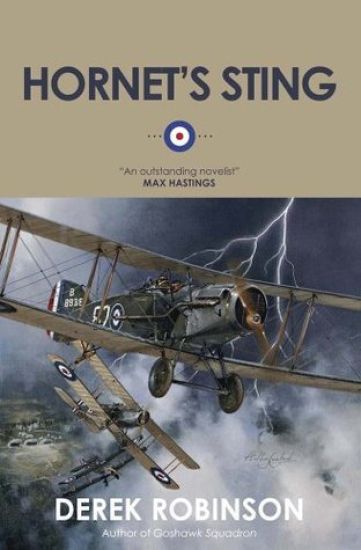
It's 1917, and Captain Stanley Woolley joins an R.F.C. squadron whose pilots are starting to fear the worst: their war over the Western Front may go on for years. A pilot's life is usually short, so while it lasts it is celebrated strenuously. Distractions from the brutality of the air war include British nurses; eccentric Russian pilots; bureaucratic battles over the plum-jam ration; rat-hunting with Very pistols; and the C.O.'s patent, potent cocktail, known as 'Hornet's Sting'. But as the summer offensives boil up, none of these can offer any lasting comfort.
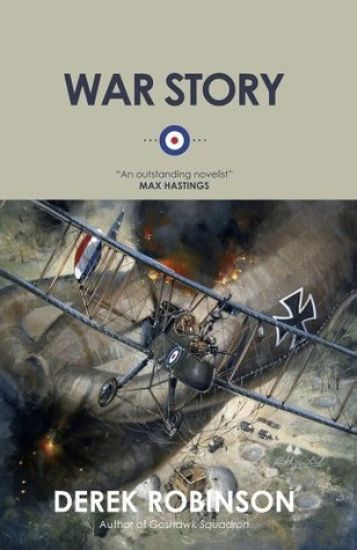
Fresh from school in June 1916, Lieutenant Oliver Paxton's first solo flight is to lead a formation of biplanes across the Channel to join Hornet Squadron in France. Five days later, he crash-lands at his destination, having lost his map, his ballast and every single plane in his charge. To his C.O. he's an idiot, to everyone else - especially the tormenting Australian who shares his billet - a pompous bastard. This is 1916, the year of the Somme, giving Paxton precious little time to grow from innocent to veteran.
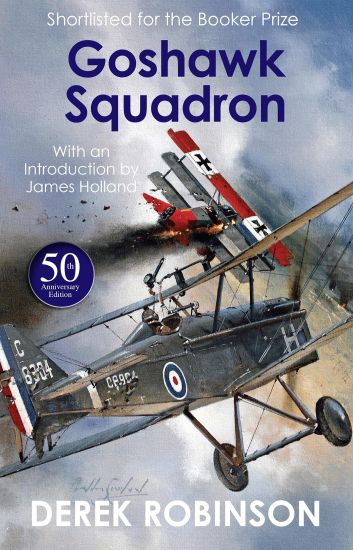
The Booker-shortlisted Royal Flying Corps classic, reissued for the 50th Anniversary of its first publicationWith an Introduction by James Holland and an Afterword by Mike Petty"Robinson is probably the best novelist ever to write about fighter combat: surprising, hyper-realistic and very, very dark" Spectator World War One pilots were the knights of the sky, and the press and public idolised them as gallant young heroes. At just twenty-three, Major Stanley Woolley is the old man and commanding officer of Goshawk Squadron. He abhors any notion of chivalry in the clouds and is determined to obliterate the decent, gentlemanly outlook of his young, public school-educated pilots - for their own good. But as the war goes on he is forced to throw greener and greener pilots into the meat grinder. Goshawk Squadron finds its gallows humour and black camaraderie no defence against a Spandau bullet to the back of the head.
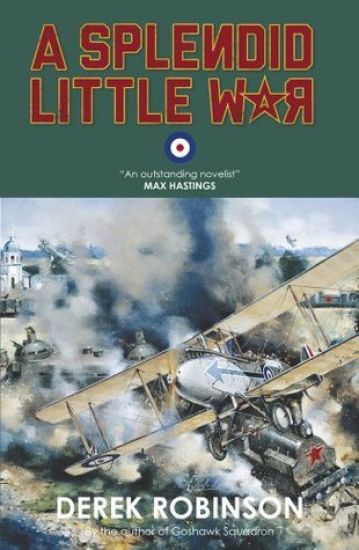
The war to end all wars, people said in 1918. Not for long. By 1919, White Russians were fighting Bolshevik Reds for control of their country, and Winston Churchill (then Secretary of State for War) wanted to see Communism 'strangled in its cradle'. So a volunteer R.A.F. squadron, flying Sopwith Camels, went there to duff up the Reds. 'There's a splendid little war going on,' a British staff officer told them. 'You'll like it.' Looked like fun. But the war was neither splendid nor little. It was big and it was brutal, a grim conflict of attrition, marked by incompetence and corruption. Before it ended, the squadron wished that both sides would lose. If that was a joke, nobody was laughing.