Kirjojen hintavertailu. Mukana 11 717 486 kirjaa ja 12 kauppaa.

Kirjahaku

Etsi kirjoja tekijän nimen, kirjan nimen tai ISBN:n perusteella.

2 kirjaa tekijältä Derek S. Dodson

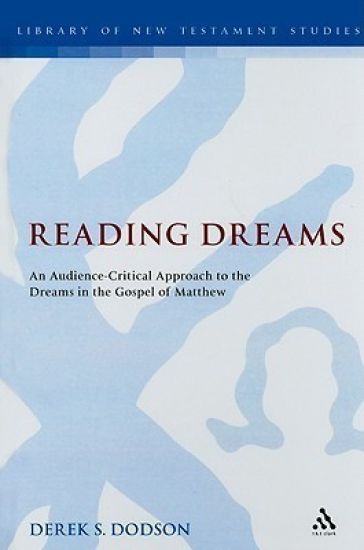
Reading Dreams

Reading Dreams

Derek S. Dodson

T. T.Clark Ltd
2009
sidottu
Dodson reads the dreams in the Gospel of Matthew (1:18b-25; 2:12, 13-15, 19-21, 22; 27:19) as the authorial audience. This approach requires an understanding of the social and literary character of dreams in the Greco-Roman world. Dodson describes the social function of dreams, noting that dreams constituted one form of divination in the ancient world, and looks at the theories and classification of dreams that developed in the ancient world. He then moves on to demonstrate the literary dimensions of dreams in Greco-Roman literature. This exploration of the literary representation of dreams is nuanced by considering the literary form of dreams, dreams in the Greco-Roman rhetorical tradition, the inventiveness of literary dreams, and the literary function of dreams. The dreams in the Gospel of Matthew are then analyzed in this social and literary context. It is demonstrated that Matthew's use of dreams as a literary convention corresponds to the script of dreams in other Greco-Roman narratives. This correspondence includes the form of the Matthean dreams, dreams as a motif of the birth topos (1:18b-25), the association of dreams and prophecy (1:22-23; 2:15, 23), the use of the double-dream report (2:12 and 2:13-15), and dreams as an ominous sign in relation to an individual's death (27:19). An appendix considers the Matthean transfiguration as a dream-vision report.
Reading Dreams

Reading Dreams

Derek S. Dodson

T. T.Clark Ltd
2019
nidottu
Dodson reads the dreams in the Gospel of Matthew (1:18b-25; 2:12, 13-15, 19-21, 22; 27:19) as the authorial audience. This approach requires an understanding of the social and literary character of dreams in the Greco-Roman world. Dodson describes the social function of dreams, noting that dreams constituted one form of divination in the ancient world, and looks at the theories and classification of dreams that developed in the ancient world. He then moves on to demonstrate the literary dimensions of dreams in Greco-Roman literature. This exploration of the literary representation of dreams is nuanced by considering the literary form of dreams, dreams in the Greco-Roman rhetorical tradition, the inventiveness of literary dreams, and the literary function of dreams. The dreams in the Gospel of Matthew are then analyzed in this social and literary context. It is demonstrated that Matthew's use of dreams as a literary convention corresponds to the script of dreams in other Greco-Roman narratives. This correspondence includes the form of the Matthean dreams, dreams as a motif of the birth topos (1:18b-25), the association of dreams and prophecy (1:22-23; 2:15, 23), the use of the double-dream report (2:12 and 2:13-15), and dreams as an ominous sign in relation to an individual's death (27:19). An appendix considers the Matthean transfiguration as a dream-vision report.