Kirjojen hintavertailu. Mukana 11 627 670 kirjaa ja 12 kauppaa.

Kirjahaku

Etsi kirjoja tekijän nimen, kirjan nimen tai ISBN:n perusteella.

15 kirjaa tekijältä Derek Wall

The Commons in History

The Commons in History

Derek Wall

MIT Press
2017
pokkari
An argument that the commons is neither tragedy nor paradise but can be a way to understand environmental sustainability.The history of the commons-jointly owned land or other resources such as fisheries or forests set aside for public use-provides a useful context for current debates over sustainability and how we can act as "good ancestors." In this book, Derek Wall considers the commons from antiquity to the present day, as an idea, an ecological space, an economic abstraction, and a management practice. He argues that the commons should be viewed neither as a "tragedy" of mismanagement (as the biologist Garrett Hardin wrote in 1968) nor as a panacea for solving environmental problems. Instead, Walls sees the commons as a particular form of property ownership, arguing that property rights are essential to understanding sustainability. How we use the land and its resources offers insights into how we value the environment.After defining the commons and describing the arguments of Hardin's influential article and Elinor Ostrom's more recent work on the commons, Wall offers historical case studies from the United States, England, India, and Mongolia. He examines the power of cultural norms to maintain the commons; political conflicts over the commons; and how commons have protected, or failed to protect ecosystems. Combining intellectual and material histories with an eye on contemporary debates, Wall offers an applied history that will interest academics, activists, and policy makers.
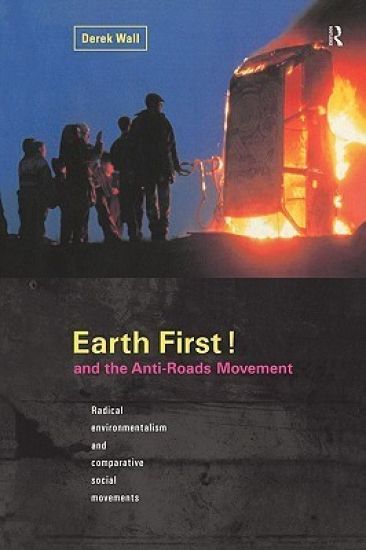
Earth First:Anti-Road Movement
First published in 1999. Detailed accounts of major ant-road campaigns, both in the UK and internationally, are included, describing confrontations at Twyford, Newbury, Glasgow and the Autobahn in Germany, as well as information on the globalisation of Earth First!, with details of protests in Australia, Ireland, Germany, France, Holland, Eastern Europe and North America. Earth Fist! and the Anti-Roads Movement traces the origins of the movement and the history of anti-roads activism in Britain since the 1880s. Showing how green social and political theory can be linked to practical struggles for environmental and social change, Derek Wall investigates key topics of political and sociological interest.
Earth First! and the Anti-Roads Movement
Earth First! is one of the most controversial and well known green movements in the world and the driving force behind the anti-road campaigns of the 1990s, made famous by sabotage tactics. Detailed accounts of major anti-road campaigns both in the UK and internationally are included, describing confrontations at Twyford, Newbury, Glasgow, the Autobahn in Germany, and information on the international spread of the Earth First! movement, with details of campaigns in Australia, Ireland, Germany, France, Holland and Eastern Europe. Earth First! and the Anti-Roads Movement traces the origins of the movement and the history of anti-roads activism in Britain since the 1880s. Radical EF! organisers describe how they took on their green activist identity, why they launched both EF! and the anti-roads movement, and their experiences of dramatic protest. Exposing the tensions between EF! and other green activists, they explain the political and economic influences on and the culture and politics of protest. Showing how green social and political theory can be linked to practical struggles for environmental and social change, Derek Wall investigates key topics of political and sociological interest in Britain and the World today. This is an authoritative account based on passionate and lyrical autobiographical accutns form activists blended with a strong theoretical grounding.
The Sustainable Economics of Elinor Ostrom
Elinor Ostrom’s Nobel Prize-winning work on common pool property rights has implications for some of the most pressing sustainability issues of the twenty-first century — from tackling climate change to maintaining cyberspace. In this book, Derek Wall critically examines Ostrom’s work, while also exploring the following questions: is it possible to combine insights rooted in methodological individualism with a theory that stresses collectivist solutions? Is Ostrom’s emphasis on largely local solutions to climate change relevant to a crisis propelled by global factors?This volume situates her ideas in terms of the constitutional analysis of her partner Vincent Ostrom and wider institutional economics. It outlines her key concerns, including a radical research methodology, commitment to indigenous people and the concept of social-ecological systems. Ostrom is recognised for producing a body of work which demonstrates how people can construct rules that allow them to exploit the environment in an ecologically sustainable way, without the need for governmental regulation, and this book argues that in a world where ecological realities increasingly threaten material prosperity, such scholarship provides a way of thinking about how humanity can create truly sustainable development.Given the inter-disciplinary nature of Ostrom’s work, this book will be relevant to those working in the areas of environmental economics, political economy, political science and ecology.
Earth First:Anti-Road Movement
First published in 1999. Detailed accounts of major ant-road campaigns, both in the UK and internationally, are included, describing confrontations at Twyford, Newbury, Glasgow and the Autobahn in Germany, as well as information on the globalisation of Earth First!, with details of protests in Australia, Ireland, Germany, France, Holland, Eastern Europe and North America. Earth Fist! and the Anti-Roads Movement traces the origins of the movement and the history of anti-roads activism in Britain since the 1880s. Showing how green social and political theory can be linked to practical struggles for environmental and social change, Derek Wall investigates key topics of political and sociological interest.
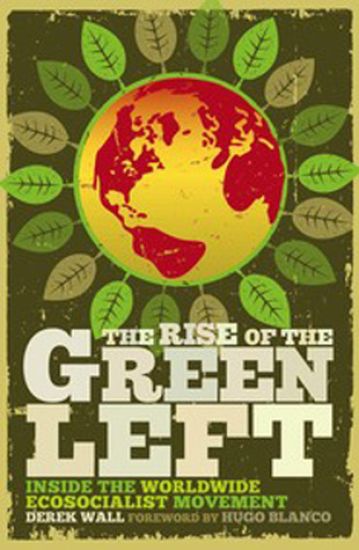
The Rise of the Green Left

The Rise of the Green Left

Derek Wall

Pluto Press
2010
pokkari
Climate change and other ecological ills are driving the creation of a grassroots global movement for change. From Latin America to Europe, Australia and China a militant movement merging red and green is taking shape. Ecosocialists argue that capitalism threatens the future of humanity and the rest of nature. From indigenous protest in the Peruvian Amazon to the green transition in Cuba to the creation of red-green parties in Europe, ecosocialism is defining the future of left and green politics globally. Latin American leaders such as Morales and Chavez are increasingly calling for an ecosocialist transition. Drawing on the work of key thinkers such as Joel Kovel and John Bellamy Foster, Derek Wall provides an unique insider view of how ecosocialism has developed and a practical guide to focused ecosocialist action. A great handbook for activists and engaged students of politics.
Economics After Capitalism

Economics After Capitalism

Derek Wall

Pluto Press
2015
pokkari
'There is no alternative' has been the unofficial mantra of the neoliberal order since its utterance by Margaret Thatcher in the 1980s. However, there is an alternative to our crisis-ridden, austerity-inflicted world - and not just one alternative, but many. Challenging the arguments for markets, mainstream economics and capitalism from Adam Smith onwards, Economics After Capitalism provides a step-by-step guide to various writers, movements and schools of thought, critical of neoliberal globalisation. These range from Keynesian-inspired reformists such as Geroge Soros and Joseph Stiglitz, critics of inequality like Thomas Piketty and Amaitya Sen, to more radical voices including Naomi Klein, Marxists such as David Harvey, anarchists, and autonomists including Toni Negri and Michael Hardt. By providing a clear and accessible guide to the economics of anti-capitalism, Derek Wall successfully demonstrates that an open source eco-socialist alternative to rampant climate change, elite rule and financial chaos is not just necessary, but possible.
Economics After Capitalism

Economics After Capitalism

Derek Wall

Pluto Press
2015
sidottu
'There is no alternative' has been the unofficial mantra of the neoliberal order since its utterance by Margaret Thatcher in the 1980s. However, there is an alternative to our crisis-ridden, austerity-inflicted world - and not just one alternative, but many. Challenging the arguments for markets, mainstream economics and capitalism from Adam Smith onwards, Economics After Capitalism provides a step-by-step guide to various writers, movements and schools of thought, critical of neoliberal globalisation. These range from Keynesian-inspired reformists such as Geroge Soros and Joseph Stiglitz, critics of inequality like Thomas Piketty and Amaitya Sen, to more radical voices including Naomi Klein, Marxists such as David Harvey, anarchists, and autonomists including Toni Negri and Michael Hardt. By providing a clear and accessible guide to the economics of anti-capitalism, Derek Wall successfully demonstrates that an open source eco-socialist alternative to rampant climate change, elite rule and financial chaos is not just necessary, but possible.
Elinor Ostrom's Rules for Radicals
Elinor Ostrom was the first woman to win the Nobel Prize for Economics. Her theorising of the commons has been celebrated as groundbreaking and opening the way for non-capitalist economic alternatives, yet, many radicals know little about her. This book redresses this, revealing the indispensability of her work for green politics, left economics and radical democracy. Ostrom has often been viewed as a conservative or managerial thinker; but Derek Wall’s analysis of her work reveals a how it is invaluable for developing a left political programme in the twenty-first century. Central to Ostrom’s work was the move ‘beyond panaceas’; transforming institutions to widen participation, promote diversity and favour cooperation over competition. She regularly challenged academia as individualist, narrow and elitist and promoted a radical take on education, based on participation. Her investigations into how we share finite resources has radical implications for the Green movement and her rubric for a functioning collective ownership is highly relevant in order in achieving radical social change. As activists continue to reject traditional models of centralised power, Ostrom’s work will become even more vital, offering a guide to creating economics that exists beyond markets and states.
Elinor Ostrom's Rules for Radicals
Elinor Ostrom was the first woman to win the Nobel Prize for Economics. Her theorising of the commons has been celebrated as groundbreaking and opening the way for non-capitalist economic alternatives, yet, many radicals know little about her. This book redresses this, revealing the indispensability of her work for green politics, left economics and radical democracy. Ostrom has often been viewed as a conservative or managerial thinker; but Derek Wall’s analysis of her work reveals a how it is invaluable for developing a left political programme in the twenty-first century. Central to Ostrom’s work was the move ‘beyond panaceas’; transforming institutions to widen participation, promote diversity and favour cooperation over competition. She regularly challenged academia as individualist, narrow and elitist and promoted a radical take on education, based on participation. Her investigations into how we share finite resources has radical implications for the Green movement and her rubric for a functioning collective ownership is highly relevant in order in achieving radical social change. As activists continue to reject traditional models of centralised power, Ostrom’s work will become even more vital, offering a guide to creating economics that exists beyond markets and states.
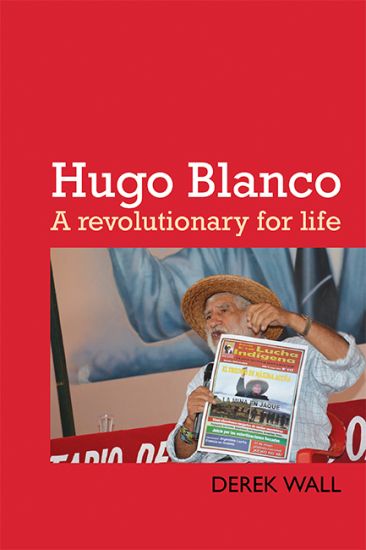
Hugo Blanco

Hugo Blanco

Derek Wall

The Merlin Press Ltd
2018
nidottu
Hugo Blanc is Peru’s best-known revolutionary. A leader of the indigenous people of the Andes, he was born in 1934 in Cusco, the former Inca capital. He is a lifelong environmental campaigner in defence of the natural riches of the Andean region and beyond. In the 1960s he led a successful armed peasant uprising demanding land rights. He was placed on death row and released only after a huge international campaign supported by Jean Paul Sartre. In exile in Chile he was lucky to escape death after the 1973 coup. More recently Hugo Blanco was a Presidential candidate and was elected as a Senator in Peru. He was exiled to Mexico, where he was influenced by the Zapatistas. Still politically active today, he publishes the newspaper Lucha Indigena (Indigenous Struggle). This engaging political biography will survey the life of this unassuming but compelling activist – a guerrilla fighter praised by Che Guevara, one- time member of the Fourth International – from the 1960s to the present. It is a story of ideas and activism: surveying Hugo Blanco’s views on defence of the environment, social and political movements, indigenous peoples, left governments and political strategy. Hugo Blanco is one of the most significant activists and ecosocialist thinkers in the world today.
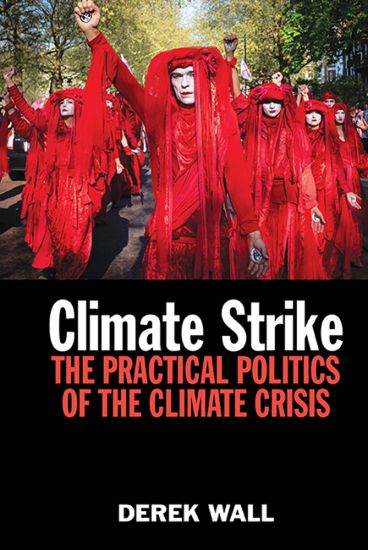
Climate Strike

Climate Strike

Derek Wall

The Merlin Press Ltd
2020
nidottu
Climate change is a product of the entire social and economic system within which we exist, in a word, capitalism. Challenging capitalism is essential to challenging climate change. We have difficult issues to consider: * How can we promote political action to end capitalism, and do so quickly? * How can individuals be mobilised to act? * What can we do now, to at least slow rising emissions? We need to build bases, as stepping-stones connected to a broader project creating capacity for a sustainable society.
The Sustainable Economics of Elinor Ostrom

The Sustainable Economics of Elinor Ostrom

Derek Wall

Taylor Francis Ltd
2021
nidottu
Elinor Ostrom’s Nobel Prize-winning work on common pool property rights has implications for some of the most pressing sustainability issues of the twenty-first century — from tackling climate change to maintaining cyberspace. In this book, Derek Wall critically examines Ostrom’s work, while also exploring the following questions: is it possible to combine insights rooted in methodological individualism with a theory that stresses collectivist solutions? Is Ostrom’s emphasis on largely local solutions to climate change relevant to a crisis propelled by global factors?This volume situates her ideas in terms of the constitutional analysis of her partner Vincent Ostrom and wider institutional economics. It outlines her key concerns, including a radical research methodology, commitment to indigenous people and the concept of social-ecological systems. Ostrom is recognised for producing a body of work which demonstrates how people can construct rules that allow them to exploit the environment in an ecologically sustainable way, without the need for governmental regulation, and this book argues that in a world where ecological realities increasingly threaten material prosperity, such scholarship provides a way of thinking about how humanity can create truly sustainable development.Given the inter-disciplinary nature of Ostrom’s work, this book will be relevant to those working in the areas of environmental economics, political economy, political science and ecology.
Earth First! and the Anti-Roads Movement
Earth First! is one of the most controversial and well known green movements in the world and the driving force behind the anti-road campaigns of the 1990s, made famous by sabotage tactics. Detailed accounts of major anti-road campaigns both in the UK and internationally are included, describing confrontations at Twyford, Newbury, Glasgow, the Autobahn in Germany, and information on the international spread of the Earth First! movement, with details of campaigns in Australia, Ireland, Germany, France, Holland and Eastern Europe. Earth First! and the Anti-Roads Movement traces the origins of the movement and the history of anti-roads activism in Britain since the 1880s. Radical EF! organisers describe how they took on their green activist identity, why they launched both EF! and the anti-roads movement, and their experiences of dramatic protest. Exposing the tensions between EF! and other green activists, they explain the political and economic influences on and the culture and politics of protest. Showing how green social and political theory can be linked to practical struggles for environmental and social change, Derek Wall investigates key topics of political and sociological interest in Britain and the World today. This is an authoritative account based on passionate and lyrical autobiographical accutns form activists blended with a strong theoretical grounding.
No-nonsense Guide To Green Politics

No-nonsense Guide To Green Politics

Derek Wall

New Internationalist Publications Ltd
2010
nidottu
In the near future there will be no politics but green politics - Climate chaos and pollution, deforestation and consumerism: the crisis facing human civilization is clear enough. But the response of politicians to it has been cowardly and inadequate, while environmental activists have tended to favour single-issue campaigns rather than electoral politics. The No-Nonsense Guide to Green Politics measures the rising tide of eco-activism and awareness and explains why it heralds a new political era worldwide.