Kirjojen hintavertailu. Mukana 11 699 587 kirjaa ja 12 kauppaa.

Kirjahaku

Etsi kirjoja tekijän nimen, kirjan nimen tai ISBN:n perusteella.

6 kirjaa tekijältä Dermot Moran

Introduction to phenomenology

Introduction to phenomenology

Dermot Moran

Routledge
2026
nidottu
Dermot Moran's groundbreaking and comprehensive "Introduction to Phenomenology" lucidly examines the contributions of phenomenology's seminal thinkers: Brentano, Husserl, Scheler, Stein, Heidegger, Gadamer, Arendt, Levinas, Sartre, Merleau-Ponty, Henry, Marion, Ricoeur, and Derrida. Written in a clear and engaging style, "Introduction to Phenomenology" charts the course of the phenomenological movement from its origins in Husserl through its transformation by Derrida and beyond. It describes the thought of Heidegger and Sartre, phenomenology's most famous thinkers, and introduces and assesses the distinctive use of phenomenology by some of its lesser-known exponents, such as Levinas, Arendt and Gadamer. Throughout the book, the enormous influence of phenomenology on the course of twentieth-century philosophy is thoroughly explored.The new edition features: a timeline of key events and publications; and, a glossary of philosophical and technical terms. 2 new chapters: Embodiment, Emotion and Empathy, which concentrates on the work of Edith Stein and Max Scheler, and Recent French Phenoenology, which examines post-Levinas, post-Derrida French phenomenology in the work of Paul Ricoeur, Jean-Luc Marion and Michel Henry. This title provides an updated introduction and conclusion, addressing the contributions of phenomenology to philosophy of mind and cognitive science, and the current debate between transcendental philosophy and naturalism. This is an indispensable introduction to a key movement for all those seeking an understanding of 20th century European thought.
Introduction to phenomenology

Introduction to phenomenology

Dermot Moran

Routledge
2026
sidottu
Introduction to Phenomenology is an outstanding and comprehensive guide to an important but often little-understood movement in European philosophy. Dermot Moran lucidly examines the contributions of phenomenology's nine seminal thinkers: Brentano, Husserl, Heidegger, Gadamer, Arendt, Levinas, Sartre, Merleau-Ponty and Derrida. Written in a clear and engaging style, this volume charts the course of the movement from its origins in Husserl to its transformation by Derrida. It describes the thought of Heidegger and Sartre, phenomenology's most famous thinkers, and introduces and assesses the distinctive use of phenomenology by some of its lesser-known exponents, such as Levinas, Arendt and Gadamer. Throughout, the enormous influence of phenomenology on the course of twentieth-century philosophy is thoroughly explored. Clearly explaining technical terms and avoiding jargon, Introduction to Phenomenology is an indispensable introduction to the history and substance of this vital current in intellectual thought.
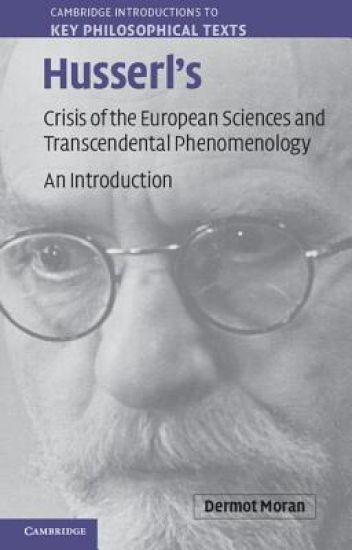
Husserl's Crisis of the European Sciences and Transcendental Phenomenology
The Crisis of the European Sciences is Husserl's last and most influential book, written in Nazi Germany where he was discriminated against as a Jew. It incisively identifies the urgent moral and existential crises of the age and defends the relevance of philosophy at a time of both scientific progress and political barbarism. It is also a response to Heidegger, offering Husserl's own approach to the problems of human finitude, history and culture. The Crisis introduces Husserl's influential notion of the 'life-world' - the pre-given, familiar environment that includes both 'nature' and 'culture' - and offers the best introduction to his phenomenology as both method and philosophy. Dermot Moran's rich and accessible introduction to the Crisis explains its intellectual and political context, its philosophical motivations and the themes that characterize it. His book will be invaluable for students and scholars of Husserl's work and of phenomenology in general.
The Philosophy of John Scottus Eriugena

The Philosophy of John Scottus Eriugena

Dermot Moran

Cambridge University Press
2004
pokkari
This work is a substantial contribution to the history of philosophy. Its subject, the ninth-century philosopher John Scottus Eriugena, developed a form of idealism that owed as much to the Greek Neoplatonic tradition as to the Latin fathers and anticipated the priority of the subject in its modern, most radical statement: German idealism. Moran has written the most comprehensive study yet of Eriugena’s philosophy, tracing the sources of his thinking and analyzing his most important text, the Periphyseon. This volume will be of special interest to historians of mediaeval philosophy, history, and theology.
Edmund Husserl

Edmund Husserl

Dermot Moran

Polity Press
2005
sidottu
Dermot Moran provides a lucid, engaging, and critical introduction to Edmund Husserl's philosophy, with specific emphasis on his development of phenomenology. This book is a comprehensive guide to Husserl's thought from its origins in nineteenth-century concerns with the nature of scientific knowledge and with psychologism, through his breakthrough discovery of phenomenology and his elucidation of the phenomenological method, to the late analyses of culture and the life-world. Husserl's complex ideas are presented in a clear and expert manner. Individual chapters explore Husserl's key texts including Philosophy of Arithmetic, Logical Investigations, Ideas I, Cartesian Meditations and Crisis of the European Sciences. In addition, Moran offers penetrating criticisms and evaluations of Husserl's achievement, including the contribution of his phenomenology to current philosophical debates concerning consciousness and the mind. Edmund Husserl is an invaluable guide to understanding the thought of one of the seminal thinkers of the twentieth century. It will be helpful to students of contemporary philosophy, and to those interested in scientific, literary and cultural studies on the European continent.
Edmund Husserl

Edmund Husserl

Dermot Moran

Polity Press
2005
nidottu
Dermot Moran provides a lucid, engaging, and critical introduction to Edmund Husserl's philosophy, with specific emphasis on his development of phenomenology. This book is a comprehensive guide to Husserl's thought from its origins in nineteenth-century concerns with the nature of scientific knowledge and with psychologism, through his breakthrough discovery of phenomenology and his elucidation of the phenomenological method, to the late analyses of culture and the life-world. Husserl's complex ideas are presented in a clear and expert manner. Individual chapters explore Husserl's key texts including Philosophy of Arithmetic, Logical Investigations, Ideas I, Cartesian Meditations and Crisis of the European Sciences. In addition, Moran offers penetrating criticisms and evaluations of Husserl's achievement, including the contribution of his phenomenology to current philosophical debates concerning consciousness and the mind. Edmund Husserl is an invaluable guide to understanding the thought of one of the seminal thinkers of the twentieth century. It will be helpful to students of contemporary philosophy, and to those interested in scientific, literary and cultural studies on the European continent.