Kirjojen hintavertailu. Mukana 11 645 314 kirjaa ja 12 kauppaa.

Kirjahaku

Etsi kirjoja tekijän nimen, kirjan nimen tai ISBN:n perusteella.

5 kirjaa tekijältä Des Fitzgerald

Tracing Autism

Tracing Autism

Des Fitzgerald

University of Washington Press
2017
sidottu
In Tracing Autism, Des Fitzgerald offers an up-close account of the search for a neurological explanation of autism. As autism has gained cultural prominence with more diagnoses and more controversy, its biological causes remain elusive.Through in-depth interviews with neuroscientists, psychologists, and psychiatrists, Fitzgerald examines what it means to do scientific research in the ambiguous terrain of autism research, a field marked by shifting horizons of uncertainty and ambivalence. He draws out how autism scientists talk and feel their way through their research, demonstrating its profoundly affective character, and expanding our understanding of what is at stake in the new brain sciences.
Tracing Autism

Tracing Autism

Des Fitzgerald

University of Washington Press
2017
pokkari
In Tracing Autism, Des Fitzgerald offers an up-close account of the search for a neurological explanation of autism. As autism has gained cultural prominence with more diagnoses and more controversy, its biological causes remain elusive.Through in-depth interviews with neuroscientists, psychologists, and psychiatrists, Fitzgerald examines what it means to do scientific research in the ambiguous terrain of autism research, a field marked by shifting horizons of uncertainty and ambivalence. He draws out how autism scientists talk and feel their way through their research, demonstrating its profoundly affective character, and expanding our understanding of what is at stake in the new brain sciences.
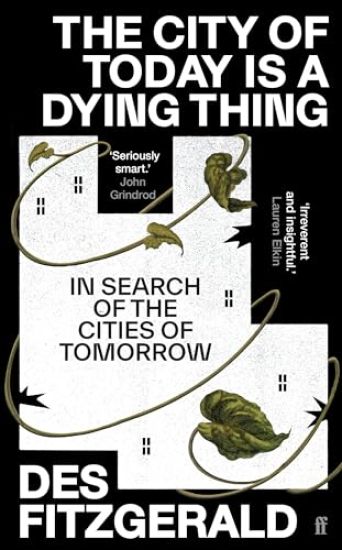
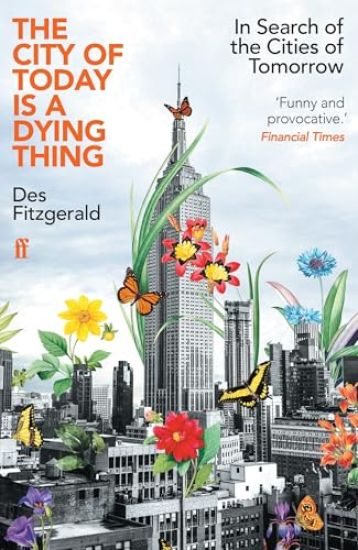
The City of Today is a Dying Thing

The City of Today is a Dying Thing

Des Fitzgerald

FABER FABER
2024
sidottu
'Counterintuitive, funny and provocative . . . We could all use a little more of Fitzgerald's scepticism.' Edwin Heathcote, Financial Times'Like Jon Ronson on town planners . . . Endlessly funny and seriously smart.' John GrindrodCities are bad for us: polluted, noisy and fundamentally unnatural. We need green space, not concrete. Trees, not tower blocks. So goes the argument. But is it true? What would the city of the future look like if we tried to build a better life from the ground up? And would anyone want to live there?Here, Des Fitzgerald takes us on an urgent, unforgettable journey into the future of urban life, from shimmering edifices in the Arizona desert to forest-bathing in deepest Wales, and from rats in mazes to neuroscientific studies of the effects of our surroundings. Along the way, he reveals the deep-lying and often controversial roots of today's green city movement, and offers an argument for celebrating our cities as they are - in all their raucous, constructed and artificial glory.
The City of Today is a Dying Thing

The City of Today is a Dying Thing

Des Fitzgerald

FABER FABER
2025
nidottu
Cities are bad for us: polluted, noisy and fundamentally unnatural. We need green space, not concrete. Trees, not tower blocks.So goes the argument. But is it true? What would the city of the future look like if we tried to build a better life from the ground up? And would anyone want to live there?Here, Des Fitzgerald takes us on an urgent, unforgettable journey into the future of urban life, from shimmering edifices in the Arizona desert to forest-bathing in deepest Wales, and from rats in mazes to neuroscientific studies of the effects of our surroundings.Along the way, he reveals the deep-lying and often controversial roots of today's green city movement, and offers an argument for celebrating our cities as they are - in all their raucous, constructed and artificial glory.
The Living City: Why Cities Don't Need to Be Green to Be Great
A sociologist explores why "green cities" won't fix everything--and urges us to celebrate urban life as it is Everywhere you look, cities are getting greener. The general assumption is clear: if something is unhealthy or bad about urban life today, then nature holds the cure. However, argues sociologist Des Fitzgerald, green spaces are not the panacea that people think. In The Living City, Fitzgerald tours the international green city movement that has flourished across the world and discovers the deep, sometimes troubling, roots of our desire to connect cities to nature. Talking to policy makers, planners, scientists, and architects, Fitzgerald suggests that underneath the wish to turn future cities green is another wish: to make the modern city, and perhaps the modern world, disappear altogether. Ultimately, he makes an argument for celebrating the contemporary city as it is--in all its noisy, constructed, artificial glory.