Kirjojen hintavertailu. Mukana 11 342 296 kirjaa ja 12 kauppaa.

Kirjahaku

Etsi kirjoja tekijän nimen, kirjan nimen tai ISBN:n perusteella.

3 kirjaa tekijältä Desmond Graham

Keith Douglas, 1920-1944

Keith Douglas, 1920-1944

Desmond Graham

Faber Faber
2009
pokkari
Keith Douglas was almost certainly the greatest poet of the Second World War. He was killed in Normandy three days after D-Day. He was only twenty-four. His short life was one of contradictions: the gifted artist and romantic, always in love with the wrong girl also enjoyed soldiering and was quick to volunteer at the beginning of the war. The brave and resourceful tank commander with the Sherwood Rangers in the Western Desert, in the campaign of which his Alemein to Zem Zem is the classic account, was also an outspoken critic of the military establishment and often in trouble with his superiors. There was always another side to Keith Douglas: difficult, even arrogant, he was at the same time, as Desmond Graham, observes in his original preface, 'generous, sensitive to the difficulties of others, remorselessly honest, energetic, and passionately, innocently open.' Douglas made in his brief life some friends who never forgot him, and whose memories of him have contributed much to this book.For this biography, Desmond Graham had access to much private and unpublished material. From that, interviews, Keith Douglas' own poems, letters and drawings emerges a definitive biography.'an almost unqualified success . . . Mr Graham has used his material with great skill and tact.' Roy Fuller'It is difficult to imagine a better biography than this being written about Keith Douglas . . . Desmond Graham provides us with an astonishing amount of information.' Stephen Spender'extremely well-done . . It is written with authority and it will be standard.' Peter Levi'sumptuously evocative' John Carey
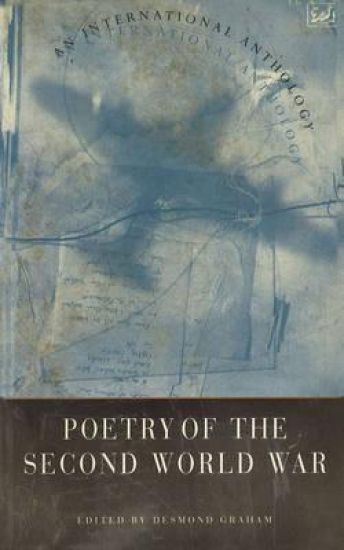
Poetry Of The Second World War
Poetry of the Second World War brings to light a neglected chapter in world literature. The anthology has been arranged to bring out the chronological and cumulative human experience of the war: pre-war fears, air raids, the boredom, fear and camaraderie of military life;
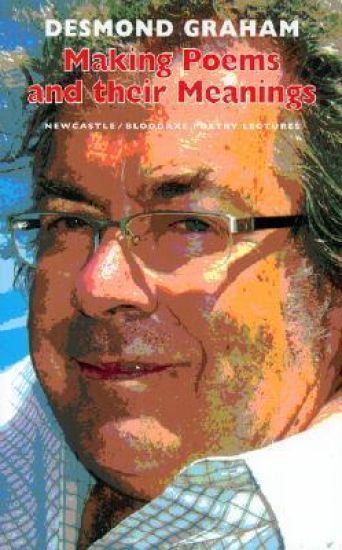
Making Poems and Their Meanings

Making Poems and Their Meanings

Desmond Graham

Bloodaxe Books Ltd
2007
nidottu
In this innovative series of public lectures at the University of Newcastle upon Tyne, leading contemporary poets speak about the craft and practice of poetry to audiences drawn from both the city and the university. The lectures are then published in book form by Bloodaxe, giving readers everywhere the opportunity to learn what the poets themselves think about their own subject. Desmond Graham reflects in three lectures on how poems are nourished and how reading can grow: Opening the Door: A chance encounter with a poem in a magazine, a neighbourly visit, a letter at the right moment - such things timed right make poetry. This lecture celebrates the unsung companions essential to the nourishment of poetry: the thoughtful friend, or the clear-headed reader on whom all writers depend; the spirits of the dead in the texts we read, or the labouring scholarly editors. The Unheard Prompter: Metre, rhythm, rhyme and line end - not just the tools of the poet but the poem's secret syntax which poet and reader hear whether they know it or not. This lecture demonstrates how poets can control meaning through formal elements: from Shakespeare's voice held in the iambs of his sonnets, to Wordsworth's arguing pronouns; from Herbert's irresistible orchestra, to the problems of punctuation in Gurney. No Less Than Bread; How does the poet write, thinking poetry a lie? How does poetry sustain the poet through impossibility? How does poetry, which solves nothing, offer a way of answering? Starting with Rozewicz and Radnoti, and moving from post-war European poetry back to David Jones and In Parenthesis, this final lecture asks what poems mean, what knowledge they carry, and how do we read them to find out? This is the sixth book in the "Newcastle/Bloodaxe Poetry" series.