Kirjojen hintavertailu. Mukana 11 244 527 kirjaa ja 12 kauppaa.

Kirjahaku

Etsi kirjoja tekijän nimen, kirjan nimen tai ISBN:n perusteella.

2 kirjaa tekijältä Devin Fore

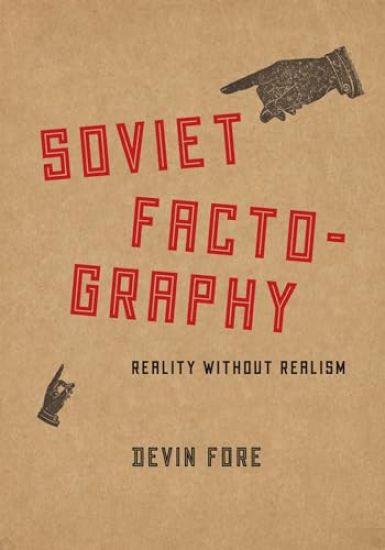
Soviet Factography

Soviet Factography

Devin Fore

THE UNIVERSITY OF CHICAGO PRESS
2024
sidottu
A study of Soviet factography, an avant-garde movement that employed photography, film, journalism, and mass media technologies. This is the first major English-language study of factography, an avant-garde movement of 1920s modernism. Devin Fore charts this style through the work of its key figures, illuminating factography’s position in the material culture of the early Soviet period and situating it as a precursor to the genre of documentary that arose in the 1930s. Factographers employed photography and film practices in their campaign to inscribe facts and to chronicle modernization as it transformed human experience and society. Fore considers factography in light of the period’s explosion of new media technologies—including radio broadcasting, sound in film, and photo-media innovations—that allowed the press to transform culture on a massive scale. This theoretically driven study uses material from Moscow archives and little-known sources to highlight factography as distinct from documentary and Socialist Realism and to establish it as one of the major twentieth-century avant-garde forms. Fore covers works of photography, film, literature, and journalism together in his considerations of Soviet culture, the interwar avant-gardes, aesthetics, and the theory of documentary.
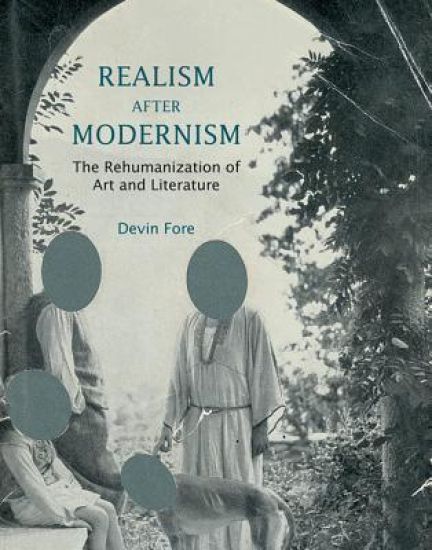
Realism after Modernism

Realism after Modernism

Devin Fore

MIT Press
2015
pokkari
The paradox at the heart of the return to realism in the interwar years, as seen in work by Moholy-Nagy, Brecht, and others.The human figure made a spectacular return in visual art and literature in the 1920s. Following modernism's withdrawal, nonobjective painting gave way to realistic depictions of the body and experimental literary techniques were abandoned for novels with powerfully individuated characters. But the celebrated return of the human in the interwar years was not as straightforward as it may seem. In Realism after Modernism, Devin Fore challenges the widely accepted view that this period represented a return to traditional realist representation and its humanist postulates. Interwar realism, he argues, did not reinstate its nineteenth-century predecessor but invoked realism as a strategy of mimicry that anticipates postmodernist pastiche.Through close readings of a series of works by German artists and writers of the period, Fore investigates five artistic devices that were central to interwar realism. He analyzes Bauhaus polymath Laszlo Moholy-Nagy's use of linear perspective; three industrial novels riven by the conflict between the temporality of capital and that of labor; Brecht's socialist realist plays, which explore new dramaturgical principles for depicting a collective subject; a memoir by Carl Einstein that oscillates between recollection and self-erasure; and the idiom of physiognomy in the photomontages of John Heartfield.Fore's readings reveal that each of these "rehumanized" works in fact calls into question the very categories of the human upon which realist figuration is based. Paradoxically, even as the human seemed to make a triumphal return in the culture of the interwar period, the definition of the human and the integrity of the body were becoming more tenuous than ever before. Interwar realism did not hearken back to earlier artistic modes but posited new and unfamiliar syntaxes of aesthetic encounter, revealing the emergence of a human subject quite unlike anything that had come before.