Kirjojen hintavertailu. Mukana 11 425 274 kirjaa ja 12 kauppaa.

Kirjahaku

Etsi kirjoja tekijän nimen, kirjan nimen tai ISBN:n perusteella.

2 kirjaa tekijältä Devin Penner

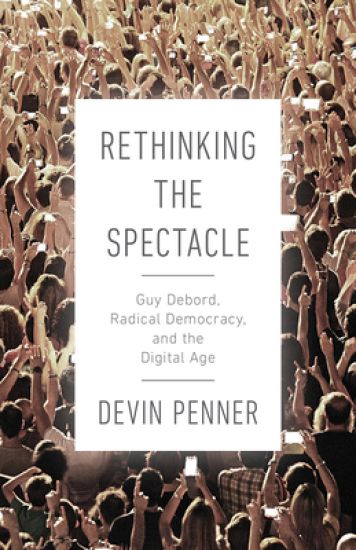
Rethinking the Spectacle

Rethinking the Spectacle

Devin Penner

University of British Columbia Press
2019
sidottu
Spectacle is usually considered a superficial form of politics, which tries to distract and deceive a passive audience. It is difficult to see how this type of politics could be reconciled with the democratic requirement of active and informed agency. Rethinking the Spectacle re-examines the tension between spectacle and political agency in our hyper-mediated digital society. Devin Penner uses the theories and practices of Guy Debord and the Situationist International as a point of departure, offering both a critical review of Situationist ideas and a way to develop their radical democratic potential in the current political climate. Emphasizing the importance of thinking about the connection between spectacle and broader democratic processes, Rethinking the Spectacle also looks at various models of social and political organization and includes an in-depth assessment of the 2011 Occupy movement. Ultimately, Rethinking the Spectacle concludes that properly conceived spectacle can in fact mobilize the public for egalitarian purposes.
Rethinking the Spectacle

Rethinking the Spectacle

Devin Penner

University of British Columbia Press
2020
pokkari
Spectacle is usually considered a superficial form of politics, which tries to distract and deceive a passive audience. It is difficult to see how this type of politics could be reconciled with the democratic requirement of active and informed agency. Rethinking the Spectacle re-examines the tension between spectacle and political agency in our hyper-mediated digital society. Devin Penner uses the theories and practices of Guy Debord and the Situationist International as a point of departure, offering both a critical review of Situationist ideas and a way to develop their radical democratic potential in the current political climate. Emphasizing the importance of thinking about the connection between spectacle and broader democratic processes, Rethinking the Spectacle also looks at various models of social and political organization and includes an in-depth assessment of the 2011 Occupy movement. Ultimately, Rethinking the Spectacle concludes that properly conceived spectacle can in fact mobilize the public for egalitarian purposes.