Kirjojen hintavertailu. Mukana 12 459 402 kirjaa ja 12 kauppaa.

Kirjahaku

Etsi kirjoja tekijän nimen, kirjan nimen tai ISBN:n perusteella.

15 kirjaa tekijältä Devon A. Mihesuah

Cultivating the Rosebuds

Cultivating the Rosebuds

Devon A. Mihesuah

University of Illinois Press
1997
nidottu
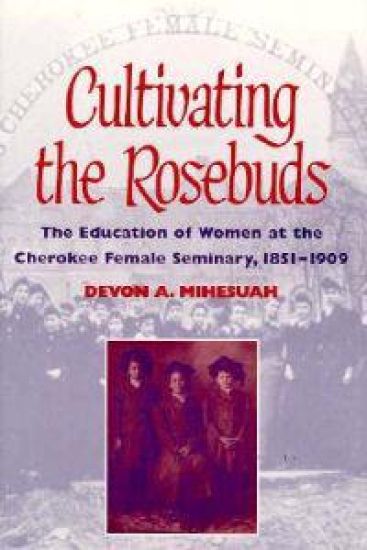
Recipient of a 1995 Critics' Choice Award of the American Educational Studies Association Established by the Cherokee Nation in 1851 in present-day eastern Oklahoma, the nondenominaional Cherokee Female Seminary was one of the most important schools in the history of American Indian education. Devon Mihesuah explores its curriculum, faculty, administration, and educational philosophy. "[An] important work. . . . It tells the fascinating and occasionally poignant story of the Cherokee Female Seminary, which enrolled its first class of 'Rosebuds,' as the seminarians called themselves, in 1851." --Choice "I recommend it to any serious student of the Cherokee people." -- Robert J. Conley, author of Mountain Windsong "Of the many books about Cherokee history, few deal with the issue of acculturation in the post-removal period and none so effectively as Devon Mihesuah's Cultivating the Rosebuds." -- Nancy Shoemaker, Western Historical Quarterly "Required reading for anyone remotely interested in the history of Native American education." -- David W. Adams, History of Education Quarterly
Indigenous American Women

Indigenous American Women

Devon A. Mihesuah

University of Nebraska Press
2003
sidottu
Oklahoma Choctaw scholar Devon Abbott Mihesuah offers a frank and absorbing look at the complex, evolving identities of American Indigenous women today, their ongoing struggles against a centuries-old legacy of colonial disempowerment, and how they are seen and portrayed by themselves and others. Mihesuah first examines how American Indigenous women have been perceived and depicted by non-Natives, including scholars, and by themselves. She then illuminates the pervasive impact of colonialism and patriarchal thought on Native women's traditional tribal roles and on their participation in academia. Mihesuah considers how relations between Indigenous women and men across North America continue to be altered by Christianity and Euro-American ideologies.Sexism and violence against Indigenous women has escalated; economic disparities and intratribal factionalism and 'culturalism' threaten connections among women and with men; and many women suffer from psychological stress because their economic, religious, political, and social positions are devalued. In the last section, Mihesuah explores how modern American Indigenous women have empowered themselves tribally, nationally, or academically. Additionally, she examines the overlooked role that Native women played in the Red Power movement as well as some key differences between Native women 'feminists' and 'activists'. Devon Abbott Mihesuah is a professor of applied Indigenous studies and history at Northern Arizona University. Her books include "Cultivating the Rosebuds: The Education of Women at the Cherokee Female Seminary, 1851-1909" and "Roads of My Relatives".
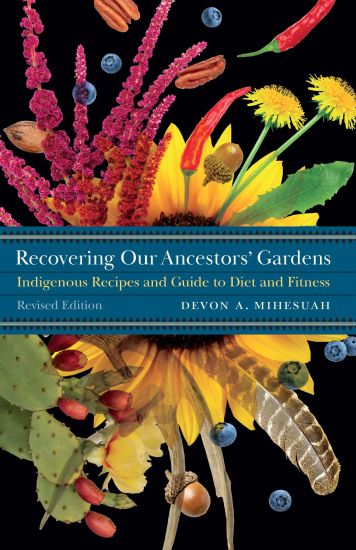
Recovering Our Ancestors' Gardens

Recovering Our Ancestors' Gardens

Devon A. Mihesuah

Bison Books
2020
pokkari
Educators, librarians, food sovereignty activists, culinary arts students, and those interested in Native American food history and sovereignty will find that this book is an excellent resource.-Elise Krohn, Tribal College Journal2020 Gourmand World Cookbook Award This new edition is revised, updated, and contains new information, new chapters, and an extensive curriculum guide that includes objectives, resources, study questions, assignments, and activities for teachers, librarians, food sovereignty activists, and anyone wanting to know more about indigenous foodways.Winner of the Gourmand International World Cookbook Award, Recovering Our Ancestors’ Gardens is back! Featuring an expanded array of tempting recipes of indigenous ingredients and practical advice about health, fitness, and becoming involved in the burgeoning indigenous food sovereignty movement, the acclaimed Choctaw author and scholar Devon A. Mihesuah draws on the rich indigenous heritages of this continent to offer a helpful guide to a healthier life. Recovering Our Ancestors’ Gardens features pointed discussions about the causes of the generally poor state of indigenous health today. Diminished health, Mihesuah contends, is a pervasive consequence of colonialism, but by advocating for political, social, economic, and environmental changes, traditional food systems and activities can be reclaimed and made relevant for a healthier lifestyle today. New recipes feature pawpaw sorbet, dandelion salad, lima bean hummus, cranberry pie with cornmeal crust, grape dumplings, green chile and turkey posole, and blue corn pancakes, among other dishes. Savory, natural, and steeped in the Native traditions of this land, these recipes are sure to delight and satisfy.
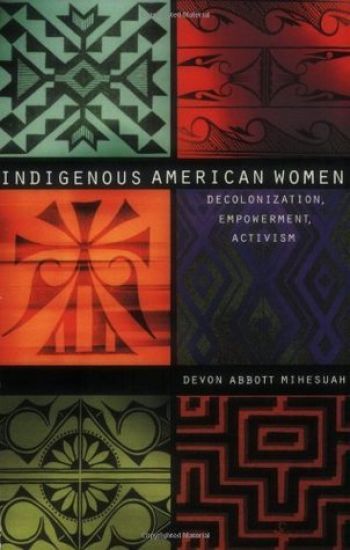
Indigenous American Women

Indigenous American Women

Devon A. Mihesuah

University of Nebraska Press
2003
pokkari
Oklahoma Choctaw scholar Devon Abbott Mihesuah offers a frank and absorbing look at the complex, evolving identities of American Indigenous women today, their ongoing struggles against a centuries-old legacy of colonial disempowerment, and how they are seen and portrayed by themselves and others. Mihesuah first examines how American Indigenous women have been perceived and depicted by non-Natives, including scholars, and by themselves. She then illuminates the pervasive impact of colonialism and patriarchal thought on Native women's traditional tribal roles and on their participation in academia. Mihesuah considers how relations between Indigenous women and men across North America continue to be altered by Christianity and Euro-American ideologies. Sexism and violence against Indigenous women has escalated; economic disparities and intratribal factionalism and "culturalism" threaten connections among women and with men; and many women suffer from psychological stress because their economic, religious, political, and social positions are devalued. In the last section, Mihesuah explores how modern American Indigenous women have empowered themselves tribally, nationally, or academically. Additionally, she examines the overlooked role that Native women played in the Red Power movement as well as some key differences between Native women "feminists" and "activists."
So You Want to Write About American Indians?
So You Want to Write about American Indians? is the first of its kind—an indispensable guide for anyone interested in writing and publishing a novel, memoir, collection of short stories, history, or ethnography involving the Indigenous peoples of the United States. In clear language illustrated with examples—many from her own experiences—Choctaw scholar and writer Devon Abbott Mihesuah explains the basic steps involved with writing about American Indians. So You Want to Write about American Indians? provides a concise overview of the different types of fiction and nonfiction books written about Natives and the common challenges and pitfalls encountered when writing each type of book. Mihesuah presents a list of ethical guidelines to follow when researching and writing about Natives, including the goals of the writer, stereotypes to avoid, and cultural issues to consider. She also offers helpful tips for developing ideas and researching effectively, submitting articles to journals, drafting effective book proposals, finding inspiration, contacting an editor, polishing a manuscript, preparing a persuasive résumé or curriculum vitae, coping with rejection, and negotiating a book contract.
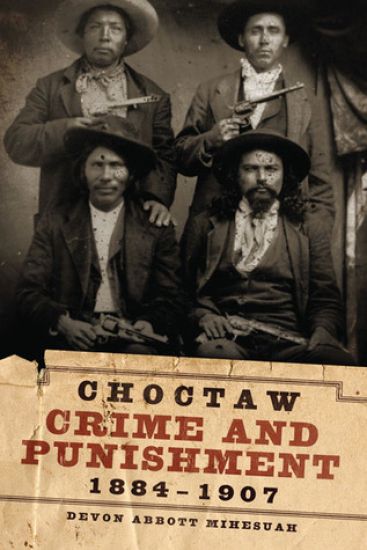
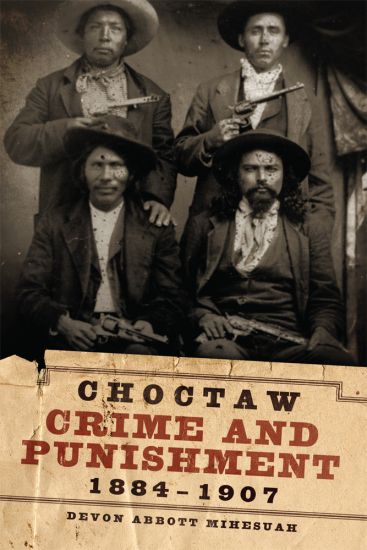
Choctaw Crime and Punishment, 1884-1907

Choctaw Crime and Punishment, 1884-1907

Devon A. Mihesuah

University of Oklahoma Press
2009
sidottu
During the decades between the Civil War and the establishment of Oklahoma statehood, Choctaws suffered almost daily from murders, thefts, and assaults - usually at the hands of white intruders, but increasingly by Choctaws themselves. This book focuses on two previously unexplored murder cases to illustrate the intense factionalism that emerged among tribal members during those lawless years as conservative Nationalists and pro-assimilation Progressives fought for control of the Choctaw Nation.Devon Abbott Mihesuah describes the brutal murder in 1884 of her own great-great-grandfather, Nationalist Charles Wilson, who was a Choctaw lighthorseman and U.S. deputy marshal. She then relates the killing spree of Progressives by Nationalist Silan Lewis ten years later. Mihesuah draws on a wide array of sources - even in the face of missing court records - to weave a spellbinding account of homicide and political intrigue. She painstakingly delineates a transformative period in Choctaw history to explore emerging gulfs between Choctaw citizens and address growing Indian resistance to white intrusions, federal policies, and the taking of tribal resources.The first book to fully describe this Choctaw factionalism, Choctaw Crime and Punishment is both a riveting narrative and an important analysis of tribal politics.
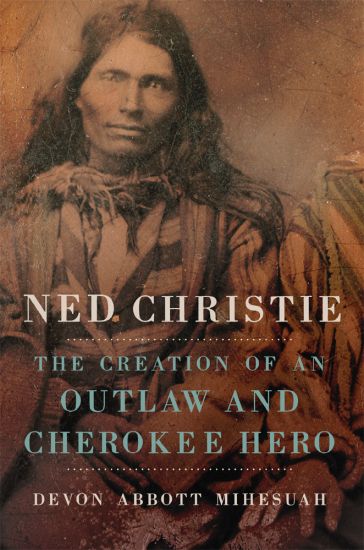
Ned Christie

Ned Christie

Devon A. Mihesuah

University of Oklahoma Press
2018
sidottu
Who was Nede Wade Christie? Was he a violent criminal guilty of murdering a federal officer? Or a Cherokee statesman who suffered a martyr's death for a crime he did not commit? For more than a century, journalists, pulp fiction authors, and even serious historians have produced largely fictitious accounts of ""Ned"" Christie's life. Now, in a tour de force of investigative scholarship, Devon A. Mihesuah offers a far more accurate depiction of Christie and the times in which he lived. In 1887 Deputy U.S. Marshal Dan Maples was shot and killed in Tahlequah, Indian Territory. As Mihesuah recounts in unsurpassed detail, any of the criminals in the vicinity at the time could have committed the crime. Yet the federal court at Fort Smith, Arkansas, focused on Christie, a Cherokee Nation councilman and adviser to the tribal chief. Christie evaded capture for five years. His life ended when a posse dynamited his home - knowing he was inside - and shot him as he emerged from the burning building. The posse took Christie's body to Fort Smith, where it lay for three days on display for photographers and gawkers. Nede's family suffered as well. His teenage cousin Arch Wolfe was sentenced to prison and ultimately perished in the Canton Asylum for ""insane"" Indians - a travesty that, Mihesuah shows, may even surpass the injustice of Nede's fate. Placing Christie's story within the rich context of Cherokee governance and nineteenth-century American political and social conditions, Mihesuah draws on hundreds of newspaper accounts, oral histories, court documents, and family testimonies to assemble the most accurate portrayal of Christie's life possible. Yet the author admits that for all this information, we may never know the full story, because Christie's own voice is largely missing from the written record. In addition, she spotlights our fascination with villains and martyrs, murder and mayhem, and our dangerous tendency to glorify the ""Old West."" More than a biography, Ned Christie traces the making of an American myth.
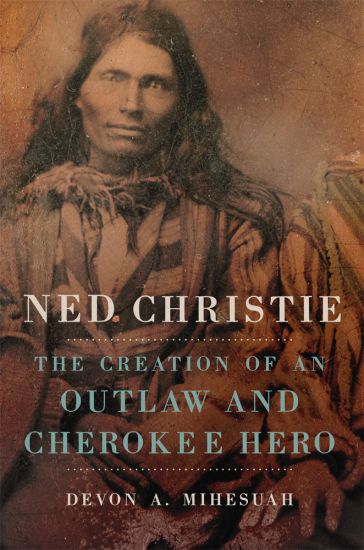
Ned Christie

Ned Christie

Devon A. Mihesuah

University of Oklahoma Press
2021
nidottu
Who was Nede Wade Christie? Was he a violent criminal guilty of murdering a federal officer? Or a Cherokee statesman who suffered a martyr's death for a crime he did not commit? For more than a century, journalists, pulp fiction authors, and even serious historians have produced largely fictitious accounts of 'Ned' Christie's life. Now, in a tour de force of investigative scholarship, Devon A. Mihesuah offers a far more accurate depiction of Christie and the times in which he lived. In 1887 Deputy U.S. Marshal Dan Maples was shot and killed in Tahlequah, Indian Territory. As Mihesuah recounts in unsurpassed detail, any of the criminals in the vicinity at the time could have committed the crime. Yet the federal court at Fort Smith, Arkansas, focused on Christie, a Cherokee Nation councilman and adviser to the tribal chief. Christie evaded capture for five years. His life ended when a posse dynamited his home - knowing he was inside - and shot him as he emerged from the burning building. The posse took Christie's body to Fort Smith, where it lay for three days on display for photographers and gawkers. Nede's family suffered as well. His teenage cousin Arch Wolfe was sentenced to prison and ultimately perished in the Canton Asylum for 'insane' Indians - a travesty that, Mihesuah shows, may even surpass the injustice of Nede's fate. Placing Christie's story within the rich context of Cherokee governance and nineteenth-century American political and social conditions, Mihesuah draws on hundreds of newspaper accounts, oral histories, court documents, and family testimonies to assemble the most accurate portrayal of Christie's life possible. Yet the author admits that for all this information, we may never know the full story, because Christie's own voice is largely missing from the written record. In addition, she spotlights our fascination with villains and martyrs, murder and mayhem, and our dangerous tendency to glorify the 'Old West.' More than a biography, Ned Christie traces the making of an American myth.
Choctaw Crime and Punishment, 1884–1907

Choctaw Crime and Punishment, 1884–1907

Devon A. Mihesuah

UNIVERSITY OF OKLAHOMA PRESS
2022
nidottu
During the decades between the Civil War and the establishment of Oklahoma statehood, Choctaws suffered almost daily from murders, thefts, and assaults—usually at the hands of white intruders, but increasingly by Choctaws themselves. This book focuses on two previously unexplored murder cases to illustrate the intense factionalism that emerged among tribal members during those lawless years as conservative Nationalists and pro-assimilation Progressives fought for control of the Choctaw Nation.Devon Abbott Mihesuah describes the brutal murder in 1884 of her own great-great-grandfather, Nationalist Charles Wilson, who was a Choctaw lighthorseman and U.S. deputy marshal. She then relates the killing spree of Progressives by Nationalist Silan Lewis ten years later. Mihesuah draws on a wide array of sources—even in the face of missing court records—to weave a spellbinding account of homicide and political intrigue. She painstakingly delineates a transformative period in Choctaw history to explore emerging gulfs between Choctaw citizens and address growing Indian resistance to white intrusions, federal policies, and the taking of tribal resources.The first book to fully describe this Choctaw factionalism, Choctaw Crime and Punishment is both a riveting narrative and an important analysis of tribal politics.
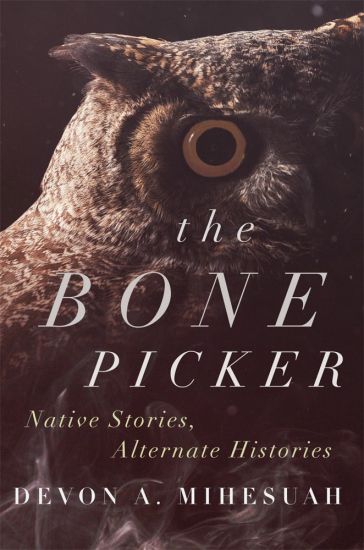
The Bone Picker

The Bone Picker

Devon A. Mihesuah

UNIVERSITY OF OKLAHOMA PRESS
2024
nidottu
Under the shadow of gray clouds, three children venture into the woods, where they spot the corpse of an old man on a scaffold. Suddenly a wild figure emerges, with long fingernails and tangled hair. It is the Hattak fullih nipi foni, the bone picker, who comes to tear off rotting flesh with his fingernails. Only the Choctaws who adhere to the old ways will speak of him. The frightening bone picker is just one of many entities, scary and mysterious, who lurk behind every page of this spine-tingling collection of Native fiction, written by award-winning Choctaw author Devon A. Mihesuah. Choctaw lore features a large pantheon of deities. These beings created the first people, taught them how to hunt, and warned them of impending danger. Their stories are not meant simply to entertain: each entity has a purpose in its behavior and a lesson to share—to those who take heed. As a Choctaw citizen, with deep ties to Indian Territory and Oklahoma, Mihesuah grew up hearing the stories of her ancestors. In the tradition of Native storytelling, she spins tales that move back and forth fluidly across time. The ancient beings, we discover, followed the tribe from their original homelands in Mississippi and are now ever-present influences on tribal consciousness. While some of the horrors told here are “real life” in nature, the art of fiction that Mihesuah employs reveals surprising outcomes or alternative histories. It turns out the things that scare us the most can lead to the answers we are seeking and even ensure our very survival.
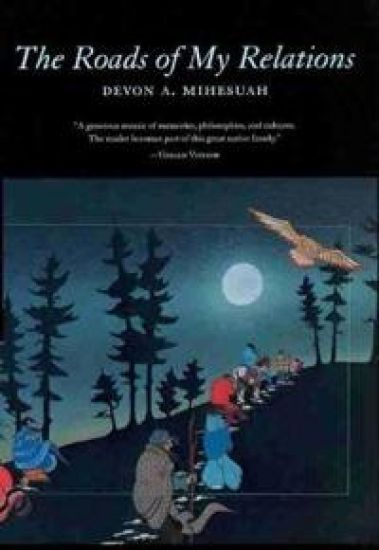
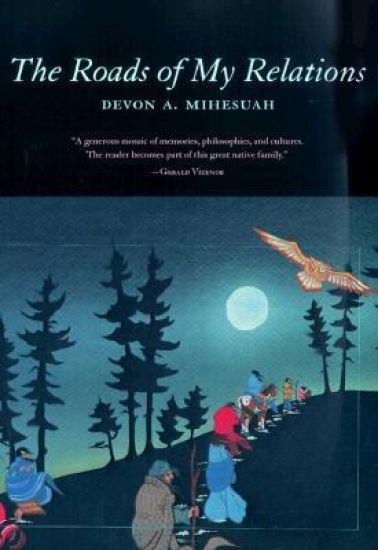
The Roads of My Relations

The Roads of My Relations

Devon A. Mihesuah

University of Arizona Press
2000
sidottu
I've traveled a lot of roads, but never alone. My relations are with me, says Billie McKenney, one of the matriarchs of the complex family of Choctaws searching for peace as the white world rapidly encroaches on their tribal land, politics, and values. In her first collection of stories, Native American writer Devon A. Mihesuah chronicles the lives of several generations of a close-knit Choctaw family as they are forced from their traditional homeland in nineteenth-century Mississippi and endure unspeakable sorrows during their journey before settling in southeastern Oklahoma.Blending family lore, stark realism, and vivid imagination, The Roads of My Relations relays a strong sense of Choctaw culture and world view in absorbing tales of history and legend. Unfolding through the voices and actions of family members, confused half-bloods, and unlikely heroes-not all of them living or even human-the stories tell of the horrors of forced removal, the turbulence of post Civil War Indian Territory, the terrifying violence suffered at the hands of immortal Crow witches, and the family's ultimate survival against forces of evil. Time-traveling ghosts, mysterious medicine men, and eerie shape-shifters share the pages with proud matriarchs, mischievous schoolgirls, and loving siblings.Together, these interwoven stories express the strength and persistence of a tribe whose identity and pride have survived the disruptions of colonialism. With The Roads of My Relations, Devon A. Mihesuah has created a universal and timeless exploration of heritage, spirituality, and the importance of preserving and passing on tradition.
The Roads of My Relations

The Roads of My Relations

Devon A. Mihesuah

University of Arizona Press
2000
nidottu
I've traveled a lot of roads, but never alone. My relations are with me, says Billie McKenney, one of the matriarchs of the complex family of Choctaws searching for peace as the white world rapidly encroaches on their tribal land, politics, and values. In her first collection of stories, Native American writer Devon A. Mihesuah chronicles the lives of several generations of a close-knit Choctaw family as they are forced from their traditional homeland in nineteenth-century Mississippi and endure unspeakable sorrows during their journey before settling in southeastern Oklahoma. Blending family lore, stark realism, and vivid imagination, The Roads of My Relations relays a strong sense of Choctaw culture and world view in absorbing tales of history and legend. Unfolding through the voices and actions of family members, confused half-bloods, and unlikely heroes--not all of them living or even human--the stories tell of the horrors of forced removal, the turbulence of post Civil War Indian Territory, the terrifying violence suffered at the hands of immortal Crow witches, and the family's ultimate survival against forces of evil. Time-traveling ghosts, mysterious medicine men, and eerie shape-shifters share the pages with proud matriarchs, mischievous schoolgirls, and loving siblings. Together, these interwoven stories express the strength and persistence of a tribe whose identity and pride have survived the disruptions of colonialism. With The Roads of My Relations, Devon A. Mihesuah has created a universal and timeless exploration of heritage, spirituality, and the importance of preserving and passing on tradition.
The Hatak Witches

The Hatak Witches

Devon A. Mihesuah

University of Arizona Press
2021
nidottu
After a security guard is found dead and another wounded at the Children's Museum of Science and History in Norman, Oklahoma, Detective Monique Blue Hawk and her partner Chris Pierson are summoned to investigate. They find no fingerprints, no footprints, and no obvious means to enter the locked building. Monique discovers that a portion of an ancient and deformed skeleton had also been stolen from the neglected museum archives. Her uncle, the spiritual leader Leroy Bear Red Ears, concludes that the stolen remains are those of Hatak haksi, a witch and the matriarch of the Crow family, a group of shape-shifting Choctaws who plan to reestablish themselves as the powerful creatures they were when the tribe lived in Mississippi. Monique, Leroy, and Chris must stop the Crows, but to their dread, the entities have retreated to the dark and treacherous hollow in the center of Chalakwa Ranch. The murderous shape-shifters believe the enormous wild hogs, poisonous snakes, and other creatures of the hollow might form an adequate defense for Hatak haksi. But what no one counts on is the unexpected appearance and power of the Old Ones who guard the lands of the Choctaw afterlife. Blending tribal beliefs and myths into a modern context, The Hatak Witches continues the storyline of Choctaw cosmology and cultural survival that are prominent in Devon A. Mihesuah's award-winning novel, The Roads of My Relations.
Dance of the Returned

Dance of the Returned

Devon A. Mihesuah

University of Arizona Press
2022
nidottu
The disappearance of a young Choctaw leads Detective Monique Blue Hawk to investigate a little-known ceremonial dance. As she traces the steps of the missing man, she discovers that the seemingly innocuous Renewal Dance is not what it appears to be. After Monique embarks on a journey that she never thought possible, she learns that the past and future can converge to offer endless possibilities for the present. She must also accept her own destiny of violence and peacekeeping.
American Indians

American Indians

Devon A. Mihesuah

Clarity Press
2015
nidottu
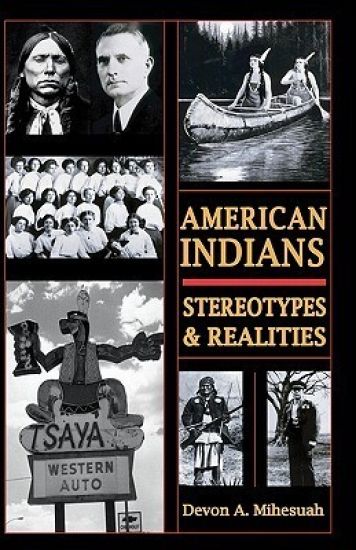
"Mihesuah's work should be required reading for elementary and upper level teachers, college instructors and parents. Let us hope it finds a wide readership in mainstream circles." Joel Monture, Multicultural Review "Professor Mihesuah goes beyond simply providing responses to common stereotypes. She provides the reader with assistance in efforts to improve understanding of her peoples... a valuable contribution in bringing greater clarity to important issues." Alejandro Garcia, Journal of Multicultural Social Work "Devon Mihesuah has provided precious insight into the racial identity and cultural struggles of American Indians... I applaud Devon Mihesuah for successfully confronting the literature of false portrayal and negative images of Indian people." Dr. Donald L. Fixico, Professor of History Western Michigan University, Kalamazoo (Shawnee, Sac & Fox, Creek, Seminole) "A good sourcebook for dispelling misconceptions and negative stereotypes about American Indians. These beliefs and attitudes exist and these statements are made in academic settings. It is fortunate that there are professors like Devon Mihesuah in classrooms to present the "other side", perhaps only once in the lifetime of some students..." Dr. Karen Swisher, Director, Center for Indian Education Arizona State University (Standing Rock Sioux) "This book will be a very useful reader for anyone truly trying to understand who American Indians really are. There is no other book on Indian images that provides the Indian "voice" that Devon maintains throughout the text.