

Kirjahaku
Etsi kirjoja tekijän nimen, kirjan nimen tai ISBN:n perusteella.
38 kirjaa tekijältä Dhan Gopal Mukerji


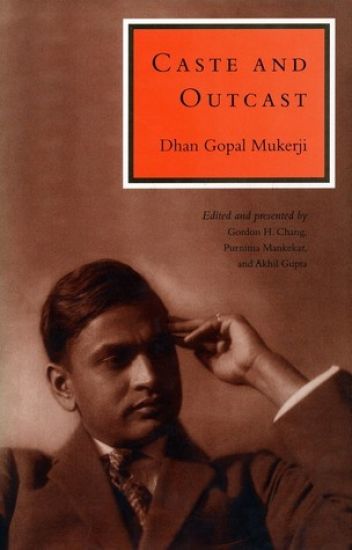
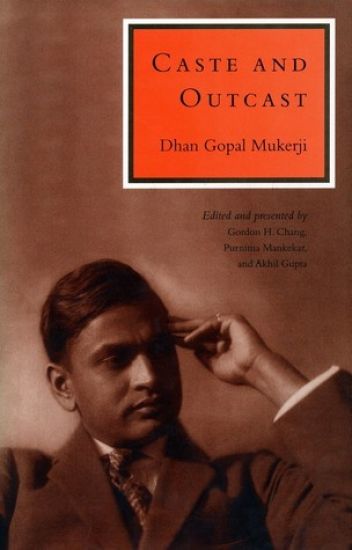
A person of rare talent and broad appeal, Dhan Gopal Mukerji (1890-1936) holds the distinction of being the first South Asian immigrant to have a successful career in the United States as a man of letters. As the author of two dozen published volumes of poetry, drama, fiction, social commentary, philosophy, translations, and children's stories, Mukerji was a pivotal figure in the transmission and interpretation of Indian traditions to Americans in the first several decades of the twentieth century. This reissue of his classic autobiography Caste and Outcast, with a new Introduction and Afterword, seeks to revitalize interest in Mukerji and his work and to contribute to the exploration of the South Asian experience in America. Originally published in 1923, this book is an exercise in both cultural translation and cultural critique. In the first half of the book, Mukerji draws upon his early experiences as a Bengali Brahmin in India, hoping to convey to readers "an intimate impression of eastern life"; the second half describes Mukerji's coming to America and his experiences as a student, worker, and activist in California. Mukerji's text, written in an engaging personal style, is the kind of ethnographic writing that seeks to render intelligible and familiar the unfamiliar and the exotic. Gordon H. Chang's substantial Introduction locates the story of Caste and Outcast within the larger context of Mukerji's life, tracing the author's personal history and his connections to such major figures as Jawaharlal Nehru, M. N. Roy, Van Wyck Brooks, Roger Baldwin, and Will Durant. The Afterword, by Purnima Mankekar and Akhil Gupta, examines the ways in which Mukerji stretches the limits of the autobiographical genre and provides a counternarrative to the dominant nationalist account of American society.
A person of rare talent and broad appeal, Dhan Gopal Mukerji (1890-1936) holds the distinction of being the first South Asian immigrant to have a successful career in the United States as a man of letters. As the author of two dozen published volumes of poetry, drama, fiction, social commentary, philosophy, translations, and children's stories, Mukerji was a pivotal figure in the transmission and interpretation of Indian traditions to Americans in the first several decades of the twentieth century. This reissue of his classic autobiography Caste and Outcast, with a new Introduction and Afterword, seeks to revitalize interest in Mukerji and his work and to contribute to the exploration of the South Asian experience in America. Originally published in 1923, this book is an exercise in both cultural translation and cultural critique. In the first half of the book, Mukerji draws upon his early experiences as a Bengali Brahmin in India, hoping to convey to readers "an intimate impression of eastern life"; the second half describes Mukerji's coming to America and his experiences as a student, worker, and activist in California. Mukerji's text, written in an engaging personal style, is the kind of ethnographic writing that seeks to render intelligible and familiar the unfamiliar and the exotic. Gordon H. Chang's substantial Introduction locates the story of Caste and Outcast within the larger context of Mukerji's life, tracing the author's personal history and his connections to such major figures as Jawaharlal Nehru, M. N. Roy, Van Wyck Brooks, Roger Baldwin, and Will Durant. The Afterword, by Purnima Mankekar and Akhil Gupta, examines the ways in which Mukerji stretches the limits of the autobiographical genre and provides a counternarrative to the dominant nationalist account of American society.





My Brother's Face is a novel written by Dhan Gopal Mukerji. The story revolves around two brothers, Raj and Jai, who are born and raised in India. Raj is the elder brother and is known for his good looks and charming personality, while Jai is the younger brother and is considered plain-looking and unremarkable. Despite their differences, the brothers share a close bond and are inseparable.However, their lives take a turn when Raj is selected to attend a prestigious school in England. Jai is left behind in India and feels neglected and overshadowed by his brother's success. He becomes increasingly resentful and bitter towards Raj, and their relationship becomes strained.As the years pass, Jai's bitterness towards his brother intensifies, and he becomes obsessed with the idea of changing his appearance to look like Raj. He undergoes multiple surgeries and spends a fortune on cosmetic treatments, but his efforts are in vain, and he remains dissatisfied with his appearance.The novel explores themes of sibling rivalry, jealousy, and the pursuit of perfection. It also delves into the cultural differences between India and England and the challenges faced by immigrants in a foreign land. Overall, My Brother's Face is a poignant and thought-provoking novel that offers a glimpse into the complexities of human relationships.This scarce antiquarian book is a facsimile reprint of the old original and may contain some imperfections such as library marks and notations. Because we believe this work is culturally important, we have made it available as part of our commitment for protecting, preserving, and promoting the world's literature in affordable, high quality, modern editions, that are true to their original work.






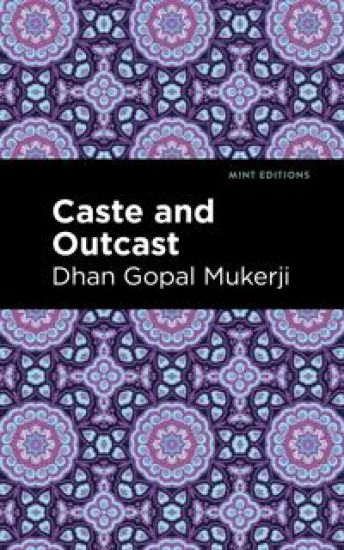
Caste and Outcast (1923) is an autobiography by Dhan Gopal Mukerji. Published the year after Mukerji moved from San Francisco to New York City, Caste and Outcast is a moving autobiographical narrative from the first Indian writer to gain a popular audience in the United States. Although he is more widely recognized for such children’s novels as Gay Neck: The Story of a Pigeon (1927), which won the 1928 Newbery Medal, and Kari the Elephant (1922), Mukerji was also a gifted poet and memoirist whose experiences in India, Japan, and the United States are essential to his unique perspective on twentieth century life. “As I look into the past and try to recover my earliest impression, I remember that the most vivid experience of my childhood was the terrific power of faces. From the day consciousness dawned upon me, I saw faces, faces everywhere, and I always noticed the eyes. It was as if the whole Hindu race lived in its eyes.” Raised in a prominent Brahmin family, Dhan Gopal Mukerji enjoyed immense privileges in his native India and came to trust in the effectiveness and fairness of the country’s caste system. As a young man, however, no longer enthralled with the ascetic lifestyle explored in his youth, Mukerji devoted himself to nationalist politics and eventually left India for Japan. Unsatisfied with life as an engineering student, he emigrated once more to the United States, where he moved in anarchist and bohemian circles while embarking on a career as a popular poet and children’s author. Although he never returned to his native country, Mukerji left an inspiring legacy through his literary achievement and unwavering commitment to Indian independence. With a beautifully designed cover and professionally typeset manuscript, this edition of Dhan Gopal Mukerji’s Caste and Outcast is a classic of Indian American literature reimagined for modern readers.

Caste and Outcast (1923) is an autobiography by Dhan Gopal Mukerji. Published the year after Mukerji moved from San Francisco to New York City, Caste and Outcast is a moving autobiographical narrative from the first Indian writer to gain a popular audience in the United States. Although he is more widely recognized for such children’s novels as Gay Neck: The Story of a Pigeon (1927), which won the 1928 Newbery Medal, and Kari the Elephant (1922), Mukerji was also a gifted poet and memoirist whose experiences in India, Japan, and the United States are essential to his unique perspective on twentieth century life. “As I look into the past and try to recover my earliest impression, I remember that the most vivid experience of my childhood was the terrific power of faces. From the day consciousness dawned upon me, I saw faces, faces everywhere, and I always noticed the eyes. It was as if the whole Hindu race lived in its eyes.” Raised in a prominent Brahmin family, Dhan Gopal Mukerji enjoyed immense privileges in his native India and came to trust in the effectiveness and fairness of the country’s caste system. As a young man, however, no longer enthralled with the ascetic lifestyle explored in his youth, Mukerji devoted himself to nationalist politics and eventually left India for Japan. Unsatisfied with life as an engineering student, he emigrated once more to the United States, where he moved in anarchist and bohemian circles while embarking on a career as a popular poet and children’s author. Although he never returned to his native country, Mukerji left an inspiring legacy through his literary achievement and unwavering commitment to Indian independence. With a beautifully designed cover and professionally typeset manuscript, this edition of Dhan Gopal Mukerji’s Caste and Outcast is a classic of Indian American literature reimagined for modern readers.