Kirjojen hintavertailu. Mukana 12 459 402 kirjaa ja 12 kauppaa.

Kirjahaku

Etsi kirjoja tekijän nimen, kirjan nimen tai ISBN:n perusteella.

3 kirjaa tekijältä Diane Arbus

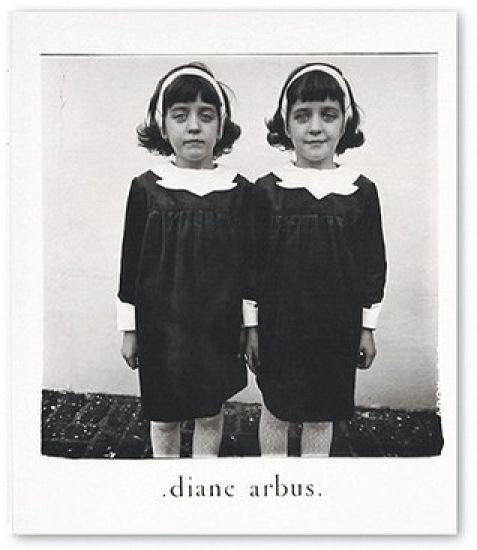
Diane Arbus: An Aperture Monograph
When Diane Arbus died in 1971 at the age of forty-eight, she was already a significant influence—even something of a legend—among serious photographers, although only a relatively small number of her most important pictures were widely known at the time. The publication of Diane Arbus: An Aperture Monograph in 1972— along with the posthumous retrospective at The Museum of Modern Art—offered the general public its first encounter with the breadth and power of her achievements. The response was unprecedented. The monograph of eighty photographs was edited and designed by the painter Marvin Israel, Diane Arbus’s friend and colleague, and by her daughter Doon Arbus. Their goal in making the book was to remain as faithful as possible to the standards by which Diane Arbus judged her own work and to the ways in which she hoped it would be seen. Universally acknowledged as a classic, Diane Arbus: An Aperture Monograph is a timeless masterpiece with editions in five languages and remains the foundation of her international reputation. Nearly half of a century has done nothing to diminish the riveting impact of these pictures or the controversy they inspire. Arbus’s photographs penetrate the psyche with all the force of a personal encounter and, in doing so, transform the way we see the world and the people in it. This is the first edition in which the image separations were created digitally; the files have been specially prepared by Robert J. Hennessey using prints by Neil Selkirk.
Untitled: Diane Arbus

Untitled: Diane Arbus

Diane Arbus

Aperture
2011
sidottu
Untitled is the third volume of Diane Arbus’s work and the only one devoted exclusively to a single project. The photographs were taken at residences for the mentally retarded between 1969 and 1971, in the last years of Arbus’s life. Although she considered doing a book on the subject, the vast majority of these pictures remained unpublished prior to this volume. These photographs achieve a lyricism, an emotional purity that sets them apart from all her other accomplishments. “Finally what I’ve been searching for,” she wrote at the time. The product of her consistently unflinching regard for reality as she found it, the images in this book have less in common with the documentary than with the mythic. Untitled may well be Arbus’s most transcendent, most romantic vision. It is a celebration of the singularity and connectedness of each and every one of us. For Diane Arbus, this is what making pictures was all about. This is the first edition in which the image separations were created digitally; the files have been specially prepared by Robert J. Hennessey using prints by Neil Selkirk.
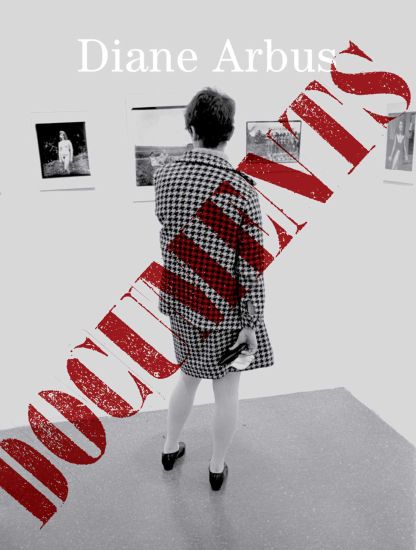
Diane Arbus Documents

Diane Arbus Documents

Diane Arbus

David Zwirner
2022
sidottu
Known for her evocative portraits, Diane Arbus is a pivotal figure in American postwar photography. Undeniably striking, Arbus’s black-and-white photographs capture a unique gaze. Criticized as well as lauded for her photographs of people deemed “outsiders,” Arbus continues to attract a diversity of opinions surrounding her subjects and practice. Critics and writers have described her work as “sinister” and “appalling” as well as “revelatory,” “sincere,” and “compassionate.” In the absence of Arbus’s own voice, art criticism and cultural shifts have shaped the language attributed to her work.Organized in eleven sections that focus on major exhibitions and significant events in Arbus’s life, as well as on her practice and her subjects, the seventy facsimiles of articles and essays––an archive by all accounts––trace the discourse on Diane Arbus, contextualizing her hugely successful oeuvre. Also with an annotated bibliography of more than six hundred entries and a comprehensive exhibition history, Documents serves as an important resource for photographers, researchers, art historians, and art critics, in addition to students of art criticism and the interested reader alike.