Kirjojen hintavertailu. Mukana 12 366 050 kirjaa ja 12 kauppaa.

Kirjahaku

Etsi kirjoja tekijän nimen, kirjan nimen tai ISBN:n perusteella.

4 kirjaa tekijältä Diane J. Heith

Polling to Govern

Polling to Govern

Diane J. Heith

Stanford University Press
2003
sidottu
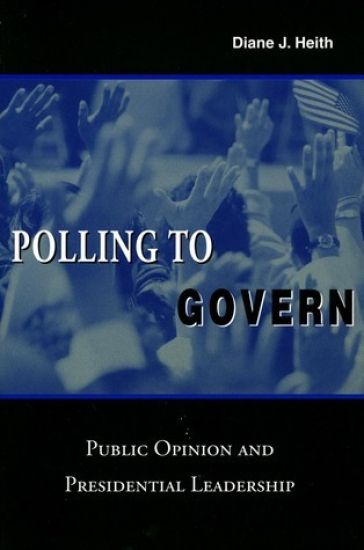
Presidents spend millions of dollars on public opinion polling while in office. Critics often point to this polling as evidence that a "permanent campaign" has taken over the White House at the expense of traditional governance. But has presidential polling truly changed the shape of presidential leadership? Diane J. Heith examines the polling practices of six presidential administrations—those of Nixon, Ford, Carter, Reagan, Bush, and Clinton—dissecting the poll apparatus of each period. She contends that while White House polls significantly influence presidential messages and responses to events, they do not impact presidential decisions to the extent that observers often claim. Heith concludes that polling, and thus the campaign environment, exists in tandem with long-established governing strategies.
Polling to Govern

Polling to Govern

Diane J. Heith

Stanford University Press
2003
pokkari
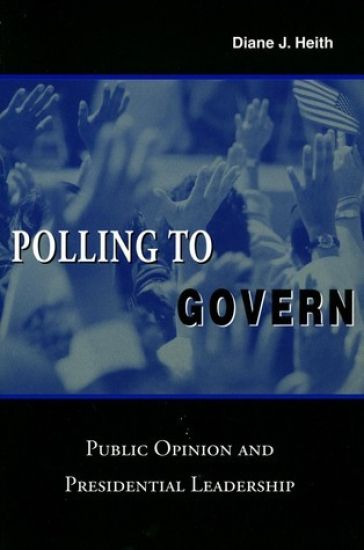
Presidents spend millions of dollars on public opinion polling while in office. Critics often point to this polling as evidence that a "permanent campaign" has taken over the White House at the expense of traditional governance. But has presidential polling truly changed the shape of presidential leadership? Diane J. Heith examines the polling practices of six presidential administrations—those of Nixon, Ford, Carter, Reagan, Bush, and Clinton—dissecting the poll apparatus of each period. She contends that while White House polls significantly influence presidential messages and responses to events, they do not impact presidential decisions to the extent that observers often claim. Heith concludes that polling, and thus the campaign environment, exists in tandem with long-established governing strategies.
Presidential Road Show

Presidential Road Show

Diane J. Heith

Paradigm
2013
sidottu
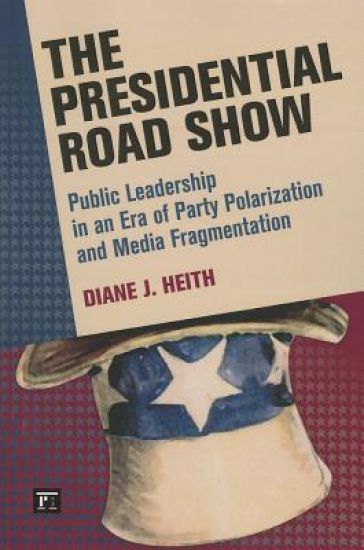
In The Presidential Road Show: Public Leadership in an Era of Party Polarization and Media Fragmentation, Diane J. Heith evaluates presidential leadership by critically examining a fundamental tenet of the presidency: the national nature of the office. The fact that the entire nation votes for the office seemingly imbues the presidency with leadership opportunities that rest on appeals to the mass public. Yet, presidents earn the office not by appealing to the nation but rather by assembling a coalition of supporters, predominantly partisans. Moreover, once in office, recent presidents have had trouble controlling their message in the fragmented media environment. The combined constraints of the electoral coalition and media environment influence the nature of public leadership presidents can exercise. Using a data set containing not only speech content but also the classification of the audience, Diane J. Heith finds that rhetorical leadership is constituency driven and targets audiences differently. Comparing tone, content, and tactics of national and local speeches reveals that presidents are abandoning national strategies in favor of local leadership efforts that may be tailored to the variety of political contexts a president must confront.
Presidential Road Show

Presidential Road Show

Diane J. Heith

Paradigm
2013
nidottu
In The Presidential Road Show: Public Leadership in an Era of Party Polarization and Media Fragmentation, Diane J. Heith evaluates presidential leadership by critically examining a fundamental tenet of the presidency: the national nature of the office. The fact that the entire nation votes for the office seemingly imbues the presidency with leadership opportunities that rest on appeals to the mass public. Yet, presidents earn the office not by appealing to the nation but rather by assembling a coalition of supporters, predominantly partisans. Moreover, once in office, recent presidents have had trouble controlling their message in the fragmented media environment. The combined constraints of the electoral coalition and media environment influence the nature of public leadership presidents can exercise. Using a data set containing not only speech content but also the classification of the audience, Diane J. Heith finds that rhetorical leadership is constituency driven and targets audiences differently. Comparing tone, content, and tactics of national and local speeches reveals that presidents are abandoning national strategies in favor of local leadership efforts that may be tailored to the variety of political contexts a president must confront.