Kirjojen hintavertailu. Mukana 11 912 767 kirjaa ja 12 kauppaa.

Kirjahaku

Etsi kirjoja tekijän nimen, kirjan nimen tai ISBN:n perusteella.

7 kirjaa tekijältä Dick Davis

The Dick Davis Dividend

The Dick Davis Dividend

Dick Davis

John Wiley Sons Inc
2008
sidottu
A pioneer in the financial media, Dick Davis has interacted with the investing public for over forty years. With his new book, he continues this trend. The first part of The Dick Davis Dividend contains an easy-to-read, yet profound discussion of the essentials of investing—focusing on the savvy veteran’s often unconventional, core beliefs. While the second part of this engaging guide makes a compelling case for combining both passive investing via index funds and active investing via stocks and mutual funds.
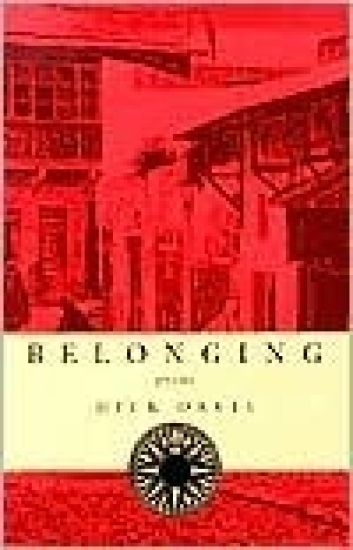
Belonging

Belonging

Dick Davis

Swallow Press
2002
sidottu
There are worlds within our own in which even the smallest victories are hard won, the tender moment is almost unbearable, and the understated rings like a bell. Belonging, a new collection by British poet Dick Davis, is an extended visit to these worlds. Deepened by his dry wit and the formal rigor of his verse, the poems of Belonging negotiate their way among personal and political divides—generations in a family, man and woman, and the tentative present and our inherited pasts. But behind much of the writing there is also a desire for a kind of idealized belonging—to a clerisy of civilized and humane decency which can be found intermittently in all cultures and is the monopoly of none. Davis's own cosmopolitan background provides the context for many of the poems, yet he is concerned always to find the humanly universal within the local and anecdotal—a hope realized in these careful and incandescent poems.
Belonging

Belonging

Dick Davis

Swallow Press
2002
pokkari
There are worlds within our own in which even the smallest victories are hard won, the tender moment is almost unbearable, and the understated rings like a bell. Belonging, a new collection by British poet Dick Davis, is an extended visit to these worlds. Deepened by his dry wit and the formal rigor of his verse, the poems of Belonging negotiate their way among personal and political divides—generations in a family, man and woman, and the tentative present and our inherited pasts. But behind much of the writing there is also a desire for a kind of idealized belonging—to a clerisy of civilized and humane decency which can be found intermittently in all cultures and is the monopoly of none. Davis's own cosmopolitan background provides the context for many of the poems, yet he is concerned always to find the humanly universal within the local and anecdotal—a hope realized in these careful and incandescent poems.
A Trick of Sunlight

A Trick of Sunlight

Dick Davis

Swallow Press
2006
sidottu
In his new collection of poems, Dick Davis, the acclaimed author of Belonging, addresses themes that he has long worked with—travel, the experience of being a stranger, the clash of cultures, the vagaries of love, the pleasures and epiphanies of meaning that art allows us. But A Trick of Sunlight introduces a new theme that revolves around the idea of happiness—is it possible, must it be illusory, is its fleetingness an essential part of its nature so that disillusion is inevitable? Many of the poems are shaded by the poet's awareness of growing older, and by the ways that this both shuts down many of life's possibilities and frees us from their demands. The levity of some verses here is something of a departure for Davis, but his insights can be mordant too, revealing darknesses as often as they invoke frivolity. As Davis's readers have come to expect, the poems in A Trick of Sunlight. aim at the aesthetic satisfactions that accompany accurate observations expressed with wit, intelligence, and grace. But they achieve as well an immediacy and rawness of vision that seem to belie his careful craft.
A Trick of Sunlight

A Trick of Sunlight

Dick Davis

Swallow Press
2006
pokkari
In his new collection of poems, Dick Davis, the acclaimed author of Belonging, addresses themes that he has long worked with—travel, the experience of being a stranger, the clash of cultures, the vagaries of love, the pleasures and epiphanies of meaning that art allows us. But A Trick of Sunlight introduces a new theme that revolves around the idea of happiness—is it possible, must it be illusory, is its fleetingness an essential part of its nature so that disillusion is inevitable? Many of the poems are shaded by the poet's awareness of growing older, and by the ways that this both shuts down many of life's possibilities and frees us from their demands. The levity of some verses here is something of a departure for Davis, but his insights can be mordant too, revealing darknesses as often as they invoke frivolity. As Davis's readers have come to expect, the poems in A Trick of Sunlight. aim at the aesthetic satisfactions that accompany accurate observations expressed with wit, intelligence, and grace. But they achieve as well an immediacy and rawness of vision that seem to belie his careful craft.

Love in Another Language

Love in Another Language

Dick Davis

Carcanet Press Ltd
2017
nidottu
In Love in Another Language Dick Davis is shown to be the outstanding formal poet of his generation, a master of rhyme and metre, a poet worthy of keeping company with the best lyric writers in our tradition. His Collected Poems draws on eight previous publications and includes a section of new work. Davis has also established himself as `the leading translator of Persian literature in our time' (Washington Post) and this volume includes a selection of his celebrated translations. Davis's original poems evoke the experiences of travel and of living in a culture in which one is a stranger, where empathy is at once difficult and necessary. His translations can be read as a record of his attempts at such empathy, in poetic terms, across centuries and cultures.
Epic & Sedition

Epic & Sedition

Dick Davis

Mage Publishers
2006
nidottu
Iran's national epic, the Shahnameh of Ferdowsi, has traditionally been regarded by both Persians and Westerners as a poem celebrating the central role of monarchy in Persian history. In this groundbreaking book, Dick Davis argues that the poem is far more than a patriotic chronicle of kingly deeds. Rather, it is a subtle and highly ambiguous discussion of authority, and far from being a celebration of monarchy, its most famous episodes and heroes amount to a radical critique of the institution. Davis demonstrates that the public world of kingly authority is shadowed in the poem by a series of tragic father-son relationships, and that in both the royal and familial spheres, authority figures are invariably presented as morally inferior to those whom they govern. The Shahnameh's complex aesthetic structure and its tragic resolution of problem of authority and hierarchy make it an artistic artefact able to take its rightful place beside the major masterpieces of world literature.