Kirjojen hintavertailu. Mukana 12 390 323 kirjaa ja 12 kauppaa.

Kirjahaku

Etsi kirjoja tekijän nimen, kirjan nimen tai ISBN:n perusteella.

28 kirjaa tekijältä Didier Eribon

Returning to Reims

Returning to Reims

Didier Eribon

Penguin Books Ltd
2019
pokkari
'A deeply intelligent and searching book, one that makes you re-consider the narrative of your own life and reframe the story you tell yourself' Hilary MantelA Guardian reader's Best Book of 2018 "There was a question that had come to trouble me a bit earlier, once I had taken the first steps on this return journey to Reims... Why, when I have had such an intense experience of forms of shame related to class ... why had it never occurred to me to take up this problem in a book?"Returning to Reims is a breathtaking account of one man's return to the town where he grew up after an absence of thirty years. It is a frank, fearlessly personal story of family, memory, identity and time lost. But it is also a sociologist's view of what itmeans to grow up working class and then leave that class; of inequality and shifting political allegiances in an increasingly divided nation. A phenomenon in France and a huge bestseller in Germany, Didier Eribon has written the defining memoir of our times.'I was overwhelmed by this book. I felt I was reading the story of my life' Edouard Louis, author of The End of Eddy'A book about self-invention and belonging' Colm Toibin
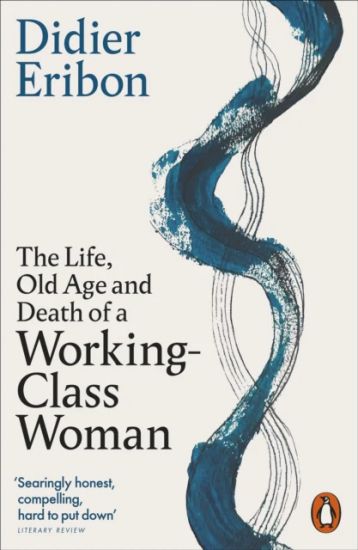
The Life, Old Age, and Death of a Working-Class Woman
'Searingly honest . . . compelling, hard to read and hard to put down' Literary Review'A frank and moving story . . . an urgent plea' Telegraph‘Who speaks? Who is able to make themselves heard? And if this fundamental political gesture remains inaccessible to so many people who figure among the most dominated, the most dispossessed, the most vulnerable, does it not fall to artists, writers and intellectuals to speak of them and for them’When Didier Eribon’s mother began to lose her physical and cognitive autonomy, the author and his brothers were compelled to place her in a nursing home, despite their misgivings. A few weeks later, she died.In The Life, Old Age, and Death of a Working-Class Woman, Eribon embarks on a historical, political and personal meditation on what it means to grow old in our society, and the care we provide for those who cannot afford to pay for better services. Tracing his mother’s rapid decline – and drawing on works by Simone de Beauvoir, Norbert Elias, Annie Ernaux and Michel Foucault, among others – Eribon offers an honest, original and wide-ranging exploration of the relationship between ageing, gender and class, transmuting his own rage, sadness and shame into a strikingly nuanced portrait of the most overlooked human experience.Translated by Michael Lucey
Insult and the Making of the Gay Self

Insult and the Making of the Gay Self

Didier Eribon

Duke University Press
2004
sidottu
A bestseller in France following its publication in 1999, Insult and the Making of the Gay Self is an extraordinary set of reflections on “the gay question” by Didier Eribon, one of France’s foremost public intellectuals. Known internationally as the author of a pathbreaking biography of Michel Foucault, Eribon is a leading voice in French gay studies. In explorations of gay subjectivity as it is lived now and as it has been expressed in literary history and in the life and work of Foucault, Eribon argues that gay male politics, social life, and culture are transformative responses to an oppressive social order. Bringing together the work of Jean-Paul Sartre, Pierre Bourdieu, Judith Butler, and Erving Goffman, he contends that gay culture and political movements flow from the need to overcome a world of insult in the process of creating gay selves.Eribon describes the emergence of homosexual literature in Britain and France at the turn of the last century and traces this new gay discourse from Oscar Wilde and the literary circles of late-Victorian Oxford to AndrÉ Gide and Marcel Proust. He asserts that Foucault should be placed in a long line of authors-including Wilde, Gide, and Proust-who from the nineteenth century onward have tried to create spaces in which to resist subjection and reformulate oneself. Drawing on his unrivaled knowledge of Foucault’s oeuvre, Eribon presents a masterful new interpretation of Foucault. He calls attention to a particular passage from Madness and Civilization that has never been translated into English. Written some fifteen years before The History of Sexuality, this passage seems to contradict Foucault’s famous idea that homosexuality was a late-nineteenth-century construction. Including an argument for the use of Hannah Arendt’s thought in gay rights advocacy, Insult and the Making of the Gay Self is an impassioned call for critical, active engagement with the question of how gay life is shaped both from without and within.
Insult and the Making of the Gay Self

Insult and the Making of the Gay Self

Didier Eribon

Duke University Press
2004
pokkari
A bestseller in France following its publication in 1999, Insult and the Making of the Gay Self is an extraordinary set of reflections on “the gay question” by Didier Eribon, one of France’s foremost public intellectuals. Known internationally as the author of a pathbreaking biography of Michel Foucault, Eribon is a leading voice in French gay studies. In explorations of gay subjectivity as it is lived now and as it has been expressed in literary history and in the life and work of Foucault, Eribon argues that gay male politics, social life, and culture are transformative responses to an oppressive social order. Bringing together the work of Jean-Paul Sartre, Pierre Bourdieu, Judith Butler, and Erving Goffman, he contends that gay culture and political movements flow from the need to overcome a world of insult in the process of creating gay selves.Eribon describes the emergence of homosexual literature in Britain and France at the turn of the last century and traces this new gay discourse from Oscar Wilde and the literary circles of late-Victorian Oxford to AndrÉ Gide and Marcel Proust. He asserts that Foucault should be placed in a long line of authors-including Wilde, Gide, and Proust-who from the nineteenth century onward have tried to create spaces in which to resist subjection and reformulate oneself. Drawing on his unrivaled knowledge of Foucault’s oeuvre, Eribon presents a masterful new interpretation of Foucault. He calls attention to a particular passage from Madness and Civilization that has never been translated into English. Written some fifteen years before The History of Sexuality, this passage seems to contradict Foucault’s famous idea that homosexuality was a late-nineteenth-century construction. Including an argument for the use of Hannah Arendt’s thought in gay rights advocacy, Insult and the Making of the Gay Self is an impassioned call for critical, active engagement with the question of how gay life is shaped both from without and within.
The Life, Old Age, and Death of a Working-Class Woman
A personal and philosophical reflection on the question of old age as a limit concept of Western thought. A few years ago, Didier Eribon's mother entered a retirement home. Over the course of several months, she lost her physical and cognitive autonomy, and despite his resistance, Eribon and his brothers were compelled to place her in a nursing home. The doctor had warned that she'd rapidly decline. And indeed, refusing the degradation and humiliation of her condition, Eribon's mother died just a few weeks later. In The Life, Old Age, and Death of a Working-Class Woman, Eribon furthers the archeological, historical, sociological, political, and personal reflection he began with Returning to Reims, this time to look at the question of old age. How does our society treat the elderly, especially the very elderly? What are the daily humiliations the elderly are forced to suffer? What are the conditions at the end of life? Threaded through an erudite engagement with the works of Simone de Beauvoir, Annie Ernaux, Albert Cohen, Michel Foucault, Norbert Elias, and many others, the question of old age is shown here as a limit concept of Western thought and political philosophy. What is the place of bodies that can no longer assemble, discuss freedom, or protest? How do we hear those who can no longer say "us"? What does it mean not to project into the future? Can the absolutely dependent speak for themselves--and if not, who can speak for them? Eribon left behind his prejudiced working-class family to become an intellectual. Looking back on his relationship with his mother, he transmutes his rage, sadness, and shame over her death into a portrait of being reunited beyond unbridgeable difference.
Michel Foucault

Michel Foucault

Didier Eribon

SUHRKAMP VERLAG
2009
pokkari
Mit Michel Foucault starb 1984 einer der bedeutendsten Philosophen Frankreichs. Wenigen ist es wie ihm gelungen, ihre Zeit nicht nur zu reflektieren, sondern ihr auch das Signum des eigenen Denkens aufzuprägen. Didier Eribon schildert nicht nur Foucaults Leben, sondern wirft auch exemplarische Schlaglichter auf die französische Geistesgeschichte.
Tillbaka till Reims

Tillbaka till Reims

Didier Eribon

Verbal Förlag
2018
sidottu
I Tillbaka till Reims (Retour à Reims) söker sig Didier Eribon tillbaka till hemstaden för att reflektera kring den sociala skammen. På vägen till frigörelse har författaren förträngt sin uppväxt och arbetarbakgrund.Mer än halva livet har den franske sociologen levt som öppet homosexuell i kosmopolitiska storstadsmiljöer, på betryggande avstånd från den nordfranska arbetarkultur han flydde i sin ungdom. I sina akademiska arbeten om sexuell skam har han med tiden etablerat sig som en av Frankrikes ledande queerteoretiker. Men genom resan till Reims inser han hur lite han under alla dessa år velat befatta sig med en annan typ av skam: den sociala skammen.Didier Eribons banbrytande essä hyllades av Le Monde, Libération, L Express och andra tidningar när den gavs ut 2009. Den har gjort stort intryck på debatten om högerpopulistiska Front Nationals framgångar inom arbetarklassen och getts ut på en rad andra språk.
En arbetarkvinnas liv, ålderdom och död

En arbetarkvinnas liv, ålderdom och död

Didier Eribon

Verbal Förlag
2024
sidottu
INTERNATIONELL FÖRFATTARSCEN I STOCKHOLM 8/10!"En unik och kollektiv berättelse som skildrar ålderdomen som ett personligt och politiskt skeppsbrott."LE JDD"En engagerad, gripande och uppriktig essä."Le TempsNär Didier Eribons mor flyttar in på äldreboende förlorar hon gradvis sin fysiska och kognitiva självständighet. Chocken över flytten blir stor och bara några veckor senare avlider hon. I denna bok återupptar Didier Eribon det personliga och teoretiska utforskande som han påbörjade i Tillbaka till Reims efter faderns död. Han reflekterar kring moderns yrkesliv som städerska och fabriksarbetare och fångar henne i all sin komplexitet, från deltagandet i strejker till de rasistiska utfallen. Didier Eribon analyserar våra relationer till äldre och upplevelsen av att bli gammal och gör ålderdomen till utgångspunkt för en politisk reflektion: Hur kan människor mobilisera när de inte längre har rörlighet eller förmåga att tala och därmed säga "vi"? Vem gör deras röster hörda? Didier Eribon (f. 1953) är en fransk författare, sociolog och filosof. Han blev känd 1989 med sin uppskattade biografi över Michel Foucault. Den banbrytande boken Tillbaka till Reims (Verbal, 2018) har gjort ett stort intryck på debatten om högerpopulistiska framgångar inom arbetarklassen och satts upp som pjäs på bland annat Dramaten.