Kirjojen hintavertailu. Mukana 12 390 999 kirjaa ja 12 kauppaa.

Kirjahaku

Etsi kirjoja tekijän nimen, kirjan nimen tai ISBN:n perusteella.

5 kirjaa tekijältä Dieter Senghaas

Dieter Senghaas

Dieter Senghaas

Dieter Senghaas

Springer-Verlag Berlin and Heidelberg GmbH Co. K
2012
nidottu
Dieter Senghaas, professor emeritus of international relations, University of Bremen, was one of most innovative contemporary German social scientists, with major contributions on peace and development research and on music and peace. He was awarded many prizes: the International Peace Research Award (1987), Göttingen Peace Prize (1999), Culture and Peace Prize of the Villa Ichon in Bremen (2006), and the Leopold-Kohr Prize of the Austrian Ministry of Science and Research (2010). In addition to his autobiographic notes and his selected bibliography, this book offers a global audience five key texts by D. Senghaas (1974-2009): Towards an Analysis of Threat Policy in International Relations; Friedrich List and the Basic Problems of Development; Developing the Definitions of Perpetual Peace (‘para pacem’): Through What and How is Peace Constituted Today?; Sounds of Peace: On Peace Fantasies and Peace Offerings in Classical Music; and Enhancing Human Rights – A Contribution to Viable Peace.
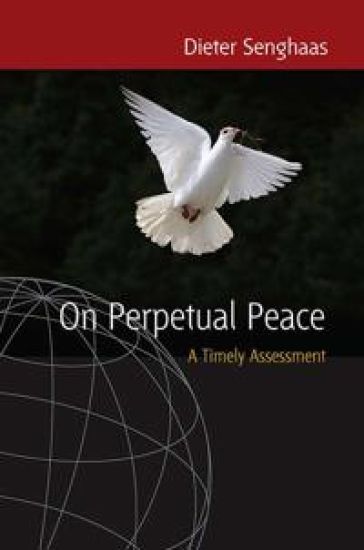
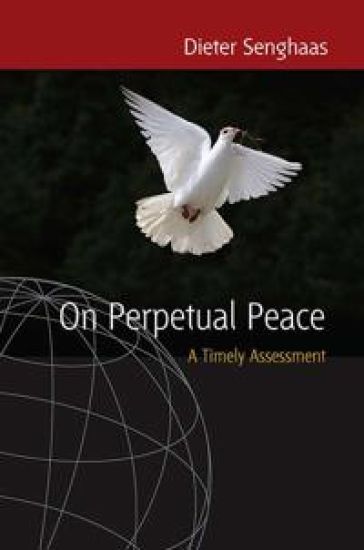
On Perpetual Peace

On Perpetual Peace

Dieter Senghaas

Berghahn Books
2007
sidottu
Dieter Senghaas today is the world's leading figure in the field of conflict research, conflict management research, and the study of the prerequisites of lasting peace. The fact that virulent conflict within what Senghaas calls the OECD world, essentially the European Union, has become unthinkable over the past half-century encourages him in the face of violent conflict in many parts of the world to be reasonably optimistic about the prospect for our planet as a whole.
On Perpetual Peace

On Perpetual Peace

Dieter Senghaas

Berghahn Books
2007
pokkari
Dieter Senghaas today is the world's leading figure in the field of conflict research, conflict management research, and the study of the prerequisites of lasting peace. The fact that virulent conflict within what Senghaas calls the OECD world, essentially the European Union, has become unthinkable over the past half-century encourages him in the face of violent conflict in many parts of the world to be reasonably optimistic about the prospect for our planet as a whole.
Hearing Peace

Hearing Peace

Dieter Senghaas

Springer International Publishing AG
2025
sidottu
Listening to peace. When social scientists, publicists and teachers approach the problem of peace, they pay special attention to the causes of violence and war. Recently, however, insights into the causes of peace have gained broad resonance. The question is which factors, individually and in their interaction, are sustainably conducive to peace. Aesthetic dimensions of a peace order, however, usually remain underexposed, although the problem of peace can be impressively conveyed through images of peace. The fact that the essays in this book explain that access to various dimensions of peace through musical and compositional contributions can also be illuminating: Which peace-relevant problems have composers addressed in their works? Striking examples are explained. They are all to be found in the offerings of classical, i.e. value-retaining music of the past five centuries. - A unique book on peace education - For teachers and students in peace research and in music studies - Written by one of the co-founders of peace research in Germany - A key background book for peace concerts - A musical appeal for peace
Multinationale Konzerne und Dritte Welt

Multinationale Konzerne und Dritte Welt

Dieter Senghaas; Ulrich Albrecht

VS Verlag fur Sozialwissenschaften
1984
nidottu
Der Bundestagsausschug fur wirtschaftliche Zusammenarbeit veranstaltete im Herbst 1974 eine offentliche Anhorung von Sachverstandigen iiber das Thema "Tatigkeit und entwicklungspolitischer Einfiug deutscher multinationaler Unternehmen in Ent- wicklungslandern". Ober das Hearing wurde in der Presse berichtet, ohne dag das Thema in grundsatzlichen Beitragen weiter verfolgt worden ware. Das Protokollliegt inzwischen vorl, ebenfalls die Abschlugauswertung des Ausschusses. Einige Abgeord- nete haben im nachhinein das Hearing kommentierende Stellungnahmen abgegeben2; nach ihrer Meinung hatte es vor allem folgendes Fazit: Es trug zur Entemotionalisierung und damit zur Versachlichung der Multi-Debatte in der BRD bei. Es verdeutlichte, dag die Aktivitaten multinationaler Konzerne nach Branchen und Entwicklungsregionen differenziert zu betrachten sind. Es fiihrte zu einigen konkreten Empfehlungen wie zur Aufforderung, die multina- tionalen Konzerne sollten urn der Transparenz willen Weltbilanzen erstellen und sich an die soziale Umwelt in Entwicklungslandern anpassen, u. a. Mit diesem Fazit hat das Hearing jene Funktion erhalten, die in der politischen Theorie als "symbolic use of politics" bezeichnet wird: Es wurde der Eindruck geschaffen, als seien Rolle, Funktion und Folgewirkungen der Aktivitaten multinatio- naler Konzerne in der Dritten Welt in aller bffentlichkeit mit Sachverstand wirklich kritisch untersucht worden, und als hatten die deutschen Multis - allen Vorurteilen zum Trotz - dieses Auf-den-Zahn-fiihlen glanzend iiberstanden. Die Initiatoren des Hearings, sie sagen in der CDU/CSU-Fraktion, haben also zunachst ihr Zie! erreicht: Einer weiteren drohenden Legitimationseinbulk der Multis wurde wenig- stens fiir den Augenblick wirkungsvoll entgegengesteuert, das Hearing ist zitierbar, und weitere Kritik kann als uninformiert und unsachlich beiseite geschoben werden.