Kirjojen hintavertailu. Mukana 11 244 527 kirjaa ja 12 kauppaa.

Kirjahaku

Etsi kirjoja tekijän nimen, kirjan nimen tai ISBN:n perusteella.

9 kirjaa tekijältä Dietmar Elger

Gerhard Richter

Gerhard Richter

Dietmar Elger

University of Chicago Press
2010
sidottu
Gerhard Richter is one of the most important and popular artists of the postwar era. For decades he has sought innovative ways to make painting more relevant, often through a multifaceted dialogue with photography. Today Richter is most widely recognized for the photo-paintings he made during the 1960s that rely on images culled from mass media and pop culture. Always fascinated with the limits and uncertainties of representation, he has since then produced landscapes, abstractions, glass and mirror constructions, prints, sculptures, and installations. Though Richter has been known in the United States for quite some time, the highly successful retrospective of his work at the MOMA in 2002 catapulted him to unprecedented fame. Enter noted curator Dietmar Elger, who here presents the first biography of this contemporary artist. Written with full access to Richter and his archives, this fascinating book offers unprecedented insight into his life and work. Elger explores Richter's childhood in Nazi Germany; his years as a student and mural painter in communist East Germany; his time in the West during the turbulent 1960s and '70s, when student protests, political strife, and violence tore the Federal Republic of Germany apart; and, his rise to international acclaim during the 1980s and beyond. Richter has always been a difficult personality to parse, and the seemingly contradictory strands of his artistic practice have frustrated and sometimes confounded critics. But the extensive interviews on which this book is based disclose a Richter who is far more candid and vivid than ever before. The result is a book that will be the foundational portrait of this artist and his profoundly influential oeuvre.
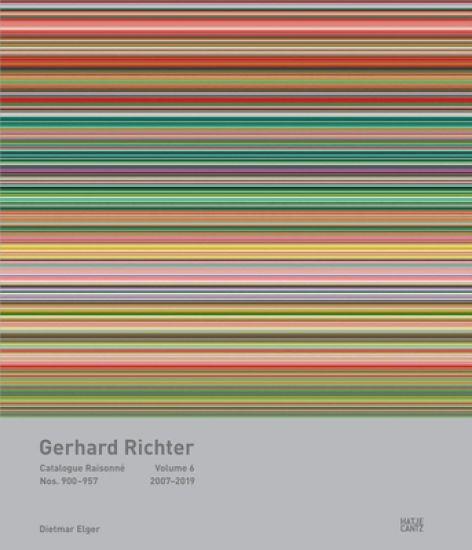
Gerhard Richter Catalogue Raisonné. Volume 6
Gerhard Richter’s oeuvre embraces in excess of three thousand individual works. Over a period of five decades he has created a stylistically heterogeneous, complex body of work that testifies to his status as the most important living artist of our time. This long-awaited first volume of the catalogue raisonné is being released on the occasion of the artist’s eightieth birthday in February 2012. Dietmar Elger, director of the Gerhard Richter Archive at the Staatliche Kunstsammlungen Dresden, has spent years researching and preparing this publication. The six-volume catalogue raisonné of all of Richter’s paintings and sculptures will be published over the next seven years. Aside from the richly colored illustrations, many of them full-page, it includes full technical details, information about the artist’s handwritten notes, and the provenance, bibliography, and exhibitions of each individual work. This information is supplemented by commentary, quotes, and comparison images. Subscription price for complete set: € 198.00 per volume. You will be invoiced with each delivery.
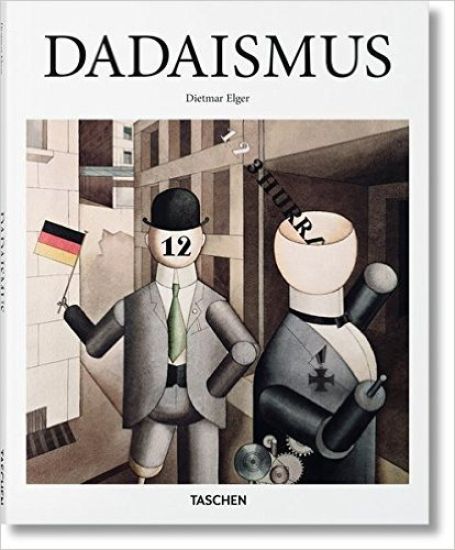
Dadaismus

Dadaismus

Dietmar Elger

TASCHEN GMBH
2016
sidottu
Dive into Dada, the defiant 20th-century movement that declared an all-out attack on societyâ??s politics, values, and cultural conformity. With a selection of key works from such leading Dada proponents as Tristan Tzara, Marcel Duchamp, Hannah Höch, Kurt Schwitters, Francis Picabia, and Man Ray, this book introduces this urgent, subversive movement and its lasting influence on modern art.
Dadaïsme

Dadaïsme

Dietmar Elger

TASCHEN GMBH
2016
sidottu
Emerging amid the brutality of World War I, the revolutionary Dada movement took disgust with the establishment as its starting point. From 1916 until the mid-1920s, artists in Zurich, Cologne, Hanover, Paris, and New York launched a radical assault on the politics, social values, and cultural conformity which they regarded as complicit in the devastating conflict. Dada artists shared no distinct style but rather a common wish to upturn societal structures as much as artistic standards and to replace logic and reason with the absurd, chaotic, and unpredictable. Their practice encompassed experimental theater, games, guttural sound-making, collage, photomontage, chance-based procedures, and the “readymade,” most notoriously Marcel Duchamp’s urinal, Fountain (1917). Throughout, the Dadaists considered the visual appearance of their work secondary to the ideas and critiques it expressed. In this sense, Dada may be seen as a fundamental precursor to conceptual art. With a selection of key works from some of the most famous proponents of Dada such as Tristan Tzara, Marcel Duchamp, Hannah Höch, Kurt Schwitters, Francis Picabia, and Man Ray, this book introduces this urgent, subversive, and determined 20th-century movement and its lasting influence on modern art.
Dadaism

Dadaism

Dietmar Elger

Taschen GmbH
2016
sidottu
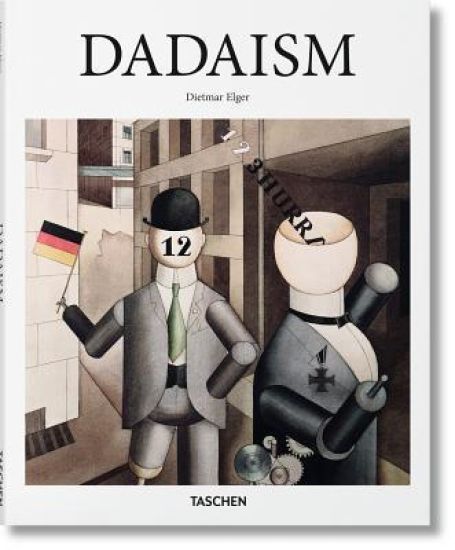
Emerging amid the brutality of World War I, the revolutionary Dada movement took disgust with the establishment as its starting point. From 1916 until the mid-1920s, artists in Zurich, Cologne, Hanover, Paris, and New York launched a radical assault on the politics, social values, and cultural conformity which they regarded as complicit in the devastating conflict. Dada artists shared no distinct style but rather a common wish to upturn societal structures as much as artistic standards and to replace logic and reason with the absurd, chaotic, and unpredictable. Their practice encompassed experimental theater, games, guttural sound-making, collage, photomontage, chance-based procedures, and the “readymade,” most notoriously Marcel Duchamp’s urinal, Fountain (1917). Throughout, the Dadaists considered the visual appearance of their work secondary to the ideas and critiques it expressed. In this sense, Dada may be seen as a fundamental precursor to conceptual art. With a selection of key works from some of the most famous proponents of Dada such as Tristan Tzara, Marcel Duchamp, Hannah Höch, Kurt Schwitters, Francis Picabia, and Man Ray, this book introduces this urgent, subversive, and determined 20th-century movement and its lasting influence on modern art.
Abstrakte Kunst

Abstrakte Kunst

Dietmar Elger

TASCHEN GMBH
2017
sidottu
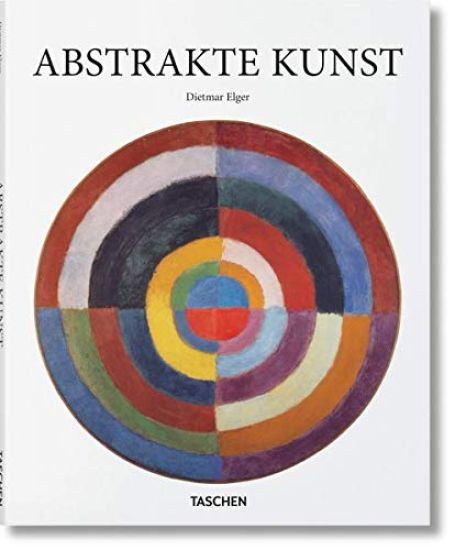
The 20th century saw art go abstract. Where once clear certainties and indisputable forms prevailed, now anarchy seemed to reign supreme. Sensibilities diffused into strange new shapes, colors assumed new significance, lines abandoned literal meaning. Dive in and discover some of the most dynamic and progressive art of modernity.
Art abstrait

Art abstrait

Dietmar Elger

TASCHEN GMBH
2017
sidottu
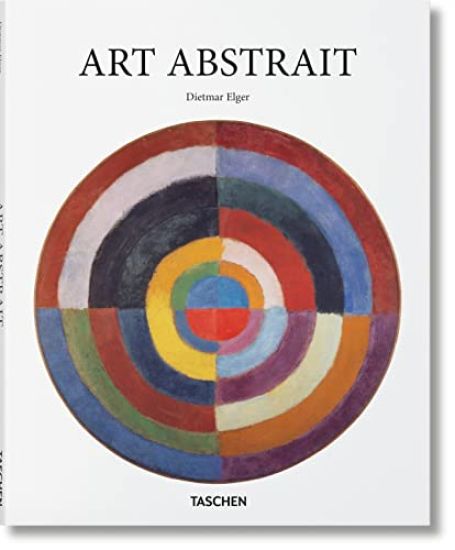
Abstraction shook Western art to its core. In the early part of the 20th century, it refuted the reign of clear, indisputable forms and confronted audiences instead with vivid visual poems devoid of conventional representational imagery and characterized by allegories of emotion and sensation. This radical artistic adventure established new artistic means, as much as narratives. Expression became characterized by shocking juxtapositions of color, light, and line. Artists abandoned the conventions of brush and easel and played with new materials and methods of artistic gesture: commercial paints and housepainter’s brushes, working on unstretched and unprimed canvases, moving the canvas to the floor, and applying paint with hands. This essential introduction spans the international breadth, conceptual depth, and seismic impact of abstract art with a thorough survey not only of the big names such as Picasso, Klee, Kline, Rothko, and Pollock, but also lesser-known figures who made equally significant contributions, including Antoni Tàpies, K. O. Götz, Ad Reinhardt, and Sophie Taeuber-Arp.
Abstract Art

Abstract Art

Dietmar Elger

Taschen GmbH
2017
sidottu
Abstraction shook Western art to its core. In the early part of the 20th century, it refuted the reign of clear, indisputable forms and confronted audiences instead with vivid visual poems devoid of conventional representational imagery and characterized by allegories of emotion and sensation. This radical artistic adventure established new artistic means, as much as narratives. Expression became characterized by shocking juxtapositions of color, light, and line. Artists abandoned the conventions of brush and easel and played with new materials and methods of artistic gesture: commercial paints and housepainter’s brushes, working on unstretched and unprimed canvases, moving the canvas to the floor, and applying paint with hands. This essential introduction spans the international breadth, conceptual depth, and seismic impact of abstract art with a thorough survey not only of the big names such as Picasso, Klee, Kline, Rothko, and Pollock, but also lesser-known figures who made equally significant contributions, including Antoni Tàpies, K. O. Götz, Ad Reinhardt, and Sophie Taeuber-Arp.