Kirjojen hintavertailu. Mukana 11 717 486 kirjaa ja 12 kauppaa.

Kirjahaku

Etsi kirjoja tekijän nimen, kirjan nimen tai ISBN:n perusteella.

7 kirjaa tekijältä Dimitar Bechev

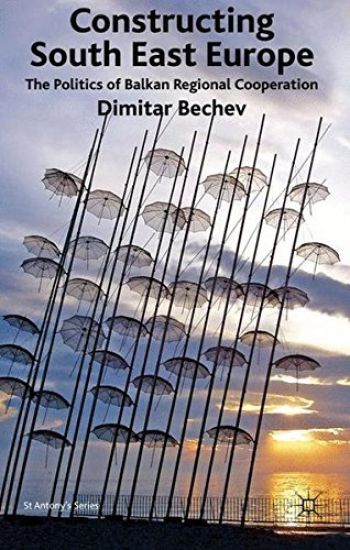
Constructing South East Europe

Constructing South East Europe

Dimitar Bechev

Palgrave Macmillan
2011
sidottu
Regional cooperation has become a distinctive feature of the Balkans, an area known for its turbulent politics. Exploring the origins and dynamics of this change, this book highlights the transformative power of the EU and other international actors.
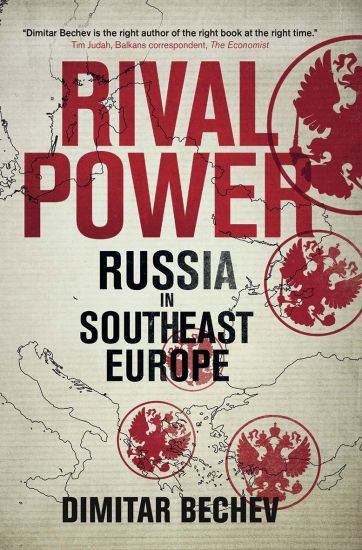
Rival Power

Rival Power

Dimitar Bechev

Yale University Press
2017
sidottu
A nuanced and comprehensive study of the political dynamics between Russia and key countries in Southeast Europe Is Russia threatening to disrupt more than two decades’ of E.U. and U.S. efforts to promote stability in post-communist Southeast Europe? Politicians and commentators in the West say, “yes.” With rising global anxiety over Russia’s political policies and objectives, Dimitar Bechev provides the only in-depth look at this volatile region. Deftly unpacking the nature and extent of Russian influence in the Balkans, Greece, and Turkey, Bechev argues that both sides are driven by pragmatism and opportunism rather than historical loyalties. Russia is seeking to assert its role in Europe’s security architecture, establish alternative routes for its gas exports—including the contested Southern Gas Corridor—and score points against the West. Yet, leaders in these areas are allowing Russia to reinsert itself to serve their own goals. This urgently needed guide analyzes the responses of regional NATO members, particularly regarding the annexation of Crimea and the Putin-Erdogan rift over Syria.
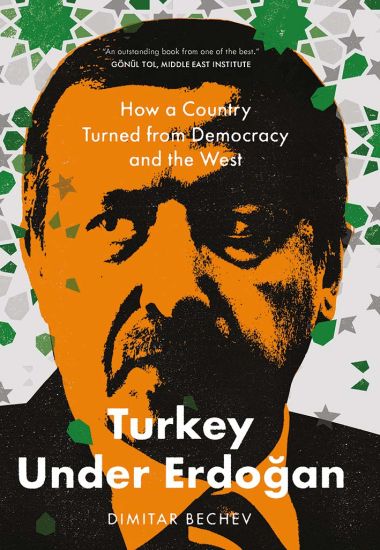
Turkey Under Erdogan

Turkey Under Erdogan

Dimitar Bechev

YALE UNIVERSITY PRESS
2022
sidottu
An incisive account of Erdogan’s Turkey—showing how its troubling transformation may be short-lived Since coming to power in 2002 Recep Tayyip Erdogan has overseen a radical transformation of Turkey. Once a pillar of the Western alliance, the country has embarked on a militaristic foreign policy, intervening in regional flashpoints from Nagorno-Karabakh to Libya. And its democracy, sustained by the aspiration to join the European Union, has given way to one-man rule. Dimitar Bechev traces the political trajectory of Erdogan’s populist regime, from the era of reform and prosperity in the 2000s to the effects of the war in neighboring Syria. In a tale of missed opportunities, Bechev explores how Turkey parted ways with the United States and Europe, embraced Putin’s Russia and other revisionist powers, and replaced a frail democratic regime with an authoritarian one. Despite this, he argues that Turkey’s democratic instincts are resilient, its economic ties to Europe are as strong as ever, and Erdogan will fail to achieve a fully autocratic regime.
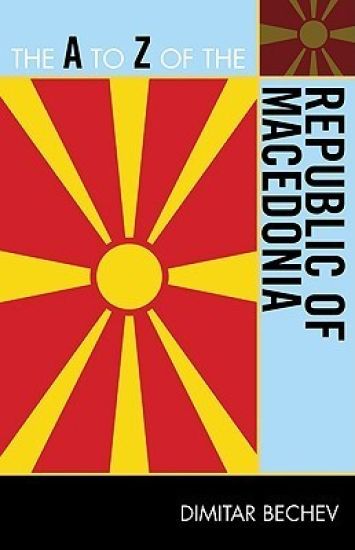
The A to Z of the Republic of Macedonia

The A to Z of the Republic of Macedonia

Dimitar Bechev

Scarecrow Press
2010
nidottu
Located at the very heart of the Balkans, the Republic of Macedonia has a rich and turbulent history, which reflects all the complexities of the region's past and present-day politics. In the late 19th and the early 20th century, it became the focal point of competition by the fledgling Balkan nation-states over the declining Ottoman Empire's European possessions. Late Ottoman Macedonia was a region, which impressed the external observer with its diversity: ethnic, religious, linguistic, clannish, and territorial identities all overlapped in a complex and puzzling mosaic. It is this diversity that has led to the Macedonian Question of the late 19th and early 20th centuries and continues to raise questions today. The A to Z of the Republic of Macedonia traces the key political, socio-economic, and cultural developments in the multiethnic mosaic that is Republic of Macedonia following its secession from the Yugoslav federation in the autumn of 1991. It also surveys often overlooked topics, such as the social transformations underwent in the course of the 20th century and during the decades of socialism, as well as the recent debates about historical memory and roots of the Slav Macedonian nation. Complete with a chronology, an introductory essay, a bibliography, and over 400 hundred cross-referenced dictionary entries, this reference provides a rich account of the history, present-day politics, and society of the Republic of Macedonia.
Constructing South East Europe

Constructing South East Europe

Dimitar Bechev

Palgrave Macmillan
2011
nidottu
Regional cooperation has become a distinctive feature of the Balkans, an area known for its turbulent politics. Exploring the origins and dynamics of this change, this book highlights the transformative power of the EU and other international actors.
Historical Dictionary of North Macedonia

Historical Dictionary of North Macedonia

Dimitar Bechev

Rowman Littlefield
2019
sidottu
Located in the middle of the Balkans, North Macedonia reflects the turbulent history of the region. The country emerged from former Yugoslavia in the 1990s without violence but struggled to achieve international recognition due to a dispute with neighboring Greece over its name and symbols. The name issue was resolved only in 2008 with the signature of the Prespa Agreement reviving prospects for membership in NATO and the European Union (EU). Yet North Macedonia’s story goes centuries back, to the Middle Ages, the period of Ottoman Rule which lasted until 1912, and the various reincarnations of Yugoslavia. The historical dictionary traces the country’s past and present with a wealth of articles on issues, events, institutions, personalities shaping political, economic and cultural life. It looks at the majority Macedonian as well as other ethnic communities such as the Albanians, Turks and the Roma. There are also entries on North Macedonia’s relations with neighbors, in history and today, as well as with global powers. This second edition of Historical Dictionary of North Macedonia contains a chronology, an introduction, and an extensive bibliography. The dictionary section has over 500 cross-referenced entries on important personalities, politics, economy, foreign relations, religion, and culture. This book is an excellent resource for students, researchers, and anyone wanting to know more about North Macedonia.