Kirjojen hintavertailu. Mukana 12 016 292 kirjaa ja 12 kauppaa.

Kirjahaku

Etsi kirjoja tekijän nimen, kirjan nimen tai ISBN:n perusteella.

5 kirjaa tekijältä Dimitris Philippidis

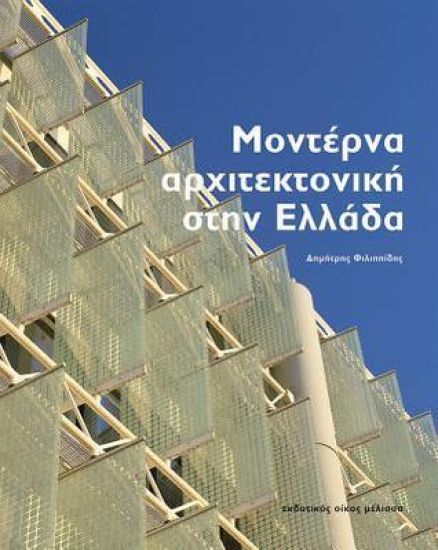
Moderna Architektonike Sten Hellada

Moderna Architektonike Sten Hellada

Dimitris Philippidis

Melissa Publishing House
2001
sidottu
An impressive dynamism characterizes Greek architecture in the 20th century. During the first two decades of the century, Neo-Classicism was still reigning as the official style as ideally befitting the Modern Greek State. This was to change soon though as the Modern Movement began to make its impact felt early in the '30s. Its subsequent astounding diffusion, particularly in the major urban centers of the country, has left a legacy of modernity of an almost unequalled scale in Europe. In the aftermath of World War II Greek architecture once more successfully adopted the post-war version of modern architecture, based on the universal use of post-and-beam concrete frame. All subsequent architectural trends in more recent years were followed closely by local architects, always eager to experiment with internationally established currents. Therefore westernization, disguised as modernity or dismissal of the past, has always played a major role in the 'progress' of Greek architecture. This book presents a fresh, unconventional way of perceiving and appreciating the development of contemporary Greek architecture, by tracing the multiple transformations of such crucial notions as 'modern' and 'modernity' throughout its recent history.
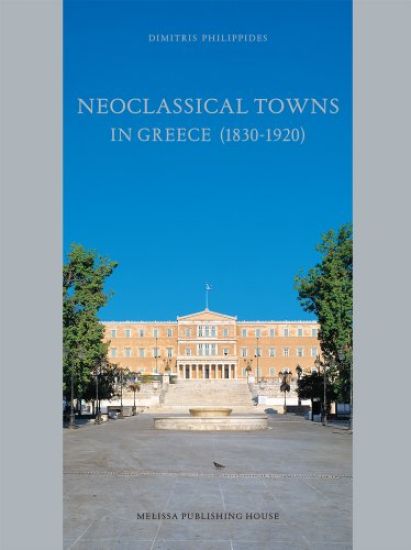
Neoclassical Towns in Greece (1830-1920)

Neoclassical Towns in Greece (1830-1920)

Dimitris Philippidis

Melissa Publishing House
2007
sidottu
Neoclassical towns cannot be identified with a specific form of town planning in Greece. They are neoclassical because they were designed and built during a particular period of history (1830-1920) in which neoclassical architecture predominated. The neoclassical town is, at bottom, a new situation, a new way of life - it is the clear expression of the modern spirit in the 19th century. It represents, that is, Europeanisation and progress as applied to the urban environment. This lavishly illustrated book is based on research and photography in the field, and on an extensive study of the relevant sources, from 19th-century monographs. It contains a selection of neoclassical towns from all over Greece: those that are promoted as 'neoclassical cities' (Athens, Patra, Nafplio and Ermoupoli), others that are known as 'historical centres', in which neoclassical features are combined with traditional traces (Symi and Pilion) and, finally, towns in areas that were integrated into Greece at a late date (Chania, Volos, Ioannina, Thessaloniki and Kavala). The taking of the photographs proved to be a laborious task; a large part of the neoclassical nuclei of the Greek towns has been rebuilt and is now occupied by apartment blocks. This means that the archive material assembled here has an added historical value: it records much that may no longer exist tomorrow.